


Large Breed Puppy Limping on Front Leg: Causes
A large breed puppy limping on a front leg can be a minor strain, but it can also point to growth-related conditions in the shoulder, elbow or long bones. A limp that lasts more than a day or two, comes back, or comes with pain should be seen by a vet before it is put down to growing. At home, rest, check the paw and track the pattern. Pawganix MoveGuard Growth supports joint development during the growth window, alongside vet care.
Joint support built for the growth window.
Shop MoveGuard GrowthWhy large breed puppies limp on a front leg
Large and giant breeds grow fast, and that puts load on the front end.
The shoulders and elbows carry a large share of a puppy's weight, and the growth plates are still open. Rapid growth, rough play and slippery floors all add stress. Most limps are minor, but the front leg is also where several growth-related problems show up first.
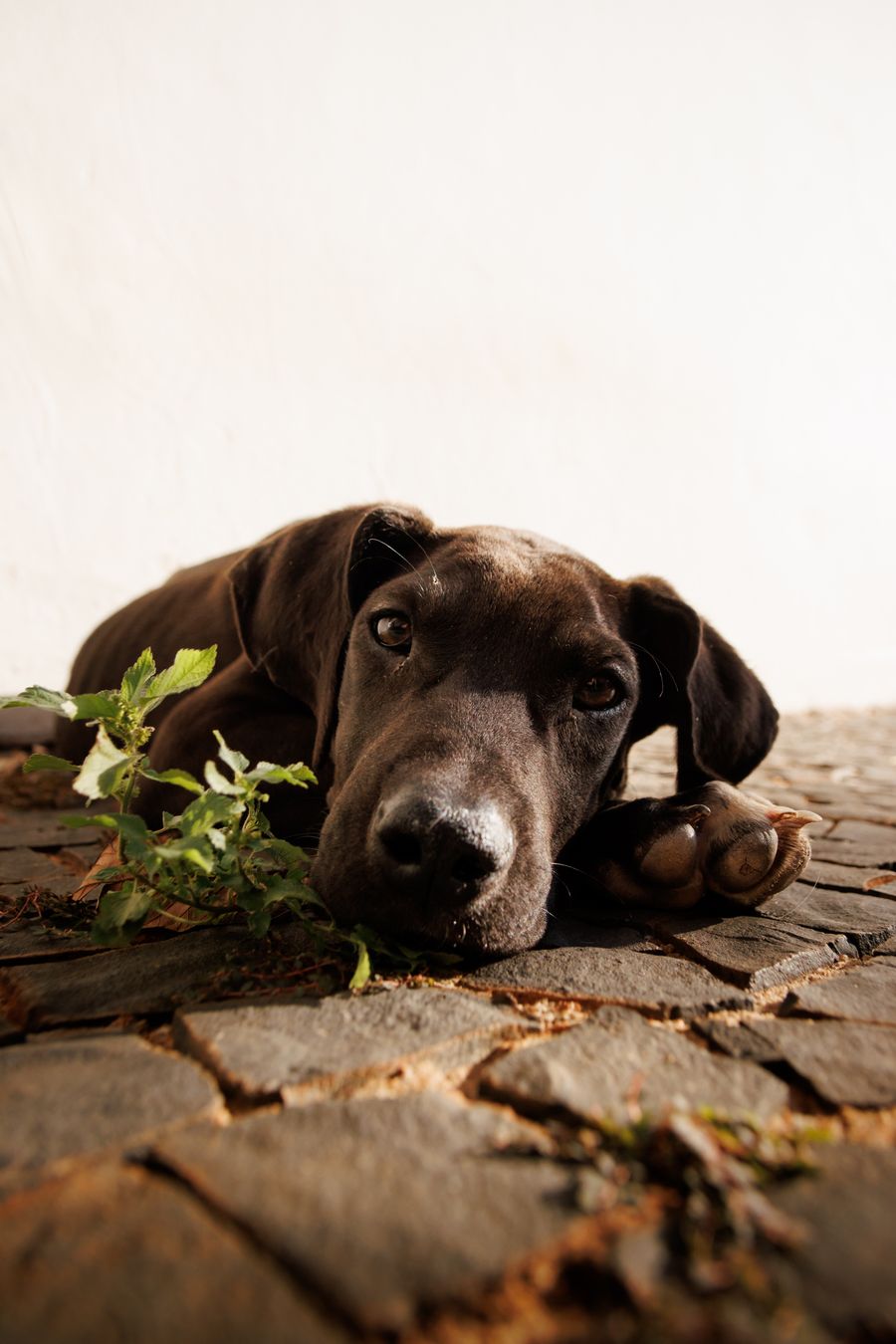
Photo: Pexels
Common causes to know about
- Simple strain or sprain: usually from play, and often improves with rest within a day or two.
- Paw problems: a thorn, torn nail, cut pad or something between the toes.
- Panosteitis, or growing pains: a limp that can shift between legs, mostly in large and giant breeds between about 5 and 16 months. See our guide to panosteitis in puppies.
- Elbow or shoulder problems: conditions such as elbow dysplasia or osteochondrosis can cause a persistent or recurring limp.
- Injury: a fall, a jump from furniture or a collision.
You cannot tell these apart by eye. That is why a limp that lasts, returns or hurts needs an exam, and often x-rays.
What to check at home first
Look at the paw
Check the pads, between the toes and the nails for cuts, thorns or swelling.
Feel gently down the leg
Run a hand from shoulder to paw and watch your puppy's face. Flinching, pulling away or yelping tells you where it hurts.
Rest, do not push
Keep play calm and on soft ground for a day or two. No stairs, jumping or rough games.
Film the walk
A short clip of your puppy walking and trotting on a flat surface helps your vet see what is happening.
When it should not wait
- Your puppy will not put weight on the leg
- The leg is swollen, hot or looks bent
- The limp lasts more than 24 to 48 hours, or keeps returning
- There is yelping, fever, or loss of appetite
Your vet may recommend x-rays, and that is a normal step in large breeds. Early answers make for better choices about exercise and care.
How are your puppy's joints doing?
Take the free Joint & Mobility Clock. Ten quick questions about your dog, and you get a named stage, the four things loading your dog's joints, and a plan sized to your dog's weight. No email needed to see your result.
Take the Joint & Mobility Clock →Supporting joints through the growth window
Large and giant breeds grow for much longer than small dogs, and the window from about 8 to 30 months is when the joints are building. Controlled exercise, a growth-appropriate diet and lean body condition matter most. Our guide to large breed puppy growth covers each.
MoveGuard Growth is a chew formulated for this window. Every active is on the label: green-lipped mussel 250mg, glucosamine 400mg, chondroitin 300mg, MSM 250mg, krill oil 150mg and hyaluronic acid 15mg, with vitamins C and E and manganese. It is dosed by expected adult weight, so check the label for your dog's expected adult weight rather than their current size.
It supports joint development and comfort. It does not diagnose or treat a limp, and it never replaces an exam. It contains shellfish, krill, fish and soy.
A creator on supporting a growing pup
Support the Joints While They Are Still Growing.
Green-lipped mussel, glucosamine, chondroitin, MSM, krill oil and hyaluronic acid in a grain-free chew. Dosed by expected adult weight, every active on the label, with a 60-day guarantee.
Shop MoveGuard GrowthFrequently Asked Questions
Common reasons are a minor strain, a paw injury or growth-related conditions in the shoulder or elbow. You cannot tell them apart at home, so a limp that lasts or returns needs a vet exam.
Mild, short-lived limping after rough play happens. Limping that lasts more than a day or two, shifts between legs or comes with pain should be checked, even if your puppy still seems playful.
It is a growing-pain condition that affects the long bones of young, fast-growing dogs and often causes a limp that shifts from leg to leg. Only a vet can diagnose it.
A supplement is not a fix for a limp, and you should have the limp checked first. Ask your vet about MoveGuard Growth, which is made for large and giant breeds in the growth window and works alongside vet care.
Short, regular, low-impact exercise is the usual advice, with no forced running or repeated jumping. See our guide on exercise for large breed puppies for more.
Their growth window only happens once.
The free Growth Blueprint covers the months that matter, the mistakes to avoid and what to ask your vet.
Get the Growth BlueprintEnter your email on the next page. You'll also get new findings as we publish them. Unsubscribe any time. See our Privacy Policy.
You're already making the content. Get paid for it.
Commission on your link, or a flat fee per post. Your call. A real person reads every application and replies within two working days.
Apply in two minutesSources
- Cornell University College of Veterinary Medicine. Panosteitis in dogs. vet.cornell.edu
- Pawganix. MoveGuard Growth product page and label. pawganix.com
These statements have not been evaluated by the Food and Drug Administration. This product is not intended to diagnose, treat, cure, or prevent any disease. This content is for informational purposes only and is not a substitute for professional veterinary advice. A dog that suddenly limps, yelps, cannot get up, or shows swelling or heat in a joint should be seen by a vet. Pawganix supplements support joint comfort and mobility and work alongside veterinary care, not instead of it.
Where is your dog on the joint clock?
Ten questions about your dog. You get a named stage, the four things loading your dog's joints, a 30-day check-in date, and a plan sized to your dog's weight.
- 1Your dog's joint stage, named and scored
- 2The four things loading the joints
- 3A plan sized to your dog's weight, or a plain answer if no formula fits
Most read
-
 Puppy GrowthGerman Shepherd Hip Dysplasia Prevention18 min read
-
 Puppy GrowthGerman Shepherd Puppy Joint Development: What to Do From 8 Weeks to 18 Months8 min read
-
 Puppy GrowthLab and Golden Retriever Growth Plate Window (2026)14 min read
-
 Itch & YeastThe 7 Best Dog Yeast Infection Supplements Compared (2026 Review)14 min read
-
 Itch & YeastBest Supplements for French Bulldogs: What Actually Helps (And What's a Waste of Money)9 min read
-
 Itch & YeastBest Ear Infection Supplements for Dogs11 min read


