


German Shepherd Hip Dysplasia Prevention
- German Shepherd Hip Dysplasia at a Glance
- Why German Shepherds Are the Highest-Risk Breed for Hip Dysplasia
- How Hip Dysplasia Develops in German Shepherd Puppies
- The GSD Growth Window: Month by Month
- Warning Signs in GSD Puppies
- Three Myths GSD Owners Need to Stop Believing
- The German Shepherd Hip Dysplasia Prevention Protocol
- Beyond Hips: Other Joint Conditions in German Shepherds
- MoveGuard Growth for German Shepherd Puppies
- Frequently Asked Questions
German Shepherd Hip Dysplasia at a Glance
German Shepherds are the breed most synonymous with hip dysplasia — OFA data consistently shows them among the highest-prevalence large breeds for the condition. Hip dysplasia in German Shepherds develops during the puppy growth window (8 weeks to 18–20 months) under the combined influence of genetics, rapid growth rate, and mechanical loading. Preventing the most severe outcomes requires action during this window: controlled exercise, correct large breed puppy nutrition, and a vet-reviewed joint supplement started at 8 months. Genetics cannot be changed — but the developmental environment can be, and it matters.
If you own a German Shepherd puppy, hip dysplasia is not a theoretical concern. It is a documented reality of this breed — one that has been studied, screened for, and debated by GSD breeders, veterinarians, and researchers for decades. The good news is that the growth window during which hip joint architecture is most influenceable is also clearly defined and actionable. This guide covers everything a German Shepherd owner needs to know to give their puppy the best possible joint foundation.
- German Shepherds have the highest documented prevalence of hip dysplasia among the most commonly screened large breeds
- Hip dysplasia is not present at birth — it develops during the growth window as the hip joint forms under mechanical load
- Genetic predisposition is real but not destiny — environmental and nutritional factors during the growth window significantly influence severity
- Start MoveGuard Growth at 8 months — vet-reviewed and built for the large breed growth window
- Degenerative myelopathy (DM) is a separate, progressive neurological condition that also affects GSDs and is sometimes confused with hip dysplasia in older dogs
- OFA hip evaluation at 24 months is considered standard of care for all GSDs, and essential for dogs intended for work or breeding
Why German Shepherds Are the Highest-Risk Breed for Hip Dysplasia
German Shepherds have occupied a unique and troubling position in canine orthopedic health data for most of the 20th and 21st centuries. OFA statistics — drawn from voluntary submissions of hip radiographs — consistently show that a substantial proportion of evaluated German Shepherds have hips rated Fair, Borderline, or Dysplastic. The actual prevalence in the broader population is difficult to measure precisely because OFA data is submitted voluntarily (and breeders with poor results are less likely to submit), but the directional picture is unambiguous: this is the highest-risk mainstream large breed for hip dysplasia.
Several factors compound in German Shepherds specifically:
Breed conformation
The characteristic angulated rear end of the modern show-line German Shepherd — with the steep croup, sharply angled stifles, and low-slung rear quarter — places the hip joints in a mechanically disadvantaged position during movement. Working-line GSDs typically have a more moderate rear angulation, and many orthopedic veterinarians consider the extreme show-line conformation to be a compounding risk factor for hip joint development. The steep rear affects how load is transmitted through the hip during growth.
Genetic loading
Hip dysplasia in German Shepherds has a substantial heritable component. Decades of OFA screening have reduced — but not eliminated — the prevalence of dysplasia in responsibly bred lines. First-generation dogs from health-tested, OFA Excellent parents carry meaningfully lower risk than dogs from untested lines, but residual genetic risk remains even in the best pedigrees.
Growth rate and body mass
German Shepherd puppies grow rapidly and develop substantial muscle mass early. Their characteristic musculature — broad through the shoulders and chest, powerful through the haunches — is building on a skeletal frame whose hip joints are still forming. The mismatch between muscle development and skeletal maturity during the growth window creates the conditions for hip laxity to develop.
Working drive and activity level
German Shepherds — particularly working-line dogs — have high exercise drive and often work hard during the growth window, which compounds mechanical loading on developing hips. GSD owners who use their dogs for Schutzhund, IPO, herding, or protection work must be particularly attentive to exercise management during the puppy growth phase.
The hip dysplasia risk in German Shepherds varies significantly between show lines (West German and American/Canadian conformation lines) and working lines (West German working, Czech, East German/DDR). Working-line breeders have historically selected more strongly for functional conformation, and working-line GSDs often show lower rates of severe hip dysplasia. If you are choosing a GSD puppy specifically with joint health in mind, the breeder's line and screening history matters — ask for OFA results on both parents.
How Hip Dysplasia Develops in German Shepherd Puppies
Understanding how hip dysplasia forms in a GSD puppy — as opposed to treating it as something a dog either "has or doesn't have" from birth — is the insight that changes how owners approach the growth window.
Hip dysplasia is a developmental condition. The hip joint consists of the femoral head (ball) and the acetabulum (socket). In a correctly formed hip, the femoral head fits tightly and congruently into the acetabulum, distributing load evenly across the joint surface. In a dysplastic hip, the fit is imperfect — the ball rides too loosely in the socket, creating abnormal movement patterns, cartilage wear, and progressive joint damage over time.
This imperfect fit does not exist at birth in most affected puppies. It develops during the growth window, under the combined influence of three factors:
- Genetic predisposition — the blueprint for hip structure inherited from the parents
- Growth rate and body weight — how fast the puppy grows and how much weight the developing hip carries
- Nutritional support for cartilage development — whether the developing joint tissue has the building blocks it needs to form correctly under load
The first factor cannot be changed. The second and third can. This is the entire argument for intervention during the growth window — and why a vet-reviewed joint supplement started at 8 months, combined with appropriate exercise management and large breed puppy nutrition, is not supplementary care for GSDs. It is the prevention protocol.
PennHIP screening from 16 weeks can detect hip laxity — the early measurable looseness in the hip joint that often precedes visible dysplasia. A high distraction index (DI) on PennHIP does not guarantee your GSD will develop clinical hip dysplasia, but it identifies puppies whose hips are forming under abnormal laxity conditions. If your GSD puppy has been PennHIP screened and shows elevated laxity, the case for nutritional joint support during the growth window is even stronger.
The GSD Growth Window: Month by Month
Your GSD puppy comes home. The hip joints are forming their foundational architecture. Begin large breed puppy food immediately. Protect from stairs and hard surfaces where possible. Keep sessions short and surfaces soft. No joint supplement needed yet — but begin planning for 8 months.
Rapid growth phase. GSD puppies gain substantial body mass during this period and the hip joints are under increasing mechanical load from that growing weight. This is when hip laxity is most likely to be amplified by inadequate cartilage support. Exercise restriction is critical — no repetitive jumping, forced running, or rough play on hard surfaces.
Growth continues. Many GSD owners see their puppy's characteristic ears beginning to stand and interpret this as a sign of overall maturity — it is not a joint maturity signal. Growth plates are still wide open and the hip joint is still forming. Working-line owners should resist the temptation to begin structured obedience or protection training that involves physical exertion during this phase.
The optimal start point for joint supplementation in German Shepherd puppies. The frame is actively growing, the hip joints are under daily mechanical load, and the 9-ingredient formula — led by NZ Green-Lipped Mussel (250mg) — provides structural cartilage support, anti-inflammatory omega-3s, and connective tissue co-factors during the highest-leverage developmental phase. Introduce with food for the first week.
Continue daily supplementation through the growth window. Growth plates in most GSDs close between 18 and 20 months. This is the full period during which joint architecture is being completed. Maintain lean body weight — excess weight during this phase directly amplifies the mechanical stress on the forming hip joint. Begin gradually increasing structured activity after 12 months.
Growth plates approaching closure. OFA hip radiographs at 24 months give you the complete picture of the hip architecture your GSD has developed. This result guides long-term management decisions. Begin transitioning to MoveGuard Adult — the same brand's maintenance formula for developed joints — around 24 months.
Warning Signs in GSD Puppies
German Shepherds are stoic dogs. They often continue working and appearing functional even when experiencing significant hip discomfort — a trait that has been selected for in working lines across generations. This means behavioural changes, not expressions of pain, are your most reliable signal.
Bunny Hopping Gait at Trot or Canter
The most recognised early sign of hip dysplasia in GSDs. When both rear legs swing forward together rather than alternating, the dog is distributing load away from the hip joints. In a GSD puppy under 18 months showing this gait, radiographic evaluation is warranted — do not wait for the gait to worsen.
Reduced Drive or Exercise Reluctance
A working-line GSD puppy with high drive that begins showing reluctance to work, flags early in training sessions, or avoids activities it previously engaged with willingly is communicating something through behaviour. GSD working owners know their dogs — unexplained reduction in drive in a puppy under 18 months is a signal to investigate joints before assuming training or temperament issues.
Difficulty Rising After Rest
A GSD puppy that braces with the front legs to push up from lying down, takes several steps to loosen up after resting, or shows obvious stiffness in the morning is displaying a pattern inconsistent with normal puppy development. In a GSD under 18 months, morning stiffness involving the rear quarters should be evaluated for hip dysplasia.
Narrow Rear Stance or "Cow Hocking"
GSDs with developing hip dysplasia sometimes hold their rear legs closer together than normal (narrow base rear stance) or show cow hocking — where the hocks angle inward — as a compensatory posture that reduces painful internal hip rotation. This postural change is easier to see from behind when the dog is standing still.
Pain on Hip Manipulation
During routine veterinary examinations, the Ortolani test detects hip laxity in anaesthetised dogs. But in conscious puppies, resistance to having the hip joint rotated or extended — pulling the rear leg back and outward — can indicate hip discomfort. This is a finding to discuss with your vet, not to test at home.
Is MoveGuard Growth Right for Your German Shepherd?
Take the free Joint & Mobility Clock. Ten quick questions about your dog, and you get a named stage, the four things loading your dog's joints, and a plan sized to your dog's weight. No email needed to see your result.
Take the Joint & Mobility Clock →Three Myths GSD Owners Need to Stop Believing
Hip dysplasia is one of the most discussed conditions in dog ownership — and also one of the most misunderstood. These three myths cost GSD owners the most.
"If my puppy's parents have Good or Excellent OFA scores, my dog won't get hip dysplasia."
RealityOFA-tested parents significantly reduce the probability of severe dysplasia — but do not eliminate it. Hip dysplasia has polygenic inheritance (multiple genes involved), meaning two Excellent parents can produce a puppy with Fair or Borderline hips. Testing reduces risk. It does not remove it. The growth window prevention protocol remains relevant regardless of parental OFA status.
"My GSD is running and playing normally, so their hips must be fine."
RealityGerman Shepherds are among the most stoic breeds. Dogs with moderate to significant hip dysplasia on radiographs frequently appear entirely normal in daily activity — particularly during puppyhood when their young musculature can compensate effectively for joint instability. The absence of visible symptoms does not confirm joint health. OFA radiographs at 24 months are the only way to assess hip architecture accurately.
"Hip dysplasia is genetic — there's nothing I can do about it."
RealityGenetics determines the blueprint. The growth environment determines what is built from it. Research consistently shows that growth rate, body weight, exercise management, and nutritional support during the growth window all influence the severity of hip dysplasia expression in genetically predisposed dogs. A puppy with moderate genetic risk raised with controlled exercise, lean body condition, large breed puppy food, and daily joint supplementation from 8 months can develop meaningfully better hip architecture than a similar puppy without those interventions.
The German Shepherd Hip Dysplasia Prevention Protocol
Prevention in German Shepherds is about managing every modifiable factor during the growth window — because genetics will provide the baseline, but environment determines the outcome within that baseline.
Pillar 1 — Large Breed Puppy Food, Not Generic or High-Protein Working Dog Food
German Shepherd owners with working-line dogs sometimes feed high-protein, high-energy working dog formulas from early puppyhood — believing this supports the performance dog they're developing. This is counterproductive during the growth window. High energy density accelerates growth rate, which amplifies mechanical stress on developing hip joints. Large breed specific puppy food with controlled calcium and energy density is the correct choice from 8 weeks to 18 months. Switch to adult or working dog food only after the growth window closes.
Pillar 2 — Exercise Management: The 5-Minute Rule and Working-Line Specific Cautions
Five minutes of structured exercise per month of age, twice daily, is the guideline. A 6-month GSD gets two 30-minute walks — not 90-minute tracking sessions or 45-minute ball throws. Working-line GSD owners must hold off on obedience and protection training that involves physical exertion, jumping, turns, and stops until after the growth window closes. Mental stimulation — marker training, scent work, impulse control — can proceed without physical loading. See: Exercise for Large Breed Puppies: How Much Is Safe?
Pillar 3 — MoveGuard Growth From 8 Months
Daily joint supplementation through the GSD growth window provides the 9 ingredients that support cartilage formation, regulate joint inflammation, lubricate the developing hip joint space, and build the connective tissue framework that will determine hip architecture at 24 months. Start at 8 months. Give daily. Do not skip. Continue until transitioning to MoveGuard Adult at 20–24 months.
Pillar 4 — Lean Body Weight Throughout the Growth Window
Every kilogram of excess body weight during the growth window adds mechanical stress to the developing hip joint. GSDs can be greedy eaters, particularly working-line dogs with high metabolisms. Body condition scoring monthly — aiming for a condition where ribs are easily felt, waist is visible from above, and abdominal tuck is visible from the side — is not optional for this breed during growth. Thin is dramatically safer than heavy for developing GSD hips.
Pillar 5 — PennHIP at 16 Weeks, OFA at 24 Months
PennHIP can measure hip laxity from 16 weeks and gives an early indicator of hip architecture under development. OFA evaluation at 24 months provides the standard definitive assessment of hip quality after skeletal maturity. Both are tools — not verdicts. A poor PennHIP result at 16 weeks should intensify prevention efforts, not cause despair. An Excellent OFA at 24 months is the goal and the payoff for rigorous growth window management.
Beyond Hips: Other Joint Conditions in German Shepherds
Hip dysplasia is the most discussed GSD joint condition, but it is not the only one owners need to understand.
Degenerative Myelopathy (DM)
Degenerative myelopathy is a progressive neurological condition — not a joint condition — that affects the spinal cord in older German Shepherds, typically from 7 to 14 years of age. It begins with progressive weakness and ataxia in the rear limbs that can be visually similar to severe hip dysplasia or advanced arthritis. DM is genetic (caused by a SOD1 mutation) and can be tested for. There is no treatment that halts progression, but physical rehabilitation can slow functional decline. If your older GSD is showing progressive rear limb weakness, your vet can distinguish between DM, hip dysplasia, and lumbosacral disease through examination and imaging.
Lumbosacral Disease (Cauda Equina Syndrome)
Degenerative lumbosacral stenosis is another condition specific to German Shepherds — compression of the spinal nerves at the lumbosacral junction causing pain, rear limb weakness, and sometimes urinary or fecal incontinence. It typically presents in middle-aged to older GSDs and can be confused with hip dysplasia. Signs include reluctance to sit, pain when the tail is lifted, and difficulty with hind limb movement. Diagnosis requires MRI or CT imaging.
Elbow Dysplasia
German Shepherds also appear in OFA elbow screening data at meaningful rates. Elbow dysplasia in GSDs presents similarly to other large breeds — forelimb lameness, often intermittent, presenting between 4 and 12 months. The joint supplementation protocol that supports hip development also provides elbow cartilage support — MoveGuard Growth addresses both developmental joint conditions simultaneously.
MoveGuard Growth for German Shepherd Puppies
MoveGuard Growth is vet-reviewed and built specifically for the 8–30 month large and giant breed growth window — making it appropriate for German Shepherd puppies from 8 months through to the transition to MoveGuard Adult at approximately 20–24 months.
For German Shepherds specifically, the formula's combination of structural cartilage support (Glucosamine HCl 400mg, Chondroitin Sulfate 300mg), anti-inflammatory marine omega-3s (NZ Green-Lipped Mussel 250mg — the hero ingredient not found in fish oil — plus Antarctic Krill Oil 150mg), synovial lubrication (Hyaluronic Acid 15mg), and connective tissue co-factors (Vitamin C 50mg, Manganese 2mg) addresses the developmental requirements of a breed whose hip joint architecture is under significant genetic and mechanical pressure during growth.
Every dose is printed on the label — no proprietary blends. Real chicken liver soft chews that GSDs accept readily. Dosed by expected adult weight (50–80 lb or 80–100+ lb). Free from wheat, corn, artificial colours, artificial flavours, and artificial preservatives. Made in a GMP/NSF facility in the USA. Backed by a 60-Day Guarantee.
You cannot change your German Shepherd's genetics. You can control how those genetics express during the growth window. Controlled exercise, lean body weight, large breed puppy nutrition, and MoveGuard Growth from 8 months are the four tools that give developing GSD hips the best possible environment to form correctly. None of them are guarantees — but all of them matter.
Built for the Growth Window Your GSD Is In Right Now
Vet-reviewed for the 8–30 month large breed growth phase. Every dose on the label. Real chicken-liver soft chews your German Shepherd will look forward to daily.
MoveGuard Growth — joint supplement for large breed puppies →Frequently Asked Questions
Many big-dog parents start daily joint support early in the growth window — an ideal starting point is around 8 months, when the frame is growing fast and the joints are still forming. It's a start-early choice, not a wait-and-see one.
If your GSD is still growing (roughly 8–30 months), choose MoveGuard Growth. If your German Shepherd is a fully grown adult (24+ months), choose MoveGuard Adult. The choice is determined by age, size, and growth stage.
Yes — that's the idea. Most dogs graduate from MoveGuard Growth to MoveGuard Adult around 24 months, once they're fully grown. Same brand, same transparency, calibrated for the new stage.
Both are real chicken-liver soft chews made to be easy to give every day. As with any new supplement, introduce it with food and consult your veterinarian, especially if your dog is on medication.
New Zealand Green-Lipped Mussel in both formulas, every dose printed on the label, vet-reviewed and stage-specific, made in a GMP/NSF facility in the USA, and backed by a 60-Day Guarantee.
Related Reading
- Joint Supplement for Large Breed Puppies: What to Look For in 2026
- When Should You Start Giving Your Puppy a Joint Supplement?
- Labrador Retriever Joint Health: The Complete Guide for Puppy Owners
- Golden Retriever Puppy Growth and Joint Protection: The Complete Guide
- Signs of Hip Dysplasia in Dogs: Early Symptoms Every Owner Should Know
- Is Hip Dysplasia in Dogs Genetic or Preventable? What Research Says
- German Shepherd Puppy Joint Development: 8 Weeks to 18 Months
- Exercise for Large Breed Puppies: How Much Is Safe?
- What Is Green-Lipped Mussel for Dogs? Benefits, Dosage and Science
- Large Breed Puppy Nutrition: Why Getting It Wrong Damages Joints
* These statements have not been evaluated by the Food and Drug Administration. This product is not intended to diagnose, treat, cure, or prevent any disease. Always consult your veterinarian before starting your dog on a new supplement, particularly if your dog is on medication or has an existing health condition.
Where is your dog on the joint clock?
Ten questions about your dog. You get a named stage, the four things loading your dog's joints, a 30-day check-in date, and a plan sized to your dog's weight.
- 1Your dog's joint stage, named and scored
- 2The four things loading the joints
- 3A plan sized to your dog's weight, or a plain answer if no formula fits
Most read
-
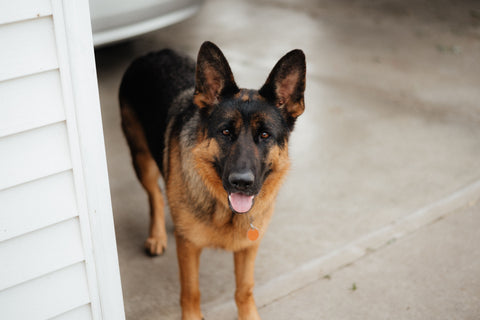 Puppy GrowthGerman Shepherd Puppy Joint Development: What to Do From 8 Weeks to 18 Months8 min read
-
 Puppy GrowthLab and Golden Retriever Growth Plate Window (2026)14 min read
-
 Itch & YeastThe 7 Best Dog Yeast Infection Supplements Compared (2026 Review)14 min read
-
 Itch & YeastBest Supplements for French Bulldogs: What Actually Helps (And What's a Waste of Money)9 min read
-
 Itch & YeastBest Ear Infection Supplements for Dogs11 min read
-
 Itch & YeastYeastGuard vs. Zesty Paws Aller-Immune Bites: Ingredients, Results, and Value Compared10 min read


