


Labrador Retriever Puppy Joint Health: The Complete Guide
- Labrador Joint Health at a Glance
- Why Labradors Are Particularly Vulnerable
- The Three Joint Conditions Lab Owners Must Know
- The Lab Puppy Growth Window: Month by Month
- Warning Signs in Labrador Puppies
- The Labrador Joint Health Prevention Protocol
- What to Look For in a Joint Supplement for Labs
- Exercise Guidelines During the Growth Window
- MoveGuard Growth for Labrador Puppies
- Frequently Asked Questions
Labrador Joint Health at a Glance
Labrador Retrievers are among the breeds most commonly affected by hip and elbow dysplasia — two developmental joint conditions that form during the puppy growth window (8 weeks to 18–20 months). Labrador puppy joint health requires three things during this period: appropriate exercise management, correct large breed nutrition, and targeted joint supplementation to support cartilage development while the skeleton is still forming. Starting a vet-reviewed joint supplement at 8 months gives Lab puppies the nutritional support their developing joints need during the highest-risk growth phase.
If you own a Labrador Retriever puppy, you are the owner of one of the world's most beloved breeds — and one of the most joint-susceptible. Labs are consistently among the top breeds in OFA (Orthopedic Foundation for Animals) screening databases for both hip and elbow dysplasia, which means that proactive joint health management during puppyhood is not optional for this breed. It is standard responsible ownership.
This guide covers everything a Labrador puppy owner needs to know: why Labs are structurally vulnerable, the three joint conditions to understand, the month-by-month growth window, how to recognise early warning signs, and the complete prevention protocol — including when and how to use a joint supplement.
- Labrador Retrievers have a documented genetic predisposition to hip dysplasia and elbow dysplasia — two of the most common joint conditions in large breed dogs
- The growth window for Labs runs from 8 weeks to approximately 18–20 months, when growth plates close
- Both hip and elbow dysplasia are influenced by genetic and environmental factors — the growth window is your primary opportunity to reduce environmental risk
- Start a vet-reviewed joint supplement at 8 months, manage exercise carefully during growth, and feed a large breed specific puppy food
- MoveGuard Growth is vet-reviewed and formulated for the 8–30 month large and giant breed growth window — appropriate for Labrador puppies from 8 months
- OFA hip and elbow evaluation at 24 months is recommended for all Labradors, particularly those intended for breeding
Why Labradors Are Particularly Vulnerable
Labrador Retrievers are a large breed with a muscular, compact build and a high activity drive. They combine several characteristics that place them at elevated joint risk during the growth phase:
Genetic predisposition
Hip and elbow dysplasia in Labradors have significant heritable components. OFA statistics consistently show Labradors among the higher-prevalence large breeds for both conditions. Even puppies from health-tested parents carry residual genetic risk that responsible breeders work to reduce through selective pairing — but cannot eliminate entirely.
Rapid early growth rate
Labrador puppies grow quickly during the first 6–12 months, reaching 70–80% of their adult weight by around 9–10 months. This rapid mass accumulation places significant mechanical load on joints whose cartilage is still maturing. The mismatch between growth rate and skeletal maturity is the central risk factor for developmental orthopedic conditions in Labs.
High energy during the vulnerable window
Labradors are famously enthusiastic puppies — energetic, playful, and often indiscriminate about exertion. Unlike breeds that self-regulate activity more naturally, Lab puppies will routinely run, jump, and play to exhaustion on developing joints that are not yet equipped to handle that load. Owner-managed exercise restrictions during the growth window are essential.
Body composition and weight gain risk
Labradors are one of the breeds most prone to obesity across their lifetime. Excess weight during the growth phase accelerates the mechanical stress on developing hip and elbow joints. Keeping a Lab puppy lean through the growth window is one of the most impactful single interventions an owner can make.
The Labrador's enthusiasm — the trait that makes them exceptional companions, working dogs, and family pets — is precisely the characteristic that makes proactive joint management necessary. They will not protect their own joints during development. That is the owner's job.
The Three Joint Conditions Lab Owners Must Know
Hip Dysplasia
The most widely discussed joint condition in Labradors. Hip dysplasia occurs when the femoral head (the ball of the hip joint) does not fit correctly into the acetabulum (the socket), leading to abnormal wear, instability, and progressive joint damage over time.
How it develops in puppies
The malformation occurs during the growth window — rapid growth, mechanical loading, and inadequate joint tissue quality during development all contribute. It is not present at birth in most cases; it develops as the puppy grows. Early screening (PennHIP from 16 weeks) can detect hip laxity before the full condition is visible on standard radiographs.
Signs in Lab puppies
- Bunny hopping gait (both rear legs swinging forward together) when running
- Reluctance to climb stairs or jump into the car
- Stiffness after rest, particularly in the morning
- Reduced activity levels or reluctance to play as usual
- Narrowed stance in the rear legs
Elbow Dysplasia
Elbow dysplasia is actually a collection of developmental conditions affecting the elbow joint — the most common in Labradors being fragmented coronoid process (FCP) and osteochondrosis dissecans (OCD) of the medial humeral condyle. Labradors are among the most frequently affected breeds in elbow dysplasia OFA screening data.
How it develops
Like hip dysplasia, elbow dysplasia is developmental — it emerges during the growth window as the joint forms under mechanical load. In Labs, the forelimbs bear significant weight, and the elbow joint is particularly susceptible during rapid growth phases when bone and cartilage development are not perfectly synchronised.
Signs in Lab puppies
- Forelimb lameness — often intermittent at first, becoming more consistent
- Holding one front leg slightly raised when standing
- Reluctance to extend the front leg fully
- Swelling around the elbow joint
- Puppies may appear to "spare" one front leg during play
Cruciate Ligament Disease (CCL Rupture)
While not a developmental condition in the same way as dysplasia, Labrador Retrievers have an elevated lifetime risk of cranial cruciate ligament (CCL) rupture — the canine equivalent of an ACL tear in humans. This risk is partly structural (a steeper tibial plateau angle in Labs contributes to ligament load) and partly related to the quality of joint tissue and overall joint health over time.
Connection to the puppy growth window
The quality of joint architecture developed during the growth window — including cartilage integrity, ligament tissue quality, and overall joint stability — influences long-term CCL vulnerability. Supporting joint tissue development during puppyhood is one layer of a lifetime joint health strategy for this breed.
Is MoveGuard Growth Right for Your Lab?
Take the free Joint & Mobility Clock. Ten quick questions about your dog, and you get a named stage, the four things loading your dog's joints, and a plan sized to your dog's weight. No email needed to see your result.
Take the Joint & Mobility Clock →The Lab Puppy Growth Window: Month by Month
Understanding what is happening inside your Lab's joints at each stage of development helps you make the right management decisions at the right time.
Your Lab puppy comes home. Joints are forming their basic architecture. Growth is rapid but the puppy is still small enough that mechanical loading is limited. Begin large breed puppy food if not already started. No joint supplement required yet — focus on nutrition and avoiding overexertion on stairs and hard surfaces.
Peak growth velocity. Your Lab is gaining weight rapidly and the hip and elbow joints are under increasing mechanical load. Growth plates are open and cartilage is actively forming. Exercise restriction is critical during this phase — no forced running, no repetitive jumping, no extended hiking. Begin planning to start supplementation at 8 months.
Growth rate begins to slow slightly but the skeleton is still developing. The elbow and hip joints are in a critical phase of cartilage maturation. Labs at this age often seem fully grown but are not — their growth plates are still open. This is a common time for owners to relax exercise restrictions prematurely. Maintain controlled exercise.
The ideal start point for joint supplementation in Labrador puppies. The frame is growing fast, the joints are still forming, and the 9-ingredient formula in MoveGuard Growth provides the structural support, anti-inflammatory omega-3s, and connective tissue co-factors that developing Lab joints need most. Introduce with food for the first week.
Continue daily supplementation through the remainder of the growth window. Growth plates in Labradors typically close between 18 and 20 months. Maintain lean body weight — this is a high-risk period for weight gain that accelerates joint stress. Continue controlled exercise; begin to introduce more structured activity gradually after 12 months.
Growth plates approaching or at closure. Schedule an OFA hip and elbow evaluation at 24 months. Begin transitioning from MoveGuard Growth to MoveGuard Adult around 24 months — same brand, same transparency, recalibrated for maintaining and cushioning the now-developed joints through adulthood.
Warning Signs in Labrador Puppies
These signs in a Labrador puppy between 4 and 18 months warrant a veterinary assessment. Do not wait for symptoms to worsen — early intervention provides more options.
Bunny Hopping When Running
When a Lab puppy moves both rear legs forward simultaneously in a hopping motion rather than alternating them, this is a classic early indicator of hip discomfort or instability. It is the body's way of offloading stress from the hips by engaging the spine and hindquarters differently.
Forelimb Lameness — One Leg Raised or Spared
A Lab puppy that consistently favours one front leg, holds it slightly raised when standing still, or appears to "spare" it during play may be showing early signs of elbow dysplasia. This lameness is often subtle initially and may be intermittent — which is a reason to pay close attention, not to dismiss it.
Stiffness After Rest
A puppy that struggles to rise after sleeping, moves stiffly for the first few minutes after waking, or appears reluctant to begin activity after lying down is showing a pattern consistent with joint discomfort. In puppies, this is worth taking seriously — stiffness after rest in an 8–12 month old Lab is not normal.
Reluctance to Climb Stairs or Jump
Lab puppies are typically enthusiastic about everything. A puppy that hesitates at the bottom of stairs, refuses to jump into the car, or avoids obstacles it previously navigated without issue is communicating that these movements cause discomfort. This is a meaningful behavioural change in a breed that is inherently bold and active.
Reduced Activity or Early Fatigue
A Lab puppy that tires more quickly than expected on walks, lies down during play sessions, or shows reduced interest in activities it previously enjoyed is signalling something. In a breed known for boundless energy during puppyhood, reduced activity should be investigated rather than attributed to a "quiet phase."
Any persistent lameness affecting one specific leg — particularly a front leg in a growing Lab — should be evaluated by a veterinarian promptly. Elbow dysplasia is most amenable to management when identified early. Do not manage lameness with rest alone and assume it will resolve.
The Labrador Joint Health Prevention Protocol
The most effective approach to Labrador puppy joint health is a three-part protocol that addresses the three modifiable risk factors during the growth window: nutrition, exercise, and supplementation. Genetics cannot be controlled — but these three factors can be, and they matter.
Pillar 1 — Nutrition: Large Breed Puppy Food, Not Generic Puppy Food
Generic puppy foods are often too energy-dense and have calcium-to-phosphorus ratios that can accelerate growth rate beyond what developing joints can accommodate. A large breed specific puppy food is formulated with lower energy density and calibrated calcium levels to support controlled, appropriate growth. Feed the large breed puppy formula until 18 months minimum.
Pillar 2 — Exercise: Control During the Growth Window
The general guideline for large breed puppies is 5 minutes of structured exercise per month of age, twice daily — so a 6-month-old Lab gets two 30-minute walks per day, not hour-long runs. Avoid repetitive high-impact activities (ball throwing with abrupt stops and starts, jumping, rough play on hard surfaces) until the growth window is closed. Free play on grass is generally fine. Forced exercise is not.
See: Exercise for Large Breed Puppies: How Much Is Safe?
Pillar 3 — Supplementation: MoveGuard Growth from 8 Months
Daily joint supplementation during the growth window provides the structural building blocks and anti-inflammatory omega-3 support that developing Lab joints need. This is not a substitute for correct nutrition and exercise management — it is the third pillar that works alongside them. Start at 8 months and continue through to 20 months or the transition to MoveGuard Adult.
Pillar 4 — Weight Management: Keep Your Lab Puppy Lean
You should be able to feel (not see) your Lab puppy's ribs easily. A visible waist when viewed from above and a slight tuck when viewed from the side are the targets. Excess weight during the growth window directly amplifies the mechanical stress on developing hips and elbows. Labs are genetically predisposed to overconsume — portion control from puppyhood is not optional for this breed.
What to Look For in a Labrador Joint Supplement
For a Labrador Retriever puppy, the joint supplement needs to be formulated for the growth window — not an adult formula adapted for puppies. The criteria:
| Criterion | Why It Matters for Labs |
|---|---|
| Glucosamine HCl (400mg+) | Foundational cartilage building block — critical during active joint formation in the growth window |
| Chondroitin Sulfate (300mg+) | Protects developing cartilage from enzymatic breakdown; works synergistically with glucosamine |
| NZ Green-Lipped Mussel (250mg+) | Unique ETA omega-3s not in fish oil; natural glycosaminoglycans; the hero ingredient for growing joints |
| MSM (250mg+) | Supports balanced inflammatory response in developing joint tissue under mechanical load |
| Marine omega-3 source (krill oil) | Bioavailable EPA/DHA for inflammatory regulation during rapid growth phases |
| Hyaluronic Acid | Supports synovial fluid in developing joint spaces; important as Lab's joints form and begin loading |
| Vitamin C + Manganese | Collagen synthesis and connective tissue co-factors — elevated demand during rapid tissue growth |
| Every dose on the label | No proprietary blends — you need to know what your Lab is actually getting per chew |
| Vet-reviewed, stage-specific | Built for the growth window, not adapted from an adult formula or stretched to "all life stages" |
Exercise Guidelines During the Lab Growth Window
This is one of the most important — and most frequently ignored — aspects of Labrador puppy joint health. Labs are so energetic and their owners are so eager to enjoy them that exercise restrictions during the growth window are often underimplemented.
The 5-Minute Rule
Structured exercise (on-lead walks, training sessions) should be limited to 5 minutes per month of age, twice daily. A 4-month-old Lab: 2 × 20 minutes. A 9-month-old Lab: 2 × 45 minutes. This is the structured exercise limit — free play in a garden or on grass can be somewhat more flexible, but should not be prolonged.
What to Avoid During the Growth Window
- Repetitive ball throwing with abrupt stops and turns — high joint impact
- Jogging or running alongside a bicycle
- Jumping on and off furniture, into cars, or over obstacles
- Extended hiking or off-road running
- Rough play with larger adult dogs who may inadvertently cause impact injuries
- Swimming pools with steep entry/exit — gentle, sloped access is fine; jumping in is not
What Is Safe and Beneficial
- Controlled on-lead walking on flat surfaces
- Free swimming in lakes or calm water — excellent low-impact exercise for Labs who enjoy it
- Short, positive training sessions
- Gentle free play on grass with appropriate-size dogs
- Mental stimulation — puzzle feeders, scent work, training games
After the growth window closes (18–20 months in most Labs), activity restrictions can be progressively relaxed and your Lab can begin enjoying more vigorous exercise — running, fetching, hiking — with a much more robust skeletal foundation underneath them.
MoveGuard Growth for Labrador Puppies
MoveGuard Growth is vet-reviewed and built from scratch for the 8–30 month large and giant breed growth window — making it appropriate for Labrador Retrievers from 8 months through to the transition to adult maintenance supplementation at approximately 20–24 months.
The formula's nine fully-disclosed active ingredients address every aspect of joint development that matters most for a Labrador puppy:
- Glucosamine HCl (400mg) — cartilage structural building block
- Chondroitin Sulfate (300mg) — protects forming cartilage from breakdown
- NZ Green-Lipped Mussel (250mg) — the hero omega-3 and glycosaminoglycan source
- MSM (250mg) — balanced inflammatory support in developing tissue
- Antarctic Krill Oil (150mg) — bioavailable EPA/DHA in phospholipid form
- Vitamin C (50mg) — collagen synthesis during rapid tissue growth
- Vitamin E (25 IU) — antioxidant protection for developing joint tissue
- Hyaluronic Acid (15mg) — synovial fluid support in forming joint spaces
- Manganese (2mg) — connective tissue and glycosaminoglycan formation
Dosed by expected adult weight — one level for Labs expected to reach 50–80 lb, a higher level for Labs expected to reach 80–100+ lb. Real chicken liver soft chews that Labs accept readily without any hiding or pill-pocketing. Free from wheat, corn, artificial colours, artificial flavours, and artificial preservatives. Made in a GMP/NSF facility in the USA. Backed by a 60-Day Guarantee.
After the growth window closes, transition to MoveGuard Adult — same brand, same transparency, formulated for maintaining and cushioning the joints your Labrador has now fully developed.
Built for Labradors in the Growth Window
Vet-reviewed for the 8–30 month growth phase. Every dose on the label. Real chicken-liver soft chews Labs actually want to eat.
MoveGuard Growth — joint supplement for large breed puppies →Frequently Asked Questions
Many big-dog parents start daily joint support early in the growth window — an ideal starting point is around 8 months, when the frame is growing fast and the joints are still forming. It's a start-early choice, not a wait-and-see one.
If your Labrador is still growing (roughly 8–30 months), choose MoveGuard Growth. If your Lab is a fully grown adult (24+ months), choose MoveGuard Adult. The choice is determined by age, size, and growth stage.
Yes — that's the idea. Most dogs graduate from MoveGuard Growth to MoveGuard Adult around 24 months, once they're fully grown. Same brand, same transparency, calibrated for the new stage.
Both are real chicken-liver soft chews made to be easy to give every day. As with any new supplement, introduce it with food and consult your veterinarian, especially if your dog is on medication.
New Zealand Green-Lipped Mussel in both formulas, every dose printed on the label, vet-reviewed and stage-specific, made in a GMP/NSF facility in the USA, and backed by a 60-Day Guarantee.
Related Reading
- Joint Supplement for Large Breed Puppies: What to Look For in 2026
- When Should You Start Giving Your Puppy a Joint Supplement?
- Labrador Puppy Hip Health: Early Prevention
- Signs of Hip Dysplasia in Dogs: Early Symptoms Every Owner Should Know
- Exercise for Large Breed Puppies: How Much Is Safe?
- Large Breed Puppy Nutrition: Why Getting It Wrong Damages Joints
- Growth Plates in Puppies: Large Breed Owner Guide
- What Is Green-Lipped Mussel for Dogs? Benefits, Dosage and Science
- Labrador Retriever Growth Guide — Pawganix
* These statements have not been evaluated by the Food and Drug Administration. This product is not intended to diagnose, treat, cure, or prevent any disease. Always consult your veterinarian before starting your dog on a new supplement, particularly if your dog is on medication or has an existing health condition.
Where is your dog on the joint clock?
Ten questions about your dog. You get a named stage, the four things loading your dog's joints, a 30-day check-in date, and a plan sized to your dog's weight.
- 1Your dog's joint stage, named and scored
- 2The four things loading the joints
- 3A plan sized to your dog's weight, or a plain answer if no formula fits
Most read
-
 Puppy GrowthGerman Shepherd Hip Dysplasia Prevention18 min read
-
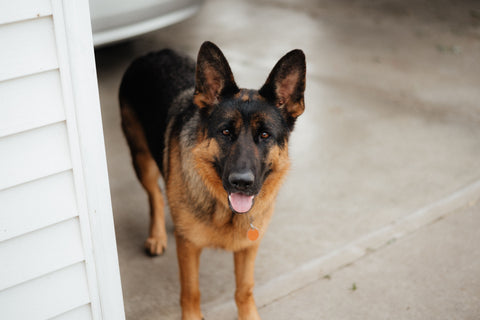 Puppy GrowthGerman Shepherd Puppy Joint Development: What to Do From 8 Weeks to 18 Months8 min read
-
 Puppy GrowthLab and Golden Retriever Growth Plate Window (2026)14 min read
-
 Itch & YeastThe 7 Best Dog Yeast Infection Supplements Compared (2026 Review)14 min read
-
 Itch & YeastBest Supplements for French Bulldogs: What Actually Helps (And What's a Waste of Money)9 min read
-
 Itch & YeastBest Ear Infection Supplements for Dogs11 min read


