


Large Breed Puppy Growth: Joints & Bones
- The Growth Plate: Why Large Breed Puppies Are Uniquely Vulnerable
- Developmental Orthopedic Diseases: The Conditions You Are Trying to Prevent
- Nutrition for Controlled Growth: The Three Variables That Matter
- Exercise During Growth: How Much Is Safe?
- Joint Supplementation During the Growth Period
- Growth Plate Closure Timelines by Breed Size
- The Financial Case for Preventive Joint Support
- Frequently Asked Questions
A Golden Retriever puppy weighs about 1 pound at birth. By 12 months, that same puppy weighs 65 to 75 pounds. A Great Dane goes from under 2 pounds to over 100 pounds in the same timeframe. No other mammal on earth grows this fast relative to its birth weight — and no other developmental period in your dog's life is as consequential for their long-term joint health.
The decisions you make during the first 12 to 24 months — what you feed, how much exercise you allow, whether you provide targeted joint support, and when you spay or neuter — have permanent effects on your large breed puppy's skeletal development. Get it right, and you set the foundation for a lifetime of comfortable mobility. Get it wrong, and you create conditions for hip dysplasia, elbow dysplasia, osteochondritis dissecans, and other developmental orthopedic diseases that are expensive to treat and impossible to fully reverse.
- Large and giant breed puppies grow faster and longer than small breeds, keeping growth plates open — and vulnerable — until 14 to 24 months of age.
- Many developmental orthopedic diseases have significant environmental components: nutrition, exercise, and growth rate can all be managed by the owner.
- Excess calcium supplementation on top of a balanced puppy food is actively harmful and a leading cause of growth plate damage.
- The 5-minutes-per-month-of-age rule governs safe structured exercise until growth plates close.
- A growth-stage joint supplement (not an adult formula) is most valuable starting at 8 to 12 weeks for large breeds.
- Size is not maturity — a puppy that looks full-grown at 10 months may still have open growth plates for another 4 to 8 months.
The Growth Plate: Why Large Breed Puppies Are Uniquely Vulnerable
Every bone in your puppy's body grows from specialized regions called growth plates (physes) — areas of actively dividing cartilage located near the ends of long bones. New cartilage cells are continuously produced at the growth plate, then gradually convert to bone through a process called endochondral ossification. This is how bones get longer and joints take their final shape.
Growth plates are softer and more flexible than mature bone. They are the weakest point in the developing skeleton — weaker than the surrounding bone, weaker than the ligaments, and weaker than the tendons that attach muscles to the skeleton. This means that forces which would strain a ligament in an adult dog can fracture or damage a growth plate in a puppy.
In large and giant breed puppies, the stakes are amplified by two factors. First, these puppies grow faster and for a longer period than small breeds — their growth plates remain open (unfused) until 14 to 24 months of age, compared to 8 to 12 months for small breeds. This means the window of vulnerability is longer. Second, the puppy's body weight is increasing rapidly during this entire period, placing progressively greater mechanical load on growth plates that are still cartilaginous and not yet fully ossified.
The combination of prolonged vulnerability and increasing body weight load is why large breed puppies account for the overwhelming majority of developmental orthopedic disease diagnoses in veterinary medicine.
Learn more: Growth Plates in Puppies: Large Breed Owner Guide →
Developmental Orthopedic Diseases: The Conditions You Are Trying to Prevent
Developmental orthopedic disease (DOD) is an umbrella term for conditions that arise from abnormal bone and cartilage development during the growth period. The most common DODs in large and giant breed puppies include:
Hip Dysplasia
Abnormal development of the hip joint where the femoral head (ball) does not fit properly in the acetabulum (socket). The most common orthopedic condition in large breed dogs. Has both genetic and environmental components — meaning you cannot fully prevent it through genetics alone, but you can significantly influence its severity through management during the growth period.
Elbow Dysplasia
A group of three conditions (fragmented coronoid process, osteochondritis dissecans of the medial condyle, and ununited anconeal process) affecting the elbow joint. Causes front-leg lameness and progressive arthritis. Most common in German Shepherds, Labrador Retrievers, Rottweilers, and Golden Retrievers.
Osteochondritis Dissecans (OCD)
A condition where a flap of cartilage separates from the underlying bone in a developing joint, typically the shoulder, elbow, stifle, or hock. Caused by abnormal endochondral ossification during rapid growth. OCD is directly linked to nutrition: excess calcium, excess calories, and too-rapid growth rates increase risk significantly.
Panosteitis (Growing Pains)
Inflammation of the long bone shafts causing shifting leg lameness in puppies aged 5 to 18 months. Self-limiting but painful and concerning for owners. Most common in German Shepherds, Great Danes, and other large breeds.
Hypertrophic Osteodystrophy (HOD)
Inflammation near the growth plates causing swelling, pain, and fever. A serious condition that can cause permanent growth plate damage if severe. Linked to nutritional imbalances, particularly excess calcium supplementation.
Many of these conditions are not purely genetic. They have significant environmental components — nutrition, exercise, and growth rate — that owners can directly influence. Your management decisions during the growth period have lasting consequences.
Protect Your Puppy's Developing Joints
MoveGuard Growth is specifically formulated for the unique joint development needs of large and giant breed puppies aged 8 to 24 months.
Shop MoveGuard Growth →Nutrition for Controlled Growth: The Three Variables That Matter
Nutrition during the growth period is not about maximizing growth. It is about controlling growth rate while ensuring adequate nutrient delivery for proper skeletal development. Growing too fast is more dangerous than growing too slowly.
Caloric Intake — The Most Important Factor
Excess calories accelerate growth rate. Accelerated growth means the skeleton is carrying more weight than it was designed to support at that stage of development, and the growth plates are ossifying under conditions of mechanical overload. Multiple studies have demonstrated that calorie restriction (not deprivation — controlled intake at moderate levels) significantly reduces the incidence and severity of hip dysplasia and other DODs in large breed puppies.
Learn more: Large Breed Puppy Nutrition: Why Getting It Wrong Damages Joints →
Calcium and Phosphorus Balance
This is where well-intentioned owners cause the most damage. Calcium is essential for bone development. But excess calcium is actively harmful to growing large breed puppies. Unlike adult dogs, puppies under 6 months cannot downregulate calcium absorption — they absorb virtually all the calcium they consume, and excess calcium disrupts the orderly process of cartilage-to-bone conversion at the growth plates.
Do NOT add calcium supplements to a balanced large breed puppy food. The food already contains the correct amount. Adding more does not make bones stronger — it disrupts the growth plate biology that makes bones form correctly. If you are feeding a balanced large breed puppy formula, the calcium is already right. Leave it alone.
Protein Quality and Level
Unlike calcium and calories, moderate to high protein levels (26 to 30 percent) are safe and beneficial for large breed puppies. Protein supports muscle development around the joints, provides the amino acid building blocks for cartilage and connective tissue, and does not contribute to the metabolic factors that drive DOD. The outdated advice to feed low-protein diets to large breed puppies has been disproven — the issue was always calories and calcium, not protein.
Exercise During Growth: How Much Is Safe?
Exercise is essential for puppies — it builds muscle that stabilizes developing joints, promotes cardiovascular fitness, and provides the mental stimulation that large breed puppies desperately need. But the type and amount of exercise must be calibrated to the puppy's developmental stage.
5 minutes of structured exercise per month of age, up to twice daily. A 4-month-old puppy gets 20 minutes per walk, twice daily. A 6-month-old gets 30 minutes. This applies to structured, on-leash exercise — not to self-directed free play, which puppies regulate naturally.
What Is and Isn't Safe
Learn more: Exercise for Large Breed Puppies: How Much Is Safe? →
Not Sure Where to Start?
Take the free Joint & Mobility Clock. Ten quick questions about your dog, and you get a named stage, the four things loading your dog's joints, and a plan sized to your dog's weight. No email needed to see your result.
Take the Joint & Mobility Clock →Joint Supplementation During the Growth Period
Should you give your large breed puppy a joint supplement, and if so, when? The short answer is yes — but it must be the right supplement designed for developing joints, not an adult joint supplement applied to a puppy.
Adult joint supplements are formulated for cartilage maintenance and inflammation management in mature joints. Puppy joint development supplements are formulated to support the growth plate biology, collagen synthesis, and connective tissue formation that are unique to the developmental period. The nutrient requirements are different because the biological process is different.
Glucosamine HCl for cartilage matrix support, MSM for anti-inflammatory and connective tissue benefit, omega-3 fatty acids (EPA/DHA) for inflammation modulation, vitamin C for collagen synthesis, and manganese for cartilage and bone development. The supplement should specifically exclude excess calcium — which belongs in the food, not the supplement.
For large breed puppies, supplementation is most valuable starting at 8 to 12 weeks of age, when the most rapid growth phase begins. For giant breed puppies (Great Danes, Mastiffs, Saint Bernards), starting at 8 weeks is ideal because their growth rate is the most extreme and the developmental window is the longest.
Learn more: When to Start Joint Supplements for Large Breed Puppies →
Growth Plate Closure Timelines by Breed Size
Growth plates close (fuse) at different ages depending on the bone location and the breed size. Larger breeds close later, extending the window of vulnerability:
| Breed Size | Adult Weight | Approximate Closure Age |
|---|---|---|
| Small breeds | Under 20 lbs | 8–12 months |
| Medium breeds | 20–50 lbs | 10–14 months |
| Large breeds | 50–90 lbs | 12–18 months |
| Giant breeds | 90+ lbs | 14–24 months |
A 10-month-old German Shepherd may look full-grown but still have open growth plates that will not close for another 4 to 8 months. Radiographic confirmation of growth plate closure by your vet is the gold standard for determining when high-impact exercise is safe.
Learn more: How Fast Should Your Large Breed Puppy Grow? Growth Rate Charts and Warning Signs →
The Financial Case for Preventive Joint Support
The cost of managing developmental orthopedic diseases after they develop is staggering:
- TPLO surgery for a torn cruciate ligament: $3,000–$6,000 per knee (bilateral tears are common)
- Femoral head osteotomy (FHO) for severe hip dysplasia: $2,000–$4,000
- Total hip replacement: $5,000–$7,000 per hip
- Lifelong joint medication management (NSAIDs, physical therapy, prescription supplements): $600–$2,000 annually
The cost of prevention — a large breed puppy food, appropriate exercise management, and a daily joint development supplement for 12 to 24 months — is a small fraction of a single surgical intervention. This is not a hypothetical comparison. It is the financial reality that large breed owners face, and the math overwhelmingly favors the preventive approach.
Support Your Puppy's Growing Joints From Day One
MoveGuard Growth is formulated specifically for the developmental needs of large and giant breed puppies aged 8–24 months. Antarctic Krill Oil, Glucosamine HCl, OptiMSM®, and Manganese in a daily chew.
Shop MoveGuard Growth →Frequently Asked Questions
Hip dysplasia has a strong genetic component — breeding from screened parents reduces risk significantly. But it also has substantial environmental components. Studies have shown that caloric restriction during growth reduces hip dysplasia severity even in genetically predisposed dogs. Controlled growth rate, appropriate exercise, proper nutrition, and joint supplementation during development do not eliminate genetic risk, but they meaningfully reduce the likelihood and severity of clinical disease. Management and genetics are both factors, and you can influence the management side.
A balanced large breed puppy food provides the baseline nutritional requirements for growth. Joint supplements add targeted compounds (glucosamine, MSM, omega-3s) at concentrations above what even the best food delivers. Think of it this way: a good diet is the foundation. A targeted supplement is the additional support during the most demanding phase of skeletal development. Both matter. Neither fully replaces the other.
The transition should occur when growth plates have closed — which varies by breed size (12–18 months for large breeds, 14–24 months for giant breeds). Radiographic confirmation from your vet is the most reliable way to determine this. Once growth plates are closed, the developmental support period is over and the maintenance period begins. MoveGuard Growth transitions to MoveGuard Adult at this milestone.
The Bottom Line
The first 12 to 24 months of a large breed puppy's life are the most consequential for their long-term joint health. The decisions you make now — controlled nutrition, appropriate exercise, and targeted joint supplementation — pay dividends across the dog's entire 10-to-14-year lifespan.
You cannot change your puppy's genetics. But you can create the conditions under which those genetics produce the best possible outcome. That is the entire purpose of this guide and the product built to support it.
For the science behind growth plates, read Growth Plates in Puppies. For breed-specific growth timelines, start with German Shepherd Puppy Joint Development or Golden Retriever Puppy Growth and Joint Protection. For supplement comparisons, see Best Joint Supplements for Large Breed Puppies or MoveGuard vs. MoveGuard Growth.
Where is your dog on the joint clock?
Ten questions about your dog. You get a named stage, the four things loading your dog's joints, a 30-day check-in date, and a plan sized to your dog's weight.
- 1Your dog's joint stage, named and scored
- 2The four things loading the joints
- 3A plan sized to your dog's weight, or a plain answer if no formula fits
Most read
-
 Puppy GrowthGerman Shepherd Hip Dysplasia Prevention18 min read
-
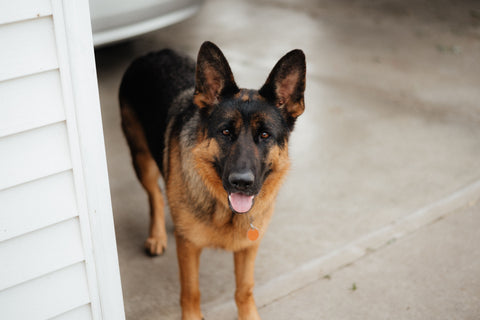 Puppy GrowthGerman Shepherd Puppy Joint Development: What to Do From 8 Weeks to 18 Months8 min read
-
 Puppy GrowthLab and Golden Retriever Growth Plate Window (2026)14 min read
-
 Itch & YeastThe 7 Best Dog Yeast Infection Supplements Compared (2026 Review)14 min read
-
 Itch & YeastBest Supplements for French Bulldogs: What Actually Helps (And What's a Waste of Money)9 min read
-
 Itch & YeastBest Ear Infection Supplements for Dogs11 min read


