


Appetite and Sleep Changes: Early Stress Signs
A change in appetite or sleep pattern is often the very first sign a cat is stressed, appearing before any body language changes or behavioral signals become obvious. Cats are creatures of routine, and stress disrupts the two most routine-dependent activities first: eating and resting. A single skipped meal or one restless night is not necessarily meaningful, but a genuine shift from a cat's established pattern, especially one that persists, is worth paying attention to.
By the time a Cat Parent notices hiding, aggression, or a litter box change, stress has often been building for a while. Appetite and sleep changes tend to arrive earlier and more quietly, which makes them a useful early signal, if you know to watch for them.
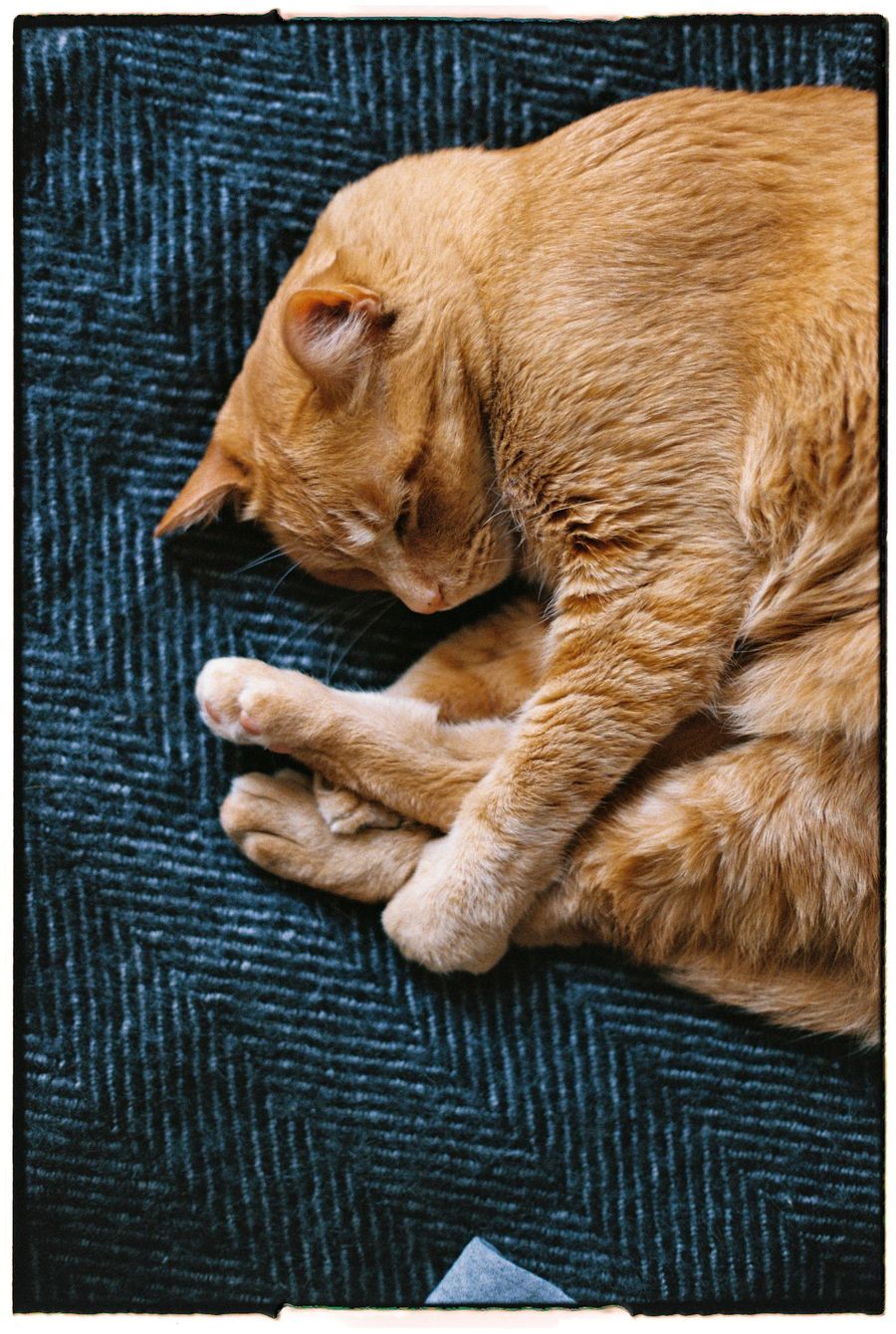
A cat's eating and sleeping routine is often the first thing to shift when something in their environment feels off.
Why These Are Often the First Signs
Cats are highly routine-oriented animals, and eating and sleeping are two of the most consistent, predictable parts of that routine for most cats. Because these behaviors are so deeply patterned, even a subtle stressor can disrupt them before it becomes intense enough to trigger a more visible behavioral response like hiding or aggression. This makes appetite and sleep changes a genuinely useful early warning signal, since they often surface before the more commonly recognized signs of stress do.
What Appetite Changes Look Like
Eating less, or more slowly, than usual
A cat who normally finishes a meal promptly but starts leaving food, eating in smaller portions, or approaching the bowl with less enthusiasm than their established pattern.
Increased begging or food-seeking behaviour
Less common than reduced appetite, but some cats respond to stress with increased food interest, sometimes as a self-soothing behaviour, worth noting as a change from their own baseline just as much as reduced appetite is.
What Sleep Changes Look Like
Restlessness during normal sleep hours
A cat who typically settles into a predictable nap schedule showing more waking, repositioning, or general restlessness during those same hours than usual.
Sleeping notably more, or seeking out new sleeping spots
Increased sleep can be a withdrawal response to stress, and a cat suddenly favouring a new, more hidden sleeping location than their usual spot is worth noting alongside any other changes.
A single off day rarely means much on its own. What matters is comparing against the individual cat's own established pattern over time, and noticing when a change persists rather than resolving within a day or two.
When These Signs Warrant a Vet Visit
Appetite and sleep changes are not exclusive to stress. They can also be early signs of an underlying medical condition, which is why a persistent change, especially one lasting more than a day or two, or a complete refusal to eat, warrants a veterinary visit rather than an assumption that stress is the cause. A veterinarian can help distinguish between a behavioral stress response and a medical issue presenting with similar early signs.
Restore the Peace
Pawganix CalmGuard: diffuser, 3 refills, and a bonus calming collar. Soothes the stress behind unwanted behavior.
Shop NowNot Sure What Your Cat Needs?
Take the free Calm Home Audit. Ten quick questions about your cat and your home, and you get the pattern named, the four things behind it, and how many rooms need covering. No email needed to see your result.
Take the Calm Home Audit →Frequently Asked Questions
It can be. Appetite changes are often one of the earliest signs of stress, since eating routine is highly patterned for most cats and is easily disrupted even by a subtle stressor. A persistent change, or a complete refusal to eat, also warrants a veterinary visit to rule out a medical cause.
Increased sleep can be a withdrawal response to stress, while restlessness during normal sleep hours can reflect an unsettled state. Both are meaningful mainly as a change from the individual cat's own established pattern, not as an absolute amount of sleep.
If the change persists for more than a day or two, or your cat refuses to eat entirely, a veterinary visit is warranted. These signs can reflect a medical condition as well as stress, and a veterinarian can help distinguish between the two.
This content is for informational purposes only and is not a substitute for professional veterinary advice. A persistent change in appetite or sleep, or a complete refusal to eat, warrants a veterinary evaluation to rule out an underlying medical cause.
What is unsettling your cat?
Ten questions about your cat and your home. You get the pattern named, the four things behind it, how many rooms need covering, and a 30-day check-in date.
- 1The pattern, named, and the four things behind it
- 2How many rooms and floors need covering
- 3A plan sized to your home, and when the collar earns its place
Most read
-
 CatsMulti-Cat Household Stress: Why Your Cats Fight and How Pheromones Can Help8 min read
-
 CatsCat Vomiting: Hairballs or Gut Problem?6 min read
-
 CatsSeparation Anxiety in Cats7 min read
-
 CatsCat Calming Collars, Diffusers & Sprays7 min read
-
 CatsFeliway vs Pawganix: Cat Calming Compared7 min read
-
 CatsCat Anxiety: The Complete Guide to Causes, Symptoms, and Solutions9 min read


