


What Is Canine Hip Dysplasia?
- What Is Canine Hip Dysplasia?
- How Hip Dysplasia Forms — The Developmental Biology
- Causes and Risk Factors
- Which Breeds Are Most Affected
- Symptoms by Life Stage
- The Three Severity Stages
- How Hip Dysplasia Is Diagnosed
- Treatment Options
- Prevention During the Growth Window
- MoveGuard Growth: Nutritional Support During the Critical Window
- Frequently Asked Questions
What Is Canine Hip Dysplasia?
Canine hip dysplasia is a developmental orthopedic condition in which the hip joint fails to form correctly during puppyhood, resulting in a poor fit between the femoral head (the ball) and the acetabulum (the socket). This malformation causes abnormal joint laxity, progressive cartilage wear, inflammation, and eventually osteoarthritis. It is one of the most common musculoskeletal conditions in large and giant breed dogs, with a significant genetic component — but environmental and nutritional factors during the growth window meaningfully influence how severely the condition expresses.
Hip dysplasia is arguably the most discussed health condition in large breed dog ownership — and also one of the most misunderstood. Many owners know the name and the fear, but not the mechanics: how it actually forms, what stage they might be looking at, how it is properly diagnosed, and what can genuinely be done about it.
This guide covers all of it — from the biology of how hip dysplasia develops in a growing puppy through to the full range of treatment options and the prevention protocol that is most effective during the growth window. It serves as the foundational reference for all breed-specific hip dysplasia content on this blog.
- Canine hip dysplasia is a developmental condition — it forms during puppyhood, not at birth
- It has a significant genetic component, but body weight, growth rate, exercise, and nutrition during the growth window all influence severity
- Large and giant breeds are disproportionately affected — German Shepherds, Labradors, Golden Retrievers, and Great Danes carry the highest documented risk
- Symptoms range from subtle gait changes in puppies to significant mobility impairment in older dogs — early recognition matters
- Diagnosis requires radiographic evaluation — clinical signs alone are not sufficient
- Treatment ranges from conservative management (weight control, exercise modification, supplementation, NSAIDs) to surgical correction in appropriate candidates
- The growth window (8 weeks to 18–24 months) is the primary opportunity to reduce the severity of expression through nutritional support and exercise management
How Hip Dysplasia Forms — The Developmental Biology
Understanding how hip dysplasia forms — rather than treating it as something a dog either "has" or "doesn't have" — is the insight that changes how owners approach prevention and management.
The hip joint is a ball-and-socket joint. In a normally developed hip, the femoral head (the rounded top of the thigh bone) fits snugly and congruently into the acetabulum — the cup-shaped socket of the pelvis. The joint surfaces are covered with smooth articular cartilage and lubricated by synovial fluid, allowing fluid, pain-free movement through a full range of motion.
In a dysplastic hip, this fit is imperfect. The femoral head may be flattened, the acetabulum too shallow, or the soft tissue structures (joint capsule, round ligament) insufficient to hold the joint congruently together during movement. The result is hip laxity — abnormal looseness in the joint — that causes the femoral head to shift within, or partially out of, the socket during normal movement.
This laxity is the engine of damage. As the hip moves abnormally, the articular cartilage covering the femoral head and acetabular surfaces experiences uneven loading, erosion, and progressive breakdown. The body responds with inflammation, bone remodelling, and the development of periarticular osteophytes (bone spurs). Over time, this process produces the chronic pain and mobility impairment of osteoarthritis.
Hip dysplasia does not exist fully formed at birth in most dogs. The malformation develops progressively during the growth window — during the period when the femoral head and acetabulum are still growing and hardening simultaneously. This is why the growth window is the primary intervention point: joint architecture is still under construction, and the construction environment can be influenced.
The growth window during which hip dysplasia formation is most active runs from approximately 8 weeks (when most puppies come home) to 18–20 months in large breeds and up to 24–30 months in giant breeds, when growth plates finally close and skeletal development is complete.
Causes and Risk Factors
Hip dysplasia results from the interaction of multiple factors — it is not caused by any single variable. Understanding each modifiable risk factor is what enables effective prevention.
Genetic predisposition
The most significant single risk factor. Hip dysplasia has polygenic inheritance — multiple genes are involved — with a heritability estimate of approximately 0.25 to 0.45 depending on the study and breed. Dogs from parents with OFA Excellent or Good hip evaluations carry meaningfully lower risk than dogs from untested or poorly-rated parents, but genetic risk cannot be eliminated through screening alone.
Rapid growth rate
The faster a puppy grows, the greater the mechanical stress on developing hip joints. Large and giant breed puppies that gain weight rapidly — particularly in the 3 to 6 month window — are at highest risk. This is why large breed specific puppy food, which has lower energy density and calibrated calcium levels to slow growth rate to an appropriate pace, matters so much during this window.
Excess body weight during growth
Closely related to growth rate, but distinct. A puppy can grow at an appropriate rate while still being overweight if energy intake consistently exceeds expenditure. Every excess kilogram a developing puppy carries amplifies the compressive load on the femoral head and acetabular cartilage during normal movement. Maintaining lean body condition during the growth window is one of the highest-leverage interventions available to owners.
Exercise type and load during the growth window
High-impact, repetitive exercise during the growth window — long runs on hard surfaces, repetitive ball throwing with abrupt direction changes, jumping — creates mechanical loading patterns that dysplastic or lax hip joints cannot accommodate safely. Exercise restriction to appropriate levels (the 5-minute per month of age guideline) during the growth window is protective. Low-impact exercise (swimming, controlled walking on soft surfaces) is preferable to high-impact alternatives during this period.
Nutritional deficiency during joint development
If developing hip cartilage lacks adequate building blocks — glucosamine precursors, glycosaminoglycans, omega-3s for inflammatory regulation, collagen co-factors — the structural quality of the cartilage forming over the femoral head and lining the acetabulum may be compromised. This is the mechanism through which targeted joint supplementation during the growth window is expected to influence outcomes.
Breed and conformation
Large and giant breeds carry disproportionate risk by virtue of their rapid growth rate and the mechanical demands placed on their hips by their body mass. Within breeds, certain conformational traits — steep croup in show-line German Shepherds, for example — are associated with altered hip joint mechanics that compound dysplasia risk.
Which Breeds Are Most Affected
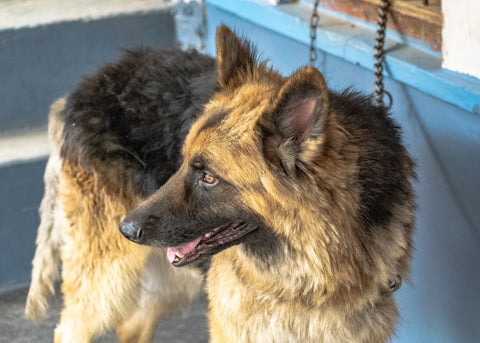
German Shepherd — The breed most synonymous with hip dysplasia in veterinary literature. OFA data shows among the highest prevalence rates of any commonly screened breed. See: German Shepherd Hip Dysplasia Prevention Guide.
Labrador Retriever — Consistently among the top breeds in OFA hip dysplasia screening data. Elbow dysplasia is equally prevalent. See: Labrador Retriever Joint Health: The Complete Guide.
Golden Retriever — High prevalence of both hip and elbow dysplasia, compounded by CCL disease and OCD risk. See: Golden Retriever Puppy Joint Health: The Complete Guide.
Great Dane — The most rapidly growing giant breed. Growth window extends to 24–30 months, providing the longest period of developmental exposure to mechanical loading.
Rottweiler — Documented high prevalence of both hip and elbow dysplasia. The breed's compact, muscular build combined with rapid growth creates significant joint loading during development.
Bernese Mountain Dog — High prevalence, compounded by a shorter than average lifespan in which orthopedic disease plays a significant role. Growth window extends to 18–24 months.
St. Bernard / Newfoundland / Mastiff — Giant breed group with extended growth windows and very high body mass during development. Hip dysplasia is a primary health concern in all three.
Boxer / Bulldog / Bullmastiff — Brachycephalic and broader-build breeds with documented hip dysplasia prevalence. The compact, low-slung build can place the hip joint in mechanically disadvantaged positions.
Symptoms by Life Stage
Hip dysplasia presents differently depending on the dog's age and the severity of the joint malformation. Recognising it early — particularly in puppies — requires knowing what to look for at each stage.
In puppies (4–18 months)
- Bunny hopping gait — both rear legs moving forward together when running, rather than alternating; the most recognised early sign
- Reluctance to rise — difficulty standing from a lying position, particularly after rest
- Narrow rear stance — rear legs held closer together than normal as a compensatory posture
- Reduced rear end engagement — the puppy appears to push primarily from the front legs during movement
- Pain response to hip manipulation — resistance when the hip joint is extended or internally rotated during examination
- Intermittent or one-sided rear limb lameness — often subtle and weather-dependent
German Shepherds, Labradors, and Golden Retrievers are among the most stoic breeds — they frequently continue playing and appearing enthusiastic even when experiencing significant hip discomfort. Behavioural changes (reduced drive, reluctance to engage in favourite activities, altered gait) are more reliable signals than expressions of pain in these breeds.
In young adults (2–4 years)
- Progressive stiffness after rest — becoming more pronounced and longer-lasting as secondary arthritis develops
- Muscle atrophy in the rear quarters — the body offloads the painful hip muscles over time
- Decreased willingness to exercise, jump, or climb stairs
- Altered rear gait — swaying, asymmetric, or short-strided movement in the hind limbs
- Clicking or crunching sounds from the hip joint during movement in some dogs
In older dogs (5+ years)
- Significant morning stiffness — often the most noticeable presenting complaint in older dogs
- Difficulty with stairs, getting into vehicles, or rising from the floor
- Visible muscle wasting in the hindquarters
- Intermittent to persistent rear limb lameness
- Palpable or visible swelling and osteophyte formation around the hip joint in severe cases
- Personality changes — irritability, withdrawal, reduced tolerance for handling — as chronic pain becomes the background condition
Is Your Dog in the Growth Window?
Take the free Joint & Mobility Clock. Ten quick questions about your dog, and you get a named stage, the four things loading your dog's joints, and a plan sized to your dog's weight. No email needed to see your result.
Take the Joint & Mobility Clock →The Three Severity Stages
Mild Hip Dysplasia
Radiographs show some incongruence between the femoral head and acetabulum, mild joint laxity, and minimal or no secondary arthritic changes. The dog may show intermittent, subtle signs — occasional stiffness, slightly altered rear gait, some reluctance after heavy exercise — or may be entirely asymptomatic.
Moderate Hip Dysplasia
Radiographs show significant joint incongruence, measurable joint laxity, and early to moderate secondary arthritic changes — osteophyte development, subchondral bone sclerosis, or acetabular remodelling. Clinical signs are more consistent: regular stiffness, visible rear gait abnormality, reduced exercise tolerance, difficulty with stairs.
Severe Hip Dysplasia
Radiographs show gross joint incongruence, severe laxity, extensive secondary arthritic change, and often significant muscle atrophy. The dog shows persistent, significant mobility impairment — difficulty rising, near-constant stiffness, unwillingness to bear weight on one or both rear limbs in the most severe cases.
How Hip Dysplasia Is Diagnosed
Clinical signs — gait abnormalities, pain on manipulation, stiffness — are sufficient reason to seek veterinary assessment, but they are not sufficient to diagnose hip dysplasia or determine its severity. Radiographic evaluation is required.
Standard OFA radiographs
The Orthopedic Foundation for Animals (OFA) evaluates hip radiographs and rates them on a scale from Excellent to Severely Dysplastic. OFA evaluation requires the dog to be at least 24 months old for a final rating (preliminary evaluations can be done earlier). The dog is positioned on its back with the rear limbs extended — a position that requires sedation or general anaesthesia for accurate positioning in dogs that are uncomfortable.
PennHIP evaluation
A more sensitive and earlier diagnostic method than OFA. PennHIP uses a distraction technique to measure actual hip laxity — the degree to which the femoral head can be mechanically distracted from the acetabulum. It can be performed from 16 weeks of age, providing the earliest meaningful assessment of hip laxity during the growth window. A high distraction index (DI) on PennHIP indicates elevated laxity and risk — allowing earlier intervention decisions.
Clinical examination findings
Your vet may find: positive Ortolani sign (a click or clunk felt when the hip is reduced from a subluxated position), restricted range of hip motion, pain on hip extension, muscle atrophy of the gluteal muscles, and a swaying rear gait. These findings point toward hip dysplasia but require radiographic confirmation for staging and treatment planning.
Treatment Options
There is no cure for hip dysplasia — but there is a broad spectrum of management options ranging from conservative to surgical, matched to the dog's age, severity, and quality of life impact.
| Approach | Best For | What It Does |
|---|---|---|
| Weight management | All dogs with hip dysplasia | Single highest-leverage conservative intervention — reduces compressive load on the hip joint |
| Exercise modification | All dogs with hip dysplasia | Low-impact exercise (swimming, controlled walking) maintains muscle mass without joint overloading |
| Joint supplementation | All stages, all ages | Supports cartilage health, inflammatory regulation, and synovial fluid quality — growth window and adult maintenance |
| NSAIDs | Moderate-to-severe, flare management | Anti-inflammatory and analgesic — manage acute flares and chronic pain; long-term use requires monitoring |
| Physiotherapy / Hydrotherapy | All stages | Maintains muscle mass, improves range of motion, reduces pain — water-based therapy is particularly effective |
| Triple Pelvic Osteotomy (TPO) | Young dogs, mild-moderate, before arthritis | Rotates the acetabulum to improve femoral head coverage — most effective before secondary arthritic changes develop |
| Total Hip Replacement (THR) | Severe, any age with appropriate bone stock | Best long-term functional outcome for severe cases — replaces the entire hip joint with prosthetic components |
| FHO / FHNE | Smaller dogs, THR not feasible | Removes the femoral head — creates a false joint (pseudarthrosis); less predictable in large breeds |
Prevention During the Growth Window
Prevention cannot eliminate the genetic component of hip dysplasia. What it can do is influence how severely that genetic predisposition expresses — which, in practice, can be the difference between a dog that lives comfortably and one that requires surgery at three years old.
Large Breed Specific Puppy Food
Controls growth rate and provides appropriate calcium-to-phosphorus ratios to support bone and joint development without acceleration. Feed the large breed formula from 8 weeks to 18 months minimum — not generic puppy food and not high-energy working dog formulas.
Lean Body Condition Throughout Growth
The most impactful single conservative intervention. Monthly body condition scoring (ribs easily felt, visible waist from above, abdominal tuck from the side) prevents the accumulation of excess body weight that multiplies hip joint loading during development.
Exercise Management: 5 Minutes Per Month of Age
Structured exercise limited to 5 minutes per month of age, twice daily. No repetitive high-impact activities — forced running, ball throwing, jumping — until growth plates close at 18–20 months in large breeds. See: Exercise for Large Breed Puppies: How Much Is Safe?
Joint Supplementation from 8 Months
Daily supplementation with glucosamine, chondroitin, NZ green-lipped mussel, MSM, and krill oil from 8 months through to the closure of the growth window provides cartilage building blocks and inflammatory regulation during the highest-leverage developmental period. For large breeds, this means starting at 8 months and continuing through to MoveGuard Adult transition at 20–24 months.
PennHIP at 16 Weeks, OFA at 24 Months
Early PennHIP screening at 16 weeks identifies dogs with elevated hip laxity and allows earlier, more intensive prevention focus. OFA evaluation at 24 months provides the definitive assessment of the hip architecture developed. Both are tools — not sentences. A positive finding is a reason to intensify management, not abandon hope.
MoveGuard Growth: Nutritional Support During the Critical Window
MoveGuard Growth is vet-reviewed and built specifically for the 8–30 month large and giant breed growth window — the period during which hip joint architecture is under active development and most responsive to nutritional support.
For dogs at risk of hip dysplasia, the formula's nine fully-disclosed active ingredients address the nutritional requirements of developing hip joint tissue directly: Glucosamine HCl (400mg) and Chondroitin Sulfate (300mg) provide structural cartilage building blocks; NZ Green-Lipped Mussel (250mg) delivers unique ETA omega-3s and natural glycosaminoglycans; MSM (250mg) and Antarctic Krill Oil (150mg) support a balanced inflammatory environment; Hyaluronic Acid (15mg) supports synovial fluid in the forming joint space; and Vitamin C (50mg) and Manganese (2mg) provide the collagen and connective tissue co-factors essential for high-quality cartilage formation.
Every dose is printed on the label — no proprietary blends. Real chicken liver soft chews for voluntary daily compliance. Made in a GMP/NSF facility in the USA. Backed by a 60-Day Guarantee.
After the growth window closes, transition to MoveGuard Adult — the same brand's maintenance formula for the now-developed joints your dog will rely on for the rest of their life.
Canine hip dysplasia is a developmental condition shaped by genetics and environment in roughly equal measure. Genetics cannot be changed — but the developmental environment can be. The growth window is the window. Nutritional support during that window is one of the most effective tools owners have.
Support the Joint Architecture That's Being Built Right Now
Vet-reviewed for the 8–30 month large breed growth window. Every ingredient dose on the label. Real chicken-liver soft chews for daily compliance.
MoveGuard Growth — joint supplement for large breed puppies →Frequently Asked Questions
Canine hip dysplasia is a developmental condition in which the hip joint fails to form correctly during puppyhood. The femoral head (ball) does not fit properly into the acetabulum (socket), causing joint laxity, cartilage damage, and progressive osteoarthritis. It has a significant genetic component but is also influenced by growth rate, body weight, exercise management, and nutritional support during the growth window.
Many big-dog parents start daily joint support early in the growth window — an ideal starting point is around 8 months, when the frame is growing fast and the joints are still forming. It's a start-early choice, not a wait-and-see one.
If your dog is a large or giant breed still growing (roughly 8–30 months), choose MoveGuard Growth. If your dog is a grown adult (24+ months), medium or large breed, choose MoveGuard Adult. The comparison above breaks it down by age, size, and goal.
Yes — that's the idea. Most dogs graduate from MoveGuard Growth to MoveGuard Adult around 24 months, once they're fully grown. Same brand, same transparency, calibrated for the new stage.
New Zealand Green-Lipped Mussel in both formulas, every dose printed on the label, vet-reviewed and stage-specific, made in a GMP/NSF facility in the USA, and backed by a 60-Day Guarantee.
Related Reading
- Signs of Hip Dysplasia in Dogs: Early Symptoms Every Owner Should Know
- Is Hip Dysplasia in Dogs Genetic or Preventable? What Research Says
- German Shepherd Hip Dysplasia Prevention: What Owners Need to Know
- Labrador Retriever Joint Health: The Complete Guide for Puppy Owners
- Golden Retriever Puppy Joint Health: The Complete Guide
- Joint Supplement for Large Breed Puppies: What to Look For in 2026
- Do Joint Supplements for Dogs Actually Work? What the Evidence Shows
- Exercise for Large Breed Puppies: How Much Is Safe?
- Large Breed Puppy Nutrition: Why Getting It Wrong Damages Joints
- Growth Plates in Puppies: Large Breed Owner Guide
* These statements have not been evaluated by the Food and Drug Administration. This product is not intended to diagnose, treat, cure, or prevent any disease. Always consult your veterinarian before starting your dog on a new supplement, particularly if your dog is on medication or has an existing health condition. If your dog is showing signs of joint pain, lameness, or mobility impairment, seek veterinary assessment — clinical signs alone are not sufficient to diagnose hip dysplasia.
Where is your dog on the joint clock?
Ten questions about your dog. You get a named stage, the four things loading your dog's joints, a 30-day check-in date, and a plan sized to your dog's weight.
- 1Your dog's joint stage, named and scored
- 2The four things loading the joints
- 3A plan sized to your dog's weight, or a plain answer if no formula fits
Most read
-
 Adult JointsNSAIDs for Dog Joint Pain: Benefits, Risks, and What Else You Should Know9 min read
-
 Adult JointsDog Limping: A Diagnostic Guide to What's Causing It and When to Worry8 min read
-
 Itch & YeastThe 7 Best Dog Yeast Infection Supplements Compared (2026 Review)14 min read
-
 Itch & YeastBest Supplements for French Bulldogs: What Actually Helps (And What's a Waste of Money)9 min read
-
 Itch & YeastBest Ear Infection Supplements for Dogs11 min read
-
 Itch & YeastYeastGuard vs. Zesty Paws Aller-Immune Bites: Ingredients, Results, and Value Compared10 min read


