


Puppy Hip Dysplasia Diagnosis Guide
You're not alone — this guide was written for you.
A hip dysplasia diagnosis on a young dog is not a verdict — it's a spectrum, and the first 7 days set up the next 90. Request the radiograph files. Get a second opinion from an ACVS board-certified surgeon. Stabilise the routine — cap impact exercise, maintain lean BCS 4/9, and begin targeted joint supplementation appropriate for the growth-plate window. Conservative management is a valid first path for many mild-to-moderate cases. Surgery (TPLO, JPS, FHO, THR) is a decision typically revisited at 18–24 months after the window closes, not in the diagnosis week.
A young-dog hip dysplasia diagnosis is a spectrum, not a verdict. Conservative management — weight management, controlled exercise, physical therapy, and targeted supplementation — is the first path for many mild-to-moderate cases. Surgery decisions are typically revisited at 18–24 months. The growth-plate window means the next 90 days matter: here is the vet-reviewed action plan.
- First, Breathe — What the Diagnosis Actually Means
- The First 7 Days After Diagnosis
- Surgery vs. Conservative Management
- Non-Surgical Management: The 5 Pillars
- Where Joint Supplementation Fits
- The 90-Day Reassessment Milestones
- Talking to Your Vet About Supplementation
- Honest Comparison: Dasuquin, Cosequin DS, MoveGuard Growth
- A Composite Story: "Bella," 14 Months
- FAQ
The diagnosis came back and the word on the report is dysplastic. You're sitting with your dog — who is running and playing and acting completely normal — and you're reading a radiograph report that describes joint abnormalities. This is one of the most disorienting moments in large-breed dog ownership, and it happens to tens of thousands of families every year.
The most important thing to understand first: a hip dysplasia diagnosis is not a sentence. It is a description of where your dog's hips are right now — and if your dog is still inside the growth-plate window (roughly 8–30 months), there is still meaningful ground to work with.
← Back to the complete Growth-Plate Window guide
First, Breathe — What the Diagnosis Actually Means
Understanding OFA grades
The OFA (Orthopedic Foundation for Animals) uses a 7-point grading scale. Three grades fall within normal limits and receive OFA numbers. Four grades describe varying degrees of dysplasia. Here is what each means in plain language:
Superior hip conformation — deep femoral head seating, minimal joint space, excellent coverage.
Well-formed congruent joint. Ball fits well into socket with good coverage. Within normal limits.
Minor irregularities. Slightly wider joint space. Still within normal limits for some breeds.
Inconclusive — may be requested to resubmit at a later age for definitive grading.
Significant subluxation. Shallow socket, increased joint space. Often no arthritic changes yet at this stage. Dogs under 24–30 months may be re-evaluated.
Ball barely seated in shallow socket. Secondary arthritic changes — remodelling, osteophytes. Conservative management or surgical evaluation warranted.
Ball partly or completely out of shallow socket. Marked arthritic changes. Surgical evaluation strongly recommended.
PennHIP scores explained
PennHIP measures distraction index (DI) — a quantitative score of hip laxity from 0.0 (no laxity) to 1.0 (maximum laxity). A DI above 0.50 is associated with elevated lifetime hip dysplasia risk. PennHIP can be performed as early as 16 weeks and is more predictive of adult hip status than OFA preliminary radiographs. If your diagnosis came from a PennHIP evaluation, the DI number is your actionable data — not a pass/fail verdict but a risk score to work with.
Why "dysplastic" is a spectrum, not a verdict
Published OFA data shows that up to 76% of severely dysplastic dogs with arthritis secondary to hip dysplasia are able to function and live comfortable, quality lives with conservative management. Mild and moderate cases — which make up the majority of young-dog diagnoses — have even better outcomes with early, consistent management during the growth-plate window. The grade you received today is not a ceiling for your dog's quality of life.
The First 7 Days After Diagnosis
Day 1 — Request the radiograph files
Ask your veterinarian for the DICOM files (the actual radiograph images) plus the OFA or PennHIP grading report. These are your files — you are entitled to them. You will need them for any second opinion and for all future orthopedic consultations.
Days 2–3 — Get a second opinion from an ACVS surgeon
Use the ACVS "Find a Surgeon" directory (acvs.org/find-a-surgeon) to locate a board-certified veterinary orthopedic surgeon. Submit your DICOM files for independent radiograph grading. A Diplomate of the American College of Veterinary Surgeons (DACVS) is the right specialist for this evaluation — not a general practitioner, not a referral to a non-specialist. If surgery is a possibility, you want this evaluation before making any decisions.
Days 4–5 — Stabilise the routine
Cap impact exercise immediately. No off-leash running on hard surfaces, no jumping from furniture, no stairs without support. Maintain lean BCS 4/9 — every excess pound amplifies force on the dysplastic joint. Begin targeted joint supplementation appropriate for the growth-plate window. See the growth-plate nutrition guide →
Days 6–7 — Document baseline
Video your dog's gait (walking and trotting, from behind and from the side), sit-to-stand mechanics, and stair behaviour if applicable. This baseline video is invaluable for later comparison — at Day 30, Day 60, and Day 90. Your eye will adapt to gradual change; video will not. Share the video with both your primary veterinarian and the ACVS surgeon.
Surgery vs. Conservative Management — An Honest Walk-Through
There are four main surgical options for canine hip dysplasia. None of them is appropriate to decide on in the diagnosis week for a young dog in a mild-to-moderate grade. Here is the honest walk-through:
| Procedure | What it is | Typical indication | Cost range (per side) |
|---|---|---|---|
| JPS — Juvenile Pubic Symphysiodesis | Fuses the pubic symphysis to redirect acetabular growth. Time-sensitive — must be performed before 18–20 weeks of age. | High DI on PennHIP at 16 weeks in a high-risk breed. Window closes at 5 months. | ~$500–$2,000 |
| Triple Pelvic Osteotomy (TPO) | Cuts and rotates the pelvis to increase acetabular coverage of the femoral head. Requires adequate bone stock. | Young dogs (typically under 12 months) with good bone stock and subluxation without arthritic changes. | ~$3,000–$6,000 |
| FHO — Femoral Head and Neck Ostectomy | Removes the femoral head entirely; dog walks on a "false joint" formed by scar tissue. | Smaller dogs (under ~50 lb) or dogs where cost prohibits THR. Not ideal for large athletic dogs. | ~$1,500–$3,500 |
| THR — Total Hip Replacement | Complete prosthetic hip joint. The gold standard for large dogs with moderate-to-severe dysplasia and secondary arthritis. | Dogs with significant pain, post-skeletal maturity (typically after 12 months), body weight ≥18 kg. | ~$5,000–$10,000 per side |
Conservative management — the non-surgical path — is a valid first approach for many mild-to-moderate cases, particularly in young dogs still inside the growth-plate window. The protocol (covered in the next section) has meaningful evidence behind it. The decision to pursue surgery is typically revisited at 18–24 months after skeletal maturity, with the exception of JPS (which closes at 5 months) and TPO (which has a narrow window). Do not let the diagnosis-week panic drive a surgical decision that is better made with time, data, and a specialist opinion.
Non-Surgical Management: The 5 Pillars
Weight Management — Lean BCS 4/9
Every excess pound of body weight multiplies the compressive force on a dysplastic hip joint. Target BCS 4/9, not 5/9. Weigh monthly. Measure every meal. Do not free-feed. This is the single highest-leverage intervention available — it costs nothing and starts today.
Controlled Exercise — Hydrotherapy and Leash Walks
The goal is maintaining the hip-stabilising musculature that supports the dysplastic joint without adding compressive load to the forming cartilage. Swimming is ideal — it builds muscle with zero joint compression. Leash walks on soft surfaces (grass, not concrete) are appropriate. Off-leash running, jumping, and hard-surface exercise are to be avoided until the management plan is established with your veterinarian.
Physical Therapy — PEMF, Laser, and Rehabilitation
Pulsed electromagnetic field (PEMF) therapy, class IV laser therapy, and certified canine rehabilitation (through a CCRP or CCRT practitioner) are all evidence-supported adjuncts for canine hip dysplasia. A board-certified veterinary rehabilitation specialist can design a programme specifically for a young dog in the growth-plate window — the protocol for a 14-month-old differs from the one for a 7-year-old with established arthritis.
Targeted Supplementation
Providing the building blocks for cartilage synthesis and supporting a healthy inflammatory response during the growth-plate window — before arthritic changes become established. This is where MoveGuard Growth is designed to support. More detail in the next section.
NSAIDs as Rescue — Under Veterinary Supervision
Carprofen, meloxicam, and other NSAIDs can provide meaningful pain relief during acute flares. They are tools for managing pain episodes — not a daily long-term management strategy in a dog under 2 years, where the risk-benefit of ongoing NSAID use requires careful veterinary assessment. Reserve them for acute periods under veterinary guidance, not as the primary management layer.
MoveGuard Growth — Formulated for the At-Risk Window
Built for this cohort: 9 fully-disclosed actives — NZ GLM 250 mg, Glucosamine HCl 400 mg, Chondroitin 300 mg, MSM 250 mg, Antarctic Krill 150 mg — reviewed by our DACVS-SA orthopedist for the 8–30 month large-breed window.
See the Full Formula →Where Joint Supplementation Fits — And Where It Doesn't
It is important to be honest about what supplementation can and cannot do in a post-diagnosis young dog, because the stakes here are real and the owner deserves a clear-eyed picture.
What supplementation may meaningfully support
- Cartilage substrate supply — providing glucosamine (the GAG precursor), chondroitin (which inhibits cartilage-degrading enzymes), and MSM (sulfur for collagen cross-linking) during the period when cartilage is still actively being synthesised
- A healthy inflammatory response — NZ Green-Lipped Mussel ETA omega-3s support the LOX and COX pathway modulation relevant to joint inflammation, alongside Antarctic Krill's phospholipid-bound EPA/DHA
- Joint fluid support — Hyaluronic Acid (15 mg per chew in MoveGuard Growth) supports the synovial fluid quality that keeps the joint surfaces moving with less friction
- Antioxidant and connective tissue cofactors — Vitamin C (collagen synthesis), Vitamin E (antioxidant), Manganese (connective tissue enzyme cofactor)
What supplementation cannot do
- Reverse existing subluxation or remodel the acetabular socket geometry
- Replace surgical intervention when surgery is indicated
- Substitute for weight management, exercise control, or physical therapy
- Treat, cure, or prevent hip dysplasia as a disease
The honest framing: supplementation is Pillar 4 of a 5-pillar conservative management protocol, not a standalone treatment. Used consistently alongside the other four pillars during the growth-plate window, it is a meaningful contributor to the best available outcome.
The 90-Day Reassessment Milestones
Clinical signs check with your veterinarian. Re-watch the Day 1 baseline video. Note any change in morning mobility, willingness to use stairs, sit-to-stand speed.
Re-imaging if indicated by your veterinarian. Progressive pain or worsening gait asymmetry at this point warrants re-evaluation of the conservative vs surgical decision.
Formal surgical vs. conservative re-decision point with the ACVS surgeon. By 90 days you have data — weight tracking, gait video, clinical signs trend — to make this decision with evidence rather than diagnosis-week emotion.
Talking to Your Vet About Supplementation Without Friction
Some veterinarians will be enthusiastic about a targeted supplementation protocol. Others will be neutral or mildly skeptical, particularly about the evidence base for GLM or krill in young dogs. Here is how to have that conversation productively:
- Ask, don't announce: "I've been reading about NZ Green-Lipped Mussel for joint support in the growth-plate window — is there anything in MoveGuard Growth's ingredient panel that would concern you given Bella's current grade?"
- Bring the Supplement Facts panel — every ingredient in MoveGuard Growth is disclosed at its exact dose (no proprietary blends), which makes the veterinary conversation straightforward. No hidden ingredients to evaluate.
- Frame it as Pillar 4 — you are not replacing veterinary management with a supplement; you are adding a nutritional layer on top of the weight management, exercise control, and physical therapy programme your vet designs.
- When a vet will resist — and why: general practitioners are sometimes cautious about the GLM evidence base because it is less voluminous than the glucosamine/chondroitin literature. The counter: the evidence from Bui & Bierer, Pollard et al., and the 2024 Enomoto study is meaningful and the safety profile is excellent. A DACVS specialist is typically more familiar with this literature than a general practitioner.
Honest Comparison: Dasuquin, Cosequin DS, and MoveGuard Growth for a Post-Diagnosis Young Dog
| Product | NZ GLM / ETA | Krill Omega-3 | Gluc. | Chond. | MSM | Designed for young window? |
|---|---|---|---|---|---|---|
| MoveGuard Growth | ✓ 250 mg | ✓ 150 mg | 400 mg | 300 mg | 250 mg | Yes — 8–30 mo, 50+ lb |
| Dasuquin with MSM | ✗ | ✗ | 900 mg | 350 mg | 800 mg | Senior/adult vet channel — missing ETA omega |
| Cosequin DS | ✗ | ✗ | 500 mg | 400 mg | — | Adult/senior maintenance — no ETA or krill |
Dasuquin and Cosequin DS are well-evidenced adult/senior products and appropriate for a 6-year-old dog with established joint disease. For a post-diagnosis young dog still in the growth-plate window — where the cartilage is still forming and the ETA anti-inflammatory profile is particularly relevant — the formulation gap is the absence of NZ GLM's ETA omega-3 and Antarctic Krill's phospholipid-bound EPA/DHA. See MoveGuard Growth's full Supplement Facts — side-by-side →
A Composite Story: "Bella," 14 Months, Moderate Bilateral Dysplasia
The diagnosis week. Bella was a 14-month-old Rottweiler, 88 lbs, running and wrestling normally when her owner brought her in for a routine wellness visit. The veterinarian recommended a preliminary radiograph given the breed. The report came back: moderate bilateral dysplasia. Her owner described the next few days as "a fog." The dog was fine. The report was not.
The decision matrix. At the ACVS consultation, the surgeon explained that Bella's grade — moderate, 14 months, no arthritic changes yet on imaging — was exactly the profile where conservative management deserved a genuine trial before committing to THR. TPO was already past the ideal window for her age and grade. The surgeon's recommendation: 90 days of aggressive conservative management, then re-evaluate. Bella's owner left with a plan: BCS management to 4/9, hydrotherapy twice weekly, a rehabilitation referral, and MoveGuard Growth daily.
90 days later. The Day 90 re-evaluation showed no progression of arthritic changes on imaging. Bella's sit-to-stand was noticeably smoother on the video comparison. She had dropped 6 lbs to a lean BCS 4/9. The ACVS surgeon's assessment: continue conservative management. Re-evaluate at 24 months. THR remains on the table if quality of life declines — but the 90-day trial gave them data, and the data supported continuing without surgery.
Bella's story represents many post-diagnosis young-dog cases where early, consistent conservative management — started while the growth-plate window was still open — meaningfully influenced the outcome trajectory. The diagnosis week is frightening. The 90-day plan is actionable.
FAQ
No. Conservative management is a valid first path for many mild-to-moderate cases, particularly in young dogs still inside the growth-plate window. Discuss the full decision matrix with an ACVS board-certified surgeon — not just your general practitioner — before making any surgical decision.
Published OFA data shows that up to 76% of severely dysplastic dogs with secondary arthritis are able to function and live comfortable, quality lives with conservative management. Mild and moderate cases — the most common young-dog diagnoses — have even better outcomes. "Normal" may look different from what you imagined before the diagnosis, but a full, active life is a realistic goal for many dogs managed well from early in the window.
Most owners report observable change between 4–8 weeks of daily supplementation. Structural benefits — cartilage substrate availability, reduced inflammatory signalling — operate on a longer timeline and may not be visible in the same way that acute pain relief would be. The primary value in a young post-diagnosis dog is managing the inflammatory environment and providing building blocks during the remaining growth-plate window, not producing a sudden dramatic change.
Continue high-impact exercise on hard surfaces (off-leash running on concrete or pavement, jumping from elevated surfaces) and allow body condition to drift above BCS 5/9. Both amplify mechanical force on an already-subluxated joint during the period when cartilage damage accumulates most rapidly. The two most damaging things are also the two easiest to control.
Hip dysplasia diagnosed prior to insurance enrolment is typically classified as a pre-existing condition and will be excluded from coverage. New insurance will generally not cover surgery for this specific condition. However, other conditions your dog may develop in future — cruciate ligament tears, other orthopedic events, illness — may still be coverable. Speak with insurers directly about the pre-existing exclusion and what it does and does not exclude.
Use the ACVS "Find a Surgeon" directory at acvs.org/find-a-surgeon to locate a Diplomate of the American College of Veterinary Surgeons. The ACVSMR (American College of Veterinary Sports Medicine and Rehabilitation) directory can help you find a board-certified rehabilitation veterinarian. Both specialists are more appropriate for this evaluation than a general-practice vet referral.
Many ACVS surgeons re-evaluate the conservative vs surgical decision at 18–24 months — after the growth-plate window closes and skeletal maturity is reached. This gives conservative management a genuine trial period and allows the imaging to show whether arthritic changes are progressing. Exceptions: JPS closes at 5 months, and TPO has a narrow window in younger dogs. These time-sensitive procedures require earlier decision-making.
Start MoveGuard Growth today — yes, MoveGuard Growth is appropriate from age 8 months for large-breed dogs 50 lbs and up in the growth-plate window, including post-diagnosis dogs managed conservatively. The 9-active formula — including NZ GLM 250 mg and Antarctic Krill 150 mg — was designed for this at-risk cohort. 60-Day Strong-Start Guarantee — full refund, keep the jar. $39.99 with Subscribe & Save.
The 90-Day Plan Starts Now
MoveGuard Growth — the growth-plate-window formula for the at-risk 8–30 month large-breed cohort. Pillar 4 of your conservative management protocol.
Shop MoveGuard Growth →Educational content. Not a substitute for veterinary diagnosis or treatment. Always consult a veterinarian and a board-certified ACVS surgeon for decisions related to your dog's hip dysplasia diagnosis and care.
Where is your dog on the joint clock?
Ten questions about your dog. You get a named stage, the four things loading your dog's joints, a 30-day check-in date, and a plan sized to your dog's weight.
- 1Your dog's joint stage, named and scored
- 2The four things loading the joints
- 3A plan sized to your dog's weight, or a plain answer if no formula fits
Most read
-
 Puppy GrowthGerman Shepherd Hip Dysplasia Prevention18 min read
-
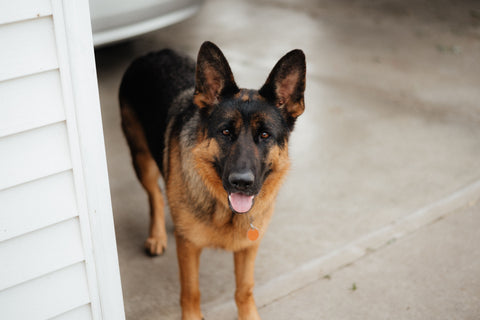 Puppy GrowthGerman Shepherd Puppy Joint Development: What to Do From 8 Weeks to 18 Months8 min read
-
 Puppy GrowthLab and Golden Retriever Growth Plate Window (2026)14 min read
-
 Itch & YeastThe 7 Best Dog Yeast Infection Supplements Compared (2026 Review)14 min read
-
 Itch & YeastBest Supplements for French Bulldogs: What Actually Helps (And What's a Waste of Money)9 min read
-
 Itch & YeastBest Ear Infection Supplements for Dogs11 min read


