


The 18-Month Growth-Plate Window
The growth-plate window is the 8-to-30-month developmental phase during which a large-breed dog's hip joint cartilage architecture is permanently laid down. Growth plates are the soft, expanding cartilage zones at the ends of long bones; in large and giant breeds they remain biologically active for 14–30 months before ossifying and closing. Once they close, the joint surface geometry is fixed — neither diet, supplementation, nor exercise can later re-shape it. This is why hip dysplasia, despite presenting in middle-age dogs, is overwhelmingly seeded in the first 30 months of life. Most owners learn this only after a senior diagnosis, when intervention windows have already closed. Large-breed puppy joint nutrition during this window is therefore a one-shot opportunity, not an ongoing maintenance question.
Large-breed puppies aged 8–30 months are inside the growth-plate window — the only period when hip joint architecture is actively forming. After ossification (12–30 months depending on breed), the joint is fixed for life. Targeted nutrition during this window may meaningfully help reduce later hip dysplasia severity for at-risk breeds.
- What Is the Growth-Plate Window?
- Why Most Large-Breed Owners Miss This Window
- The Science: How Cartilage Architecture Is Built
- The 8 Most At-Risk Large-Breed Puppies
- The Pre-Limp Prevention Checklist
- Doing Nothing vs. Diet vs. Supplementation
- Why Most Existing Joint Supplements Miss the Window
- MoveGuard Growth's Mechanism — The Gentle Wedge
- A Composite Owner Story: Almost Missing the Window
- 15-Question FAQ
- The Bottom Line
If you have a large-breed puppy — a Lab, a Golden, a German Shepherd, a Bernese Mountain Dog, a Great Dane — there is a window happening right now that most owners don't know exists until it has already closed. It is called the growth-plate window. And what happens inside it largely determines whether your dog develops hip dysplasia, how severe it becomes, and what your vet bills look like at age 5, 7, and 10.
This guide covers the science, the breeds most at risk, the prevention checklist, and the supplement decision — honestly, including where Cosequin, Dasuquin, YuMOVE, and Bark Bright land relative to a puppy in this window.
What Is the Growth-Plate Window?
Growth plates — also called physes — are the soft cartilage discs at the ends of long bones where new bone tissue is produced during development. In large and giant breeds, these plates remain biologically active and vulnerable for 14 to 30 months after birth, depending on the breed and the specific bone. During this time, the hip joint is not yet fixed. The cartilage, the coxofemoral geometry, the depth of the acetabular socket — all of it is still being shaped by the interplay of genetics, nutrition, growth rate, and mechanical load.
Once the growth plates ossify and close, that shaping is done. The joint surface geometry your dog ends up with at 18 to 30 months is the joint surface geometry they will carry for life. This is the core reason hip dysplasia — a condition that causes limping, pain, and early arthritis — is overwhelmingly seeded in the first 30 months of life, even when it doesn't present clinically until the dog is 4, 5, or 7 years old.
The growth-plate window is the only period when nutrition, supplementation, and exercise decisions can meaningfully help shape that outcome. After it closes, those same decisions shift from preventive to symptomatic.
Why Most Large-Breed Owners Miss This Window
The senior-dog joint supplement industry has trained pet owners to wait. Every major joint supplement brand — Cosequin, Dasuquin, Nutramax, YuMOVE — markets to dogs with existing arthritis, existing stiffness, existing limping. Their messaging is reactive by design, because reactive purchases convert better. The owner whose 7-year-old Lab is visibly limping buys today. The owner of a 10-month-old Lab puppy who is running perfectly fine does not.
Your veterinarian may not raise this either — not because they don't know, but because veterinary culture is also largely reactive. Most vet visits for young large-breed puppies focus on vaccines, parasites, and spay/neuter timing. Joint prevention screening at 6 to 9 months is not standard of care unless the breeder flags it or the owner asks.
The result: most owners encounter the words "growth plate" and "hip dysplasia" in the same sentence for the first time when their dog is 4 or 5 years old and the damage is already done.
The Science: How Cartilage Architecture Is Built
The growth plate is a factory. Chondrocytes (cartilage-producing cells) proliferate, mature, and deposit a collagen scaffold that is subsequently mineralized into bone. The quality of the cartilage produced during this process depends on the availability of specific building blocks: glycosaminoglycans (GAGs), chondroitin sulfate, glucosamine, and the long-chain omega-3 fatty acids EPA, DHA, and — crucially — ETA (eicosatetraenoic acid), an omega found almost exclusively in New Zealand Green-Lipped Mussel.
Published veterinary research (including Bui & Bierer and Pollard et al., cited by ACVS clinicians) shows meaningful reductions in joint inflammation markers in dogs supplemented with freeze-dried GLM at therapeutic doses. OFA data across millions of radiographic submissions consistently shows that dietary calcium and phosphorus have the strongest studied impact on growth-plate integrity — excess calcium accelerates plate closure and disrupts cartilage maturation, which is the primary case against adult-formula kibble for growing large-breed puppies. Beyond diet, glucosamine and chondroitin supplementation during the growth phase, as distinct from senior maintenance, has been studied in both veterinary and human pediatric contexts with the consensus that cartilage substrate availability matters more during formation than after.
MoveGuard Growth's Full Formula
Glucosamine HCl 400 mg + Chondroitin 300 mg + MSM 250 mg + NZ Green-Lipped Mussel 250 mg + Antarctic Krill Oil 150 mg per daily serving — formulated specifically for the growth-plate window.
See the Formula →The 8 Most At-Risk Large-Breed Puppies
OFA (Orthopedic Foundation for Animals) breed statistics across millions of radiographic submissions identify the following breeds as carrying the highest hip dysplasia prevalence. The figures below reflect OFA published breed data and are consistent with peer-reviewed veterinary literature; verify current figures at ofa.org/browse-by-breed as statistics are updated continuously.
Labrador Retriever
Most common breed. Most preventable. Growth plates close ~14 months. Adult target 65–80 lbs.
Golden Retriever
Slower maturation — full skeletal maturity 24–30 months. Stoic temperament masks early signs.
German Shepherd
Structural angulation risk. Show-line GSDs run higher than working lines. Plates close ~18 months.
Bernese Mountain Dog
Short median lifespan makes the window high-stakes. Giant-breed plate closure 20–24 months.
Rottweiler
Heavy frame. High elbow dysplasia rates compound joint burden. Target lean BCS 4/9 strictly.
Great Dane
Giant-breed timing — plates close 18–24+ months. Calcium ceiling in kibble is critical.
Newfoundland
Among the worst OFA statistics of any breed. Window extends to 24 months.
Saint Bernard
Extreme genetic loading. Nearly 1 in 2 are OFA-dysplastic. Prevention begins at 8 weeks.
Each of these breeds benefits from the same protocol: large-breed-formulated kibble, lean body condition (BCS 4/9, not 5/9), capped impact exercise before plate closure, and targeted growth-plate nutrition. The intensity of vigilance should scale with the OFA prevalence of your specific breed.
Lab and Golden Retriever owners: see the breed-specific guide →
The MoveGuard Growth Formula
Sized and dosed for 50–90+ lb large and giant-breed puppies. See the complete formula.
See the Formula →The Pre-Limp Prevention Checklist — 4 Things You Can Do Right Now
- Get an OFA preliminary radiograph at 6–9 months (or PennHIP at 16 weeks) — early laxity assessment during the window. OFA preliminary grades provide a management roadmap. PennHIP distraction index > 0.50 narrows the surgical intervention window (JPS closes at 5 months). Request these proactively — they are not routinely offered at standard wellness visits.
- Run the calorie-restriction protocol — lean body condition score 4/9, not 5/9 — every excess pound of body weight places amplified force on the developing hip joint. Labs and Goldens are particularly prone to overfeeding. Weigh monthly. Measure meals. Do not free-feed.
- Cap impact exercise — no sustained running, jumping, or stairs before growth plate closure — approximately 14–18 months for most large breeds (confirm by X-ray). Swimming is the ideal exercise: it builds hip-stabilizing musculature with zero compressive joint load. The "5-minute rule" (5 minutes of exercise per month of age, twice daily) is a commonly cited veterinary guideline for puppies in the window.
- Start targeted growth-plate nutrition — Step 4 is where MoveGuard Growth lives. Built for the pre-symptomatic window — NZ Green-Lipped Mussel, Antarctic Krill Oil, Glucosamine HCl 400 mg, Chondroitin Sulfate 300 mg, MSM 250 mg — made in Florida USA at an NSF + GMP certified facility. Add to your puppy's foundation →
Full nutrition guide: what to feed a large-breed puppy for joint health →
Doing Nothing vs. Diet Adjustment vs. Supplementation
| Scenario | What It Covers | What It Misses | Honest Assessment |
|---|---|---|---|
| A — Wait and see | Nothing active | The entire growth-plate window | The industry default. Produces the highest lifetime vet costs and most severe dysplasia outcomes for at-risk breeds. |
| B — Large-breed puppy kibble alone | Calcium/phosphorus balance, controlled calorie density, appropriate protein range | GLM omega-3s (ETA), therapeutic glucosamine/chondroitin, MSM | Significantly better than no intervention. Gets you approximately 70% of the lever. The remaining supplementation layer may matter most for high-OFA-risk breeds. |
| C — Diet + targeted supplementation | All of B, plus: NZ GLM, Antarctic Krill, glucosamine/chondroitin/MSM at growth-specific doses | Nothing significant — this is the complete layered approach | The evidence-based recommendation for any large-breed puppy at moderate-to-high OFA risk. No miracle claims — the broadest coverage of known intervention levers. |
Why Most Existing Joint Supplements Miss the Window
| Product | NZ GLM | Krill / Omega-3 | Gluc. | Chond. | MSM | Designed for puppy window? |
|---|---|---|---|---|---|---|
| MoveGuard Growth | ✓ 250 mg | ✓ 150 mg | 400 mg | 300 mg | 250 mg | Yes — 8–30 mo |
| Cosequin Maximum Strength | ✗ | ✗ | 500 mg | 400 mg | 250 mg | Adult/senior |
| Dasuquin with MSM | ✗ | ✗ | 900 mg | 350 mg | 800 mg | Senior/adult (vet channel) |
| YuMOVE Young Dogs | ✓ ActivEase | ✓ GLM-derived | 500 mg | GLM only | — | Closest comparator |
| Bark Bright Puppy Joint | ✗ | ✗ | Lower | Lower | Lower | Convenient · lower doses |
| VetriScience GlycoFlex Puppy | ✓ GLM | ✗ krill | Varies | ✗ | Varies | No ETA krill profile |
The honest assessment: YuMOVE Young Dogs is the closest direct comparator and a credible product. The meaningful differences are MoveGuard's Antarctic Krill Oil (phospholipid-bound EPA/DHA with superior bioavailability over fish oil), the dedicated dosing for 50–90+ lb large-breed puppies, and the DACVS-SA reviewer who built the formulation around the growth-plate window specifically.
See MoveGuard Growth's full Supplement Facts — the ingredient panel, side-by-side →
MoveGuard Growth's Mechanism — The Gentle Wedge
NZ Green-Lipped Mussel — what it actually is
Freeze-dried Perna canaliculus sourced from New Zealand's coastal aquaculture. The only single ingredient that delivers ETA omega-3s, GAGs, and chondroitin sulfate in one matrix. Not interchangeable with fish oil or standard glucosamine — the ETA fatty acid has a distinct anti-inflammatory mechanism (LOX pathway inhibition) that other omegas don't replicate.
Antarctic Krill Oil — phospholipid-bound omega-3 vs. triglyceride fish oil
Krill delivers EPA and DHA in phospholipid form, which crosses cell membranes more readily than the triglyceride form found in standard fish oil. For a growing dog whose joint tissues are actively incorporating fatty acids into cartilage architecture, the delivery form matters. Krill also contains astaxanthin, a carotenoid antioxidant, at naturally occurring levels.
Glucosamine HCl 400 mg + Chondroitin 300 mg + MSM 250 mg
Dose rationale for this window: these amounts are calibrated for the 50–90 lb body-weight range (2 chews/day) for the growth phase. Combined with NZ GLM (250 mg) and Antarctic Krill Oil (150 mg), the formula delivers nine fully-disclosed actives — every milligram printed on the label. Manufactured at a GMP/NSF certified facility in Florida, USA.
Start Your Puppy's Foundation
MoveGuard Growth — built for the pre-symptomatic growth-plate window.
Shop MoveGuard GrowthA Composite Owner Story: Almost Missing the Window
Meeting "Cooper" — a 9-month-old Golden Retriever
Cooper's owner — we'll call her Sarah — brought him to a routine wellness visit at 9 months. He was running perfectly, eating enthusiastically, showing no signs of anything wrong. Her vet mentioned almost in passing that she might want to consider an OFA preliminary radiograph given the breed. She scheduled it for the following month.
The X-ray showed mild subluxation — the femoral head wasn't seating fully in the acetabular socket. Not severe. Not an emergency. But a clear signal that this dog was on a trajectory. Her vet explained the growth-plate window. Sarah had never heard the term. Cooper was 10 months old. The window was open.
What Sarah wishes she'd known four months earlier: that the window starts at 8 months and that nutrition decisions during it matter. She started Cooper on MoveGuard Growth at 10 months, tightened the feeding protocol, cut the morning fetch sessions on hard ground, and added swimming twice a week.
Where Cooper is at 24 months: OFA final radiographs showed a Good rating — a meaningful improvement from the mild subluxation at 10 months. His vet noted the musculature supporting the hip joint was well-developed for the breed. Sarah credits the window — and catching it while it was still open.
Cooper's story represents the experience of many large-breed puppy owners who find the growth-plate window mid-window and act on it. The goal of this guide is to help you find it before the window is already half-closed.
15-Question FAQ
The window opens around 8 months in large breeds — when growth-plate activity is at its peak. It closes between 12 and 30 months depending on the breed and specific bone. Labs close earlier (~14 months); Great Danes and Saint Bernards close later (20–30 months). Confirm closure with an X-ray from your vet — it's the only definitive way to know.
Hip dysplasia is a developmental condition in which the hip joint forms abnormally — the socket is too shallow, the ball doesn't seat properly, or both. This causes excess friction, wear, and eventually arthritis. It is not purely genetic; environmental factors during the growth-plate window — nutrition, growth rate, exercise load — meaningfully influence severity even in genetically predisposed dogs.
Both. The genetic predisposition is inherited — this is why OFA scores on breeding dogs matter. But the severity of expression is environmental. Two dogs with the same genes, one managed during the growth-plate window and one not, will often present with meaningfully different clinical outcomes. You cannot change the genetics, but you can meaningfully influence the outcome.
MoveGuard Growth is formulated for dogs 8 months and older at 50 lbs and up. Before 8 months, the growth plate is in an earlier developmental phase where the evidence for targeted supplementation is less established. At 8 to 12 months — the early-to-middle phase of the window — the case for starting is strongest. Do not start before 8 months without veterinary guidance.
Cosequin and Dasuquin are adult/senior formulations dosed for dogs with established arthritis, not for growing dogs in the growth-plate window. They are glucosamine-and-chondroitin products without the ETA omega profile of NZ Green-Lipped Mussel or the phospholipid-bound krill delivery. They are not harmful in puppies, but they were not designed for this moment.
NZ Green-Lipped Mussel (Perna canaliculus) is a shellfish native to New Zealand that delivers three joint-relevant compounds in a single natural matrix: ETA omega-3 fatty acids (which standard fish oil doesn't provide), glycosaminoglycans (GAGs), and chondroitin sulfate. Glucosamine is a different compound — it's the precursor for GAG synthesis. They work via different mechanisms and are complementary, not substitutes for each other.
Both provide EPA and DHA omega-3s. The key difference is the molecular delivery form: fish oil delivers omega-3s in triglyceride form; Antarctic Krill Oil delivers them in phospholipid form. Phospholipid-bound EPA/DHA crosses cell membranes more efficiently and may provide better tissue uptake for a growing dog actively incorporating fatty acids into cartilage. Krill also provides ETA in small amounts and contains naturally occurring astaxanthin.
Both measure hip joint health but via different methods. OFA preliminary radiographs are appropriate from 6 months onward and provide a preliminary grade. PennHIP can be performed as early as 16 weeks and measures distraction index (DI) — a quantitative measure of joint laxity considered more predictive of adult hip status. If you want the earliest possible intervention window, PennHIP at 16 weeks is the most actionable test available.
Target BCS 4/9 (lean) — not 5/9 (ideal-average). In large-breed puppies, the slightly leaner BCS 4/9 is associated with slower growth rate, which reduces mechanical load on developing growth plates and lowers hip dysplasia risk in genetically predisposed breeds. You should be able to feel the ribs easily without pressing hard, see a visible waist from above, and a slight tuck in the abdomen from the side.
Yes — for a high-OFA-risk breed during the growth-plate window. Each jump from a couch or bed produces compressive and torsional forces on the hip joint in the 3–5× body-weight range. The accumulated impact of daily jumps over 12 months is non-trivial for a joint whose cartilage is still being architected. Use ramps. It is a real intervention, not excessive caution.
No. MoveGuard Growth is a soft chew supplement that provides joint-specific nutrients not found at therapeutic levels in standard puppy kibble. It does not interfere with the kibble's nutritional profile or AAFCO completeness. Give it as a daily treat alongside meals — most dogs take it willingly. It does not replace kibble.
Joint supplements work on biological accumulation, not acute dose. Structural benefits operate on a 4–8 week timeline before most owners report observable change. The primary benefit in a puppy is preventive and structural, not acute pain relief — you may not "see" it in the window, but you may see it at age 5, 7, and 10 when your dog is still moving well while their peers are limping.
No. A diagnosis during the growth-plate window is a call to action, not a verdict. Conservative management — weight management, controlled exercise, targeted supplementation, and when indicated, physical therapy — is a valid first path for many mild-to-moderate cases. MoveGuard Growth is appropriate for a post-diagnosis young dog in the growth-plate window. See the full 90-day post-diagnosis action plan →
MoveGuard Growth is dosed for large-breed dogs 8–30 months, with a formulation built around the developmental window — NZ GLM 250 mg, Antarctic Krill 150 mg, and the 400/300/250 mg glucosamine/chondroitin/MSM trio, plus Hyaluronic Acid, Manganese, and Vitamins C and E (9 fully-disclosed actives). MoveGuard Adult is for dogs 30 months+ (25–75 lb, flat dose of 2 chews/day) — upgraded formula led by clinically-studied Eggshell Membrane + NZ GLM 300 mg, with higher Glucosamine (1000 mg), Chondroitin (800 mg), and MSM (800 mg) per daily serving. Transition your dog from Growth to Adult after growth plate closure — typically 18–24 months, confirmed by X-ray.
Give MoveGuard Growth a full jar. If your puppy has not improved, tell us any time between day 30 and day 60 after delivery and we refund your order in full. You keep the jar. It covers your first order, and it is one claim per household. The full terms are on our Shipping & Returns page.
The Bottom Line
The growth-plate window is the most important period in your large-breed dog's joint health — and the least discussed. It opens around 8 months, closes between 12 and 30 months depending on the breed, and once it closes, the decisions you made inside it are permanent. The protocol is not complicated: large-breed puppy kibble, lean body condition, capped impact exercise, and targeted growth-plate nutrition from 8 months onward.
If you want to give your puppy the targeted growth-plate window nutrition this guide describes, start her on MoveGuard Growth: $39.99, or less with Subscribe & Save, and covered by the 60-Day Strong-Start Guarantee (full refund, keep the jar).
Start Her on MoveGuard Growth
If you want to give your puppy the targeted growth-plate window nutrition this guide describes — this is the formula we built for it.
Shop MoveGuard Growth: $39.99 →Educational content. Not a substitute for veterinary diagnosis or care. Consult your veterinarian for individual care decisions regarding your dog's joint health.
Where is your dog on the joint clock?
Ten questions about your dog. You get a named stage, the four things loading your dog's joints, a 30-day check-in date, and a plan sized to your dog's weight.
- 1Your dog's joint stage, named and scored
- 2The four things loading the joints
- 3A plan sized to your dog's weight, or a plain answer if no formula fits
Most read
-
 Puppy GrowthGerman Shepherd Hip Dysplasia Prevention18 min read
-
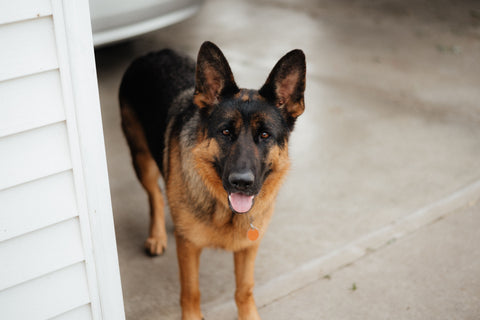 Puppy GrowthGerman Shepherd Puppy Joint Development: What to Do From 8 Weeks to 18 Months8 min read
-
 Puppy GrowthLab and Golden Retriever Growth Plate Window (2026)14 min read
-
 Itch & YeastThe 7 Best Dog Yeast Infection Supplements Compared (2026 Review)14 min read
-
 Itch & YeastBest Supplements for French Bulldogs: What Actually Helps (And What's a Waste of Money)9 min read
-
 Itch & YeastBest Ear Infection Supplements for Dogs11 min read


