


Hyaluronic Acid for Dogs: The Growth Window Role
What Is Hyaluronic Acid and What Does It Do?
Hyaluronic acid (HA) is a glycosaminoglycan — a naturally occurring molecule found throughout the body, with particularly high concentrations in joint tissue and synovial fluid. In joints, its primary role is to give synovial fluid its lubricating and shock-absorbing properties. Without adequate HA, joint fluid becomes thinner and less effective, friction increases between articulating surfaces, and cartilage undergoes greater mechanical wear per movement. In developing joints — during the 8–30 month growth window in large breed dogs — HA is not only maintaining existing joint fluid but actively supporting the formation of synovial joint spaces that are still being established. This is the distinction that makes HA inclusion in a growth-window formula specifically relevant rather than redundant with adult joint supplement formulations.
- Hyaluronic acid is a naturally occurring glycosaminoglycan that gives synovial fluid its viscosity, lubrication, and shock-absorption properties
- In the growth window, HA supports the formation of synovial joint spaces that are still developing — not just maintaining existing fluid in complete joints
- HA works synergistically with glucosamine: glucosamine is a precursor to HA synthesis, meaning supplemented glucosamine supports the body's own HA production in addition to cartilage matrix formation
- Dose matters — HA at therapeutic concentrations behaves very differently from HA at token concentrations. Under-dosing is common in multi-ingredient supplements that list HA on the label without disclosing the amount
- MoveGuard Growth provides 15mg HA per serving; MoveGuard Adult provides 25mg — the adult dose is higher because synovial fluid maintenance in an adult joint requires greater ongoing HA supply than developmental support of forming joints
- HA is not a standalone joint supplement — it is one component of a complete joint support system, working alongside glucosamine, chondroitin, MSM, and omega-3s to cover the full biological picture of a developing joint
How Hyaluronic Acid Works in Joints
To understand why hyaluronic acid belongs in a large breed puppy joint supplement, it helps to understand what synovial fluid actually is and what it needs to do.
Every moveable joint in a dog's body is enclosed in a joint capsule lined by the synovial membrane. This membrane produces synovial fluid — the joint's internal lubricant, shock absorber, and nutrient delivery system for cartilage (which has no direct blood supply and relies on synovial fluid diffusion for its nutrition). The quality of that fluid determines how well the joint functions under load.
Hyaluronic acid is the molecule that gives synovial fluid its characteristic viscoelastic properties — the combination of viscosity (thickness, lubricating capacity) and elasticity (ability to absorb impact and return to normal). At adequate concentrations, HA-rich synovial fluid acts as a near-frictionless lubricant between cartilage surfaces and as a shock absorber that distributes load across the joint rather than concentrating it at specific contact points.
Lubrication
HA creates the boundary lubrication layer between articulating cartilage surfaces. At adequate concentrations, friction between these surfaces is extremely low — far lower than any synthetic lubricant at the same scale. HA concentration in synovial fluid directly determines lubrication efficiency.
Shock absorption
HA's viscoelasticity allows synovial fluid to absorb and distribute mechanical impact. When a 100 lb puppy lands from a jump, the synovial fluid in the hip joint must absorb that impact without transmitting it fully to the cartilage surface. HA's elastic component enables this energy absorption.
Cartilage nutrition
Cartilage has no direct blood supply. Its nutrients — including the building blocks for its own matrix maintenance — diffuse in from synovial fluid during joint movement. HA-rich fluid supports this diffusion process more effectively than thin, HA-depleted fluid.
Inflammatory regulation
HA binds to CD44 receptors on synovial cells and modulates the inflammatory signalling within the joint space. In joints under mechanical stress during development, this inflammatory regulation role is particularly relevant — HA helps maintain a balanced joint environment during the sustained loading of the growth window.
Why the Growth Window Is the Critical Window for HA
In an adult dog with fully formed joints, hyaluronic acid's role is maintenance: replacing the HA that normal enzymatic turnover and mechanical stress degrade, keeping synovial fluid at optimal viscosity and volume. This is important, but it is a steady-state maintenance function.
In a large breed puppy between 8 and 30 months, HA's role is more complex because the synovial joints themselves are not yet complete. The joint capsule, synovial membrane, and synovial space are all maturing during the growth window. The HA available to support that formation comes from two sources: endogenous synthesis (the body's own HA production) and dietary supplementation. During rapid skeletal growth — when a Labrador is adding several kilograms per month and its joints are under increasing load — the demand on synovial HA is elevated above baseline adult maintenance levels.
Glucosamine is a direct precursor to hyaluronic acid synthesis in the body. When supplemental glucosamine provides the building blocks for glycosaminoglycan production, some of that production goes toward cartilage matrix — and some goes toward HA synthesis in the synovial membrane. This means glucosamine supplementation supports synovial fluid quality indirectly, in addition to its direct cartilage effects. The combination of supplemental glucosamine and supplemental HA addresses both the precursor supply and the end product concentration — a more complete approach than either alone.
The growth window is also the period of highest dynamic joint loading per unit of body weight — a puppy generating the jumping, running, and play behaviour of its early months while its joints are still developing is placing significant demands on synovial fluid at exactly the time that fluid is still being established. Supporting HA availability during this window is a direct intervention in the quality of the joint environment during its most critical formation period.
Why the Dose Matters — and What Underdosing Looks Like
Hyaluronic acid appears on the ingredient labels of a large number of dog joint supplements. Its presence on a label does not guarantee that the dose is meaningful.
Many joint supplements list hyaluronic acid as an ingredient inside a "joint support blend" or "mobility complex" without disclosing the individual milligram amount. A supplement can legally claim to "contain hyaluronic acid" at 0.5mg per serving — a homeopathic inclusion that provides no meaningful joint fluid support — while the label looks identical to a supplement providing 15mg or 25mg. Without per-ingredient dose disclosure, there is no way to distinguish between a therapeutic HA inclusion and a label-decoration trace amount. See: Proprietary Blends in Dog Joint Supplements: Why They're a Red Flag.
MoveGuard Growth and MoveGuard Adult both disclose their HA doses individually on the label — 15mg and 25mg respectively. These are the actual amounts delivered per daily serving. There are no proprietary blends concealing the quantities.
Is Your Dog in the Growth Window?
Take the free Joint & Mobility Clock. Ten quick questions about your dog, and you get a named stage, the four things loading your dog's joints, and a plan sized to your dog's weight. No email needed to see your result.
Take the Joint & Mobility Clock →HA in MoveGuard Growth vs MoveGuard Adult
Both MoveGuard formulas include hyaluronic acid, but at different doses — and the dose difference is intentional, not arbitrary.
MoveGuard Growth
HA per daily serving · For dogs 8–30 months in the growth window · Supports synovial joint space formation and fluid quality during development · Works alongside Vitamin C (50mg) and Glucosamine (400mg) as part of a growth-phase glycosaminoglycan support system
MoveGuard Adult
HA per daily serving · For adult dogs 25–75 lb with closed growth plates · Higher maintenance dose for established adult joints under daily activity loading · Supports ongoing synovial fluid viscosity in joints that are no longer developing but require sustained lubrication quality
The adult formula's higher HA dose (25mg vs 15mg) reflects the shift in biological goal. In the growth formula, HA is supporting joint space development alongside a broader set of growth-phase co-factors including manganese and Antarctic Krill Oil — the HA role is part of a multi-target system. In the adult formula, maintaining synovial fluid quality in joints that are now under sustained daily adult loading becomes a higher priority, warranting the increased dose. This dose progression mirrors the transition from developmental support to maintenance support that defines the difference between the two formulas. See: MoveGuard Growth vs MoveGuard Adult: Which Does Your Dog Need?
How HA Works Alongside the Other Actives
Hyaluronic acid does not work in isolation. Its effectiveness in a joint supplement depends on how it is positioned relative to the other actives in the formula — and whether those actives address the complementary biological systems that HA alone cannot cover.
- Glucosamine (400mg in Growth) — provides the precursor for HA synthesis alongside its direct cartilage matrix function. Supplemental glucosamine effectively supports both cartilage and synovial fluid through a shared biosynthetic pathway.
- Chondroitin Sulfate (300mg in Growth) — inhibits the enzymes that degrade cartilage matrix, including the enzymes that can also break down HA in the joint space. Chondroitin preserves the HA that is present by reducing the enzymatic environment that would otherwise degrade it.
- NZ Green-Lipped Mussel (250mg in Growth) — provides natural glycosaminoglycans including naturally occurring HA alongside ETA omega-3s. The GLM contribution supplements the standalone HA dose with whole-food-form glycosaminoglycans that support the synovial fluid environment through a different delivery mechanism.
- MSM (250mg in Growth) — provides bioavailable sulfur that supports the extracellular matrix production, including HA, in connective tissue. MSM's sulfur contribution is a co-factor for glycosaminoglycan synthesis broadly.
- Vitamin C (50mg in Growth) — a co-factor for collagen synthesis in the joint capsule, supporting the structural environment within which synovial fluid functions. A well-maintained joint capsule and synovial membrane produces and retains HA more effectively.
Hyaluronic acid at 15mg in MoveGuard Growth is not a standalone intervention — it is one component of a nine-active system where each ingredient addresses a different aspect of developing joint biology. Glucosamine and chondroitin for structural cartilage. GLM and krill oil for inflammatory regulation. MSM for connective tissue sulfur. Vitamin C for collagen. Manganese for glycosaminoglycan synthesis. And HA for synovial fluid quality. The whole is more than the sum of the parts because developing joints require all of these systems to be supported simultaneously.
"As someone with a biology background I appreciate the scientific rationale here. ETA omega-3s from NZ Green-Lipped Mussel, chondroitin for cartilage support, hyaluronic acid for synovial lubrication — evidence-backed choices our German Shepherd proves in practice."
✓ Verified MoveGuard Growth customer"I'd been cobbling together different supplements to get MSM and hyaluronic acid alongside glucosamine. MoveGuard Growth has all of it in one properly dosed chew. Huge convenience win for our Alaskan Malamute puppy's daily routine."
✓ Verified MoveGuard Growth customer15mg Hyaluronic Acid. On the Label. In Every Chew.
MoveGuard Growth — 9 fully-disclosed actives for the 8–30 month large breed growth window. Real chicken-liver soft chews. 60-Day Strong-Start Guarantee.
Shop MoveGuard Growth →Frequently Asked Questions
Hyaluronic acid supports synovial fluid quality in dog joints — giving joint fluid its lubricating viscosity, shock-absorbing elasticity, and the capacity to carry nutrients to cartilage. In adult dogs it maintains existing joint fluid. In growing large breed puppies during the 8–30 month growth window, it also supports the formation of synovial joint spaces that are still developing. Both roles make HA relevant across life stages, though the biological context differs significantly between growth and maintenance phases.
Many big-dog parents start daily joint support early in the growth window — an ideal starting point is around 8 months, when the frame is growing fast and the joints are still forming. Starting at 8 months maximises the period during which hyaluronic acid and the other actives in MoveGuard Growth can support joint space formation while it is actively occurring.
Therapeutic HA doses in canine joint supplementation research have typically been studied in the range of 10–25mg daily, depending on body weight and the target (developmental support vs adult maintenance). MoveGuard Growth provides 15mg per daily serving for large breed puppies; MoveGuard Adult provides 25mg for adult maintenance. If a supplement does not disclose its HA dose — listing it only inside a blend — there is no way to verify that the dose falls within the meaningful range.
Yes — hyaluronic acid is a naturally occurring compound found throughout the body and is generally well-tolerated in dogs of all ages when provided at appropriate doses. It is included in MoveGuard Growth specifically for the 8–30 month growth window and is vet-reviewed for this application. Always consult your veterinarian before starting any new supplement, particularly if your dog has known health conditions.
If your dog is a large or giant breed still growing (8–30 months), choose MoveGuard Growth — 15mg HA as part of a 9-active growth-window formula. If your dog is a grown adult with closed growth plates (25–75 lb), choose MoveGuard Adult — 25mg HA as part of an 8-active adult maintenance formula. See the full comparison: MoveGuard Growth vs MoveGuard Adult.
Related Reading
- Proprietary Blends in Dog Joint Supplements: Why They're a Red Flag
- MoveGuard Growth vs MoveGuard Adult: Which Does Your Dog Need?
- Do Joint Supplements for Dogs Actually Work? What the Evidence Shows
- When Should You Start Giving Your Puppy a Joint Supplement?
- 6 Best Joint Supplements for Large Breed Puppies Compared (2026)
- Joint Supplement for Large Breed Puppies: What to Look For in 2026
* These statements have not been evaluated by the Food and Drug Administration. This product is not intended to diagnose, treat, cure, or prevent any disease. Always consult your veterinarian before starting your dog on a new supplement, particularly if your dog has existing joint conditions or is on other medications.
Where is your dog on the joint clock?
Ten questions about your dog. You get a named stage, the four things loading your dog's joints, a 30-day check-in date, and a plan sized to your dog's weight.
- 1Your dog's joint stage, named and scored
- 2The four things loading the joints
- 3A plan sized to your dog's weight, or a plain answer if no formula fits
Most read
-
 Puppy GrowthGerman Shepherd Hip Dysplasia Prevention18 min read
-
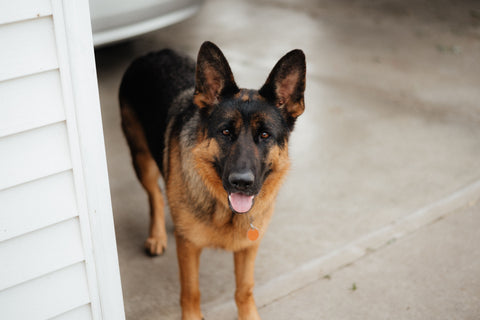 Puppy GrowthGerman Shepherd Puppy Joint Development: What to Do From 8 Weeks to 18 Months8 min read
-
 Puppy GrowthLab and Golden Retriever Growth Plate Window (2026)14 min read
-
 Itch & YeastThe 7 Best Dog Yeast Infection Supplements Compared (2026 Review)14 min read
-
 Itch & YeastBest Supplements for French Bulldogs: What Actually Helps (And What's a Waste of Money)9 min read
-
 Itch & YeastBest Ear Infection Supplements for Dogs11 min read


