


Dog Mobility Problems: Home Setup That Helps
Mobility problems in dogs usually mean joint pain, and the most common cause is osteoarthritis, a chronic and progressive joint disease that can start at any age. Signs include stiffness, trouble with stairs, difficulty getting up and less interest in walks. Your vet can diagnose it, and Cornell lists weight control, low-impact exercise, non-slip rugs and ramps among the lifestyle changes that help. Pawganix MoveGuard Adult is a daily joint chew for adult dogs 25 to 75 pounds.
Daily joint support for adult dogs.
Shop MoveGuard AdultWhat causes mobility problems in dogs
Most of the time, the joints are the story.
Cornell's Riney Canine Health Center describes osteoarthritis as a chronic, progressive disease in which joint cartilage thins and the bones around the joint change, leading to pain, inflammation and difficulty using the limb. It is not only a senior dog problem. It can develop at any age, especially with contributing factors.
Cornell lists several orthopedic conditions that can lead to it by repeatedly injuring joint cartilage, including hip dysplasia, elbow dysplasia, patella luxation, cranial cruciate ligament damage, previous fractures and repetitive high-impact activity. It also names obesity as a significant contributor, because of the added force on the joints and the inflammatory mediators that fat cells produce.
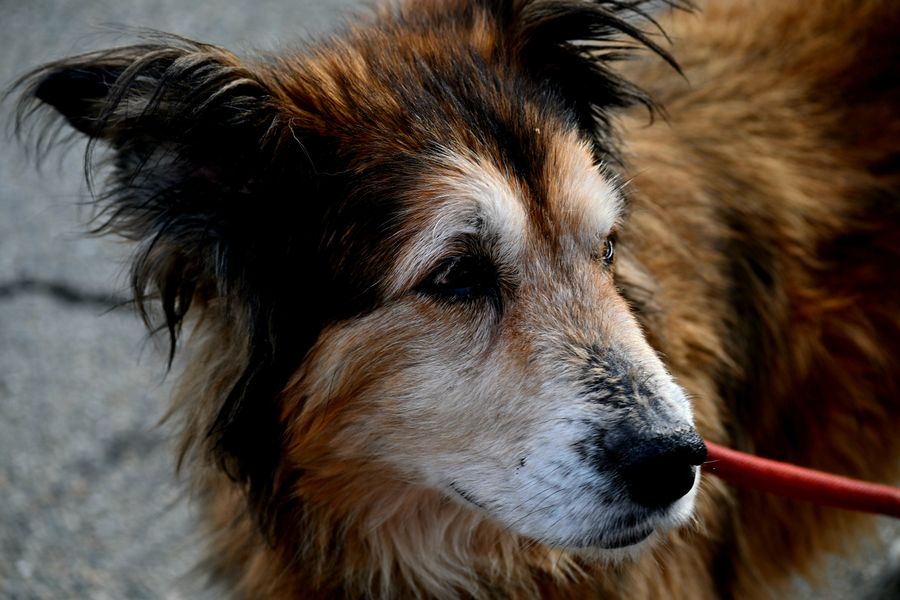
Photo: Pexels
Signs your dog is struggling
Cornell lists these among the clinical signs of osteoarthritis:
- Stiffness, or a change in gait
- Lameness
- A decrease in activity, or reluctance to walk, run or exercise
- Difficulty with stairs or jumping onto couches
- Difficulty getting up from lying down
- Muscle wasting
- Sudden behavior changes, such as irritability
Dogs hide pain well, so these changes are easy to put down to age. Our guide to slowing down versus joint pain shows how to tell them apart, and the dog arthritis guide goes deeper on the condition.
Home changes that make daily life easier
Add traction on slippery floors
Cornell lists non-slip rugs among the lifestyle changes for dogs with osteoarthritis. Runners along the paths your dog uses most, such as to the water bowl, the door and the bed, are a good start.
Use ramps for beds, couches and cars
Ramps spare the joints the impact of jumping up and down. Cornell lists ramps for getting on beds, couches or cars.
Keep your dog lean
Weight control is the first lifestyle change on Cornell's list. Measure meals and ask your vet for a target weight. Our guide to weight and joints explains the link.
Choose low-impact activity
Cornell suggests leash walks or swimming. Several shorter walks usually suit stiff joints better than one long one, and our guide to exercise and joints has more.
Give a supportive bed
A thick, supportive bed on a non-slip surface makes lying down and getting up easier. Place it away from drafts and on the ground floor if stairs are hard.
What your vet can do
Osteoarthritis is diagnosed with a physical exam, where your vet watches your dog's gait and posture and feels the joints for abnormal changes or pain. X-rays may be taken to look at the joints and to find any underlying condition.
Cornell says there is no cure, but there are several ways to slow progression, manage mobility and minimize pain, and that the earlier it is diagnosed and managed, the better the long-term outcome. Treatment can combine lifestyle changes, physical rehabilitation, prescription pain management and joint support, and sometimes surgery when there is an underlying cause. Which of those suits your dog is a decision for your vet.
How is your dog's mobility really doing?
Take the free Joint & Mobility Clock. Ten quick questions about your dog, and you get a named stage, the four things loading your dog's joints, and a plan sized to your dog's weight. No email needed to see your result.
Take the Joint & Mobility Clock →Where a daily joint chew fits
Cornell includes joint supplements such as glucosamine, chondroitin sulfate and omega-3 fatty acids under joint support. MoveGuard Adult is a chicken liver soft chew for adult dogs 25 to 75 pounds with closed growth plates, and every active is dosed on the label:
- Glucosamine, chondroitin and MSM
- Green-lipped mussel
- Eggshell membrane, a source of collagen, elastin and glycosaminoglycans
Dosing is by weight, so check the label for your dog's weight. It supports comfort and mobility, works best next to the home changes above, and is not a replacement for veterinary care. Results vary from dog to dog.
When to call the vet right away
- Your dog suddenly cannot put weight on a leg or cannot get up
- A joint is swollen, hot or painful to touch
- Your dog yelps, cries out or snaps when touched
- Hind legs seem weak, drag or give way
A sudden change is different from slow stiffness, and it needs an exam rather than a wait-and-see approach.
Keep Your Dog Moving Comfortably.
Glucosamine, chondroitin, MSM, green-lipped mussel and eggshell membrane in a chicken liver soft chew. Every active dosed on the label, made in a GMP and NSF certified facility in the USA, with a 60-day guarantee.
Shop MoveGuard AdultFrequently Asked Questions
Osteoarthritis is the most common cause. Cornell lists hip dysplasia, elbow dysplasia, patella luxation, cruciate ligament damage, past fractures, repetitive high-impact activity and obesity as contributors.
Cornell lists weight control, low-impact activity such as leash walks or swimming, and non-slip rugs and ramps for getting onto beds, couches or cars.
Yes. Cornell notes osteoarthritis can develop at any age, especially with obesity or other orthopedic conditions.
Your vet watches your dog's gait and posture, feels the joints and may take X-rays. Filming your dog on stairs or getting up helps the exam.
Some owners use a daily joint supplement to support comfort and mobility. MoveGuard Adult is made for adult dogs from 25 to 75 pounds, and it works alongside vet care, not instead of it.
Dogs hide stiffness well. Catch it early.
The free Adult Mobility Guide shows the early signs, the daily habits that protect joints and what to ask your vet.
Get the Mobility GuideEnter your email on the next page. You'll also get new findings as we publish them. Unsubscribe any time. See our Privacy Policy.
You're already making the content. Get paid for it.
Commission on your link, or a flat fee per post. Your call. A real person reads every application and replies within two working days.
Apply in two minutesSources
- Cohen A. Osteoarthritis. Cornell University College of Veterinary Medicine, Richard P. Riney Canine Health Center. Updated December 9, 2025. vet.cornell.edu
- Pawganix. MoveGuard Adult product page and label. pawganix.com
These statements have not been evaluated by the Food and Drug Administration. This product is not intended to diagnose, treat, cure, or prevent any disease. This content is for informational purposes only and is not a substitute for professional veterinary advice. A dog that suddenly limps, yelps, cannot get up, or shows swelling or heat in a joint should be seen by a vet. Pawganix supplements support joint comfort and mobility and work alongside veterinary care, not instead of it.
Where is your dog on the joint clock?
Ten questions about your dog. You get a named stage, the four things loading your dog's joints, a 30-day check-in date, and a plan sized to your dog's weight.
- 1Your dog's joint stage, named and scored
- 2The four things loading the joints
- 3A plan sized to your dog's weight, or a plain answer if no formula fits
Most read
-
 Adult JointsWhat Is Canine Hip Dysplasia?18 min read
-
 Adult JointsNSAIDs for Dog Joint Pain: Benefits, Risks, and What Else You Should Know9 min read
-
 Adult JointsDog Limping: A Diagnostic Guide to What's Causing It and When to Worry8 min read
-
 Itch & YeastThe 7 Best Dog Yeast Infection Supplements Compared (2026 Review)14 min read
-
 Itch & YeastBest Supplements for French Bulldogs: What Actually Helps (And What's a Waste of Money)9 min read
-
 Itch & YeastBest Ear Infection Supplements for Dogs11 min read


