


Senior Dog Slowing Down: Aging or Joint Pain?
Some slowing is part of aging, but a lot of what looks like "just getting old" is joint discomfort, and dogs hide it well. Stiffness after rest, hesitating on stairs, shorter walks and a reluctance to jump are worth tracking and mentioning to your vet. Your vet can check for arthritis and other causes, and supportive steps at home can help. Pawganix MoveGuard Adult is a daily joint chew for adult dogs 25 to 75 pounds.
Daily joint support for adult dogs.
Shop MoveGuard AdultNormal aging or something to look at?
The difference is usually in how the change shows up, not whether it exists.
Older dogs do sleep more and play less. Fur turns gray, the muzzle goes white and energy dips. Those are normal. Pain looks different: it is specific, it changes how your dog moves, and it often improves a little once the dog warms up.
Dogs are good at hiding discomfort, so owners often notice only after months. Treating every change as age means treatable problems get missed. If something is new and specific, mention it to your vet.
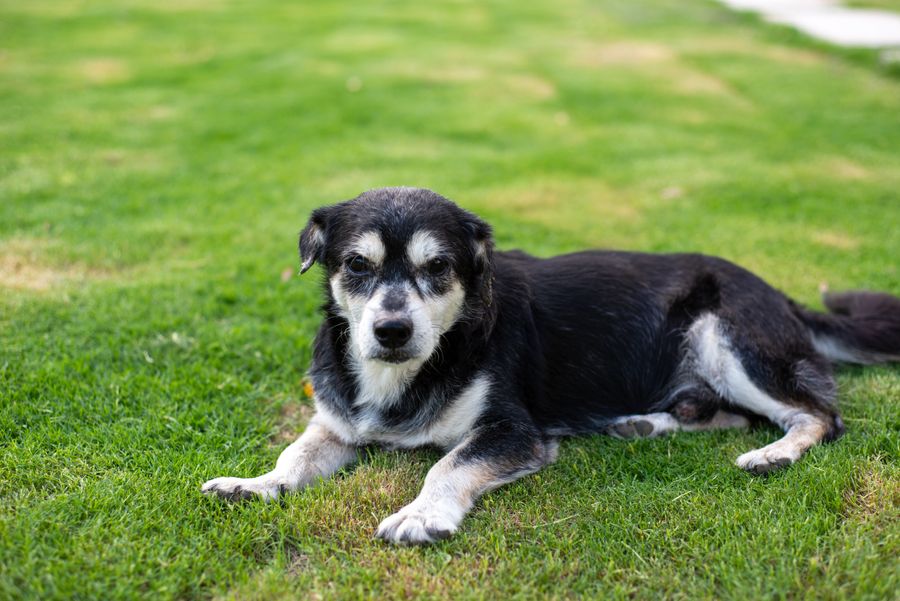
Photo: Pexels
Early signs of stiffness
- Slow to get up after resting, then looser after a few minutes
- Hesitating before stairs, the couch or the car
- Shorter walks, or lagging behind
- Licking at a joint, or a change in how your dog sits
- Slipping on hard floors
- Less interest in play, or grumpiness when touched near the hips
One sign on its own proves little. A cluster of two or three over a few weeks is worth a vet visit. Our dog arthritis guide covers the signs in more detail.
A 2-week tracking habit that helps your vet
Film the first steps of the morning
A 20-second clip of your dog getting up and walking is more useful than a description at the clinic.
Note the stairs and jumps
Write down which ones your dog now avoids, and whether that has changed in the past month.
Time the walks
Record how long your dog is happy to walk before slowing, and whether there is limping afterward.
Check the weight
Extra weight loads every joint. A quick body condition check or a weigh-in at the clinic is worth doing.
Easy changes at home
- Add rugs or runners on slippery floors
- Use a ramp or steps for the car and couch
- Choose a thick, supportive bed away from drafts
- Keep walks regular and shorter rather than rare and long
- Keep nails trimmed so your dog has better grip
- Keep your dog lean, with your vet's guidance on weight
These cost little and often make a visible difference to how comfortable a dog looks moving around the house.
How is your dog's mobility really doing?
Take the free Joint & Mobility Clock. Ten quick questions about your dog, and you get a named stage, the four things loading your dog's joints, and a plan sized to your dog's weight. No email needed to see your result.
Take the Joint & Mobility Clock →Where a daily joint chew fits
MoveGuard Adult is a real chicken liver soft chew made for medium and large adult dogs from 25 to 75 pounds whose growth plates have closed. Every active is on the label with its dose:
- Glucosamine 1000mg and chondroitin 800mg
- MSM 800mg
- NZ green-lipped mussel 300mg
- Eggshell membrane 150mg, a source of collagen, elastin and glycosaminoglycans
- Hyaluronic acid 25mg, with vitamins C and E
It supports joint comfort and mobility as part of a routine. It does not treat arthritis. Check the label for the daily chews for your dog, and note it contains shellfish, fish, soy, egg and oat flour. Your vet can advise if your dog has other conditions or takes medication. Some owners report changes within weeks, but results vary.
When to see the vet
- Sudden limping, yelping or refusal to bear weight
- A swollen, hot or visibly painful joint
- Dragging the back legs, or collapsing
- Loss of appetite, or weight loss with the slowing down
Slowing down can also come from heart, thyroid, vision or other conditions, which is one more reason to have it checked rather than assume.
Keep Your Older Dog Moving Comfortably.
Glucosamine, chondroitin, MSM, green-lipped mussel and eggshell membrane in a chicken liver soft chew. Every active dosed on the label, made in a GMP and NSF certified facility in the USA, with a 60-day guarantee.
Shop MoveGuard AdultFrequently Asked Questions
It depends on size. Large dogs are often considered seniors from around 6 to 8 years, and small dogs from around 10. Your vet can tell you where your dog sits.
Some change is normal, but a sudden drop, stiffness after rest or trouble with stairs is worth a check. Dogs hide pain, so it is easy to miss.
Only a vet can say. Common clues are stiffness that eases with movement, avoiding stairs or jumps, and reluctance to be touched near the hips. Filming your dog moving helps the exam.
Some owners use a daily joint supplement to support comfort and mobility. MoveGuard Adult is made for adult dogs from 25 to 75 pounds, and it works alongside vet care, not instead of it.
It is made for dogs 25 to 75 pounds. For dogs below that range, ask your vet which option suits them.
Dogs hide stiffness well. Catch it early.
The free Adult Mobility Guide shows the early signs, the daily habits that protect joints and what to ask your vet.
Get the Mobility GuideEnter your email on the next page. You'll also get new findings as we publish them. Unsubscribe any time. See our Privacy Policy.
You're already making the content. Get paid for it.
Commission on your link, or a flat fee per post. Your call. A real person reads every application and replies within two working days.
Apply in two minutesSources
- VCA Animal Hospitals. Five signs your pet has osteoarthritis. vcahospitals.com
- Pawganix. MoveGuard Adult product page and label. pawganix.com
These statements have not been evaluated by the Food and Drug Administration. This product is not intended to diagnose, treat, cure, or prevent any disease. This content is for informational purposes only and is not a substitute for professional veterinary advice. A dog that suddenly limps, yelps, cannot get up, or shows swelling or heat in a joint should be seen by a vet. Pawganix supplements support joint comfort and mobility and work alongside veterinary care, not instead of it.
Where is your dog on the joint clock?
Ten questions about your dog. You get a named stage, the four things loading your dog's joints, a 30-day check-in date, and a plan sized to your dog's weight.
- 1Your dog's joint stage, named and scored
- 2The four things loading the joints
- 3A plan sized to your dog's weight, or a plain answer if no formula fits
Most read
-
 Adult JointsWhat Is Canine Hip Dysplasia?18 min read
-
 Adult JointsNSAIDs for Dog Joint Pain: Benefits, Risks, and What Else You Should Know9 min read
-
 Adult JointsDog Limping: A Diagnostic Guide to What's Causing It and When to Worry8 min read
-
 Itch & YeastThe 7 Best Dog Yeast Infection Supplements Compared (2026 Review)14 min read
-
 Itch & YeastBest Supplements for French Bulldogs: What Actually Helps (And What's a Waste of Money)9 min read
-
 Itch & YeastBest Ear Infection Supplements for Dogs11 min read


