


Compulsive Behaviours in Cats: What to Watch For
Compulsive behaviours in cats are normal behaviours, grooming, chewing, or pacing, that become repetitive, exaggerated, and seemingly purposeless, persisting well beyond what the original behaviour would normally require. Overgrooming, wool-sucking, tail chasing, and excessive vocalising can all present compulsively. What distinguishes a compulsive pattern from normal behaviour is not the behaviour itself but its frequency, intensity, and how difficult it is to interrupt, and a veterinary evaluation is the appropriate first step to rule out a medical cause before addressing it as purely behavioural.
Almost every compulsive behaviour in cats starts as something completely normal: grooming, chewing, or moving around the house. What changes is not the behaviour itself but how it shows up, and recognizing that shift is the real skill here.
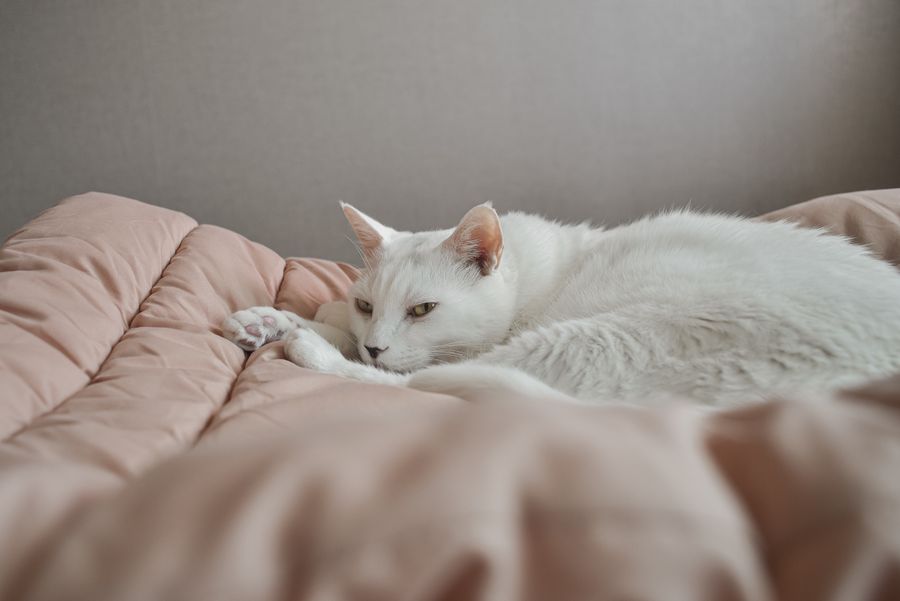
Compulsive behaviours begin as normal actions that become repetitive and difficult to interrupt.
What Makes a Behaviour Compulsive
Purposeful and interruptible
- Serves a clear function (cleaning fur, exploring)
- Ends once the purpose is served
- Easily interrupted by a distraction
- Consistent with the cat's usual pattern
Repetitive and hard to interrupt
- Continues well beyond any apparent purpose
- Difficult or impossible to redirect
- Occurs even without an identifiable trigger
- Represents a genuine change in frequency or intensity
Common Forms in Cats
Overgrooming to the point of bald patches, wool-sucking or pica, excessive or repetitive vocalising, and pacing are among the more commonly recognized compulsive presentations in cats. Feline hyperesthesia, with its episodes of skin rippling and sudden self-directed biting, is sometimes discussed alongside compulsive behaviours as well, though it involves its own distinct diagnostic considerations. Any of these can range from a mild, occasional pattern to a genuinely disruptive one, and the same behaviour can sit anywhere on that range depending on the individual cat.
Why Medical Evaluation Comes First
Pain, allergies, and other medical conditions can produce behaviour that looks compulsive on the surface, such as excessive grooming actually driven by an itchy skin condition, or pacing driven by discomfort rather than a behavioural pattern. A veterinary evaluation is the appropriate first step for any of these presentations, since the underlying cause changes what actually helps.
What Helps
Once medical causes have been ruled out or addressed, compulsive behaviours are generally approached through a combination of reducing identifiable environmental stressors, increasing enrichment and appropriate outlets for natural behaviours, and establishing a calm, predictable routine. For persistent or severe compulsive behaviour, working with a veterinarian or veterinary behaviourist to build a structured management plan is more effective than addressing the behaviour in isolation without understanding its specific trigger and pattern.
Restore the Peace
Pawganix CalmGuard: diffuser, 3 refills, and a bonus calming collar. Soothes the stress behind unwanted behavior.
Shop NowNot Sure What Your Cat Needs?
Take the free Calm Home Audit. Ten quick questions about your cat and your home, and you get the pattern named, the four things behind it, and how many rooms need covering. No email needed to see your result.
Take the Calm Home Audit →Frequently Asked Questions
A normal behaviour, such as grooming or chewing, that becomes repetitive, exaggerated, and difficult to interrupt, persisting well beyond what the original behaviour would normally require. Frequency and intensity distinguish it from normal behaviour, not the action itself.
Overgrooming to the point of bald patches, wool-sucking or pica, excessive vocalising, and pacing are among the more commonly recognized presentations, ranging from mild to genuinely disruptive.
Yes. Medical conditions like pain or allergies can produce behaviour that looks compulsive on the surface. A veterinary evaluation rules out these causes first, since the underlying cause changes what actually helps.
This content is for informational purposes only and is not a substitute for professional veterinary or behavioural advice. Persistent or severe compulsive behaviour should be evaluated by a veterinarian to rule out an underlying medical cause.
What is unsettling your cat?
Ten questions about your cat and your home. You get the pattern named, the four things behind it, how many rooms need covering, and a 30-day check-in date.
- 1The pattern, named, and the four things behind it
- 2How many rooms and floors need covering
- 3A plan sized to your home, and when the collar earns its place
Most read
-
 CatsMulti-Cat Household Stress: Why Your Cats Fight and How Pheromones Can Help8 min read
-
 CatsCat Vomiting: Hairballs or Gut Problem?6 min read
-
 CatsSeparation Anxiety in Cats7 min read
-
 CatsCat Calming Collars, Diffusers & Sprays7 min read
-
 CatsFeliway vs Pawganix: Cat Calming Compared7 min read
-
 CatsCat Anxiety: The Complete Guide to Causes, Symptoms, and Solutions9 min read


