


When Is a Dog Senior? What Actually Changes
There is no longer a fixed age. Current veterinary guidance defines a senior dog as being in the last 25% of their estimated lifespan, which for a typical medium to large dog lands somewhere around eight or nine. The more useful question is not how old your dog is but what has quietly changed, because the research says most owners miss the earliest sign. Pawganix MoveGuard Adult is daily joint nutrition for adult dogs 25 to 75 lb, with every amount on the label.
Daily joint nutrition for adult dogs 25 to 75 lb.
Shop MoveGuard AdultMost people find out their dog is officially a senior from a form at the vet, and it usually lands earlier than expected. The interesting part is that the profession itself has moved away from the number on that form.
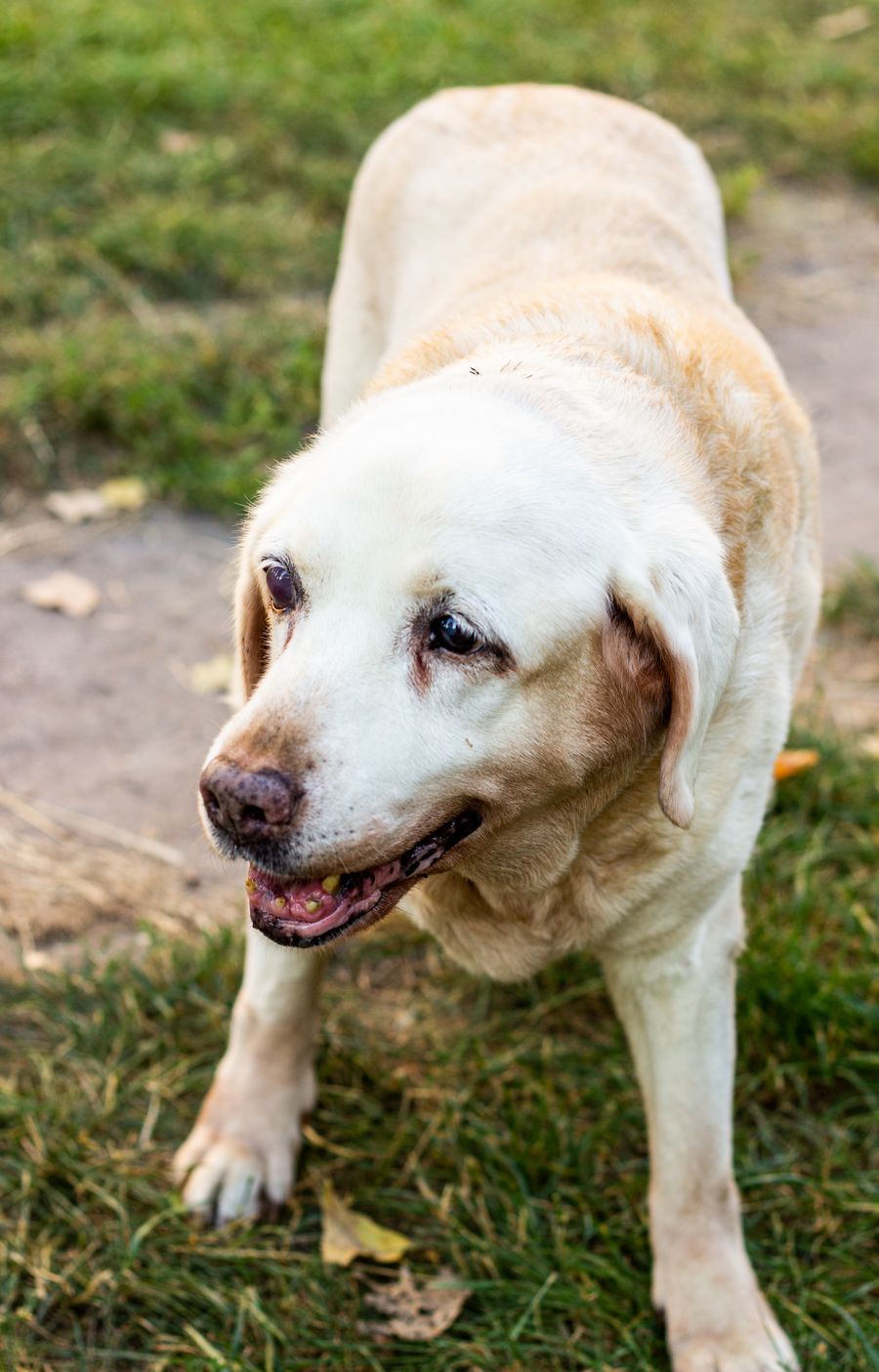
A dog can be well into the senior stage while still looking, to their owner, exactly like themselves.
When a dog becomes senior
The 2023 AAHA Senior Care Guidelines define senior as the last 25% of estimated lifespan through end of life, and explicitly decline to give an age.
The guidelines state that "because of the variability in aging based on species and breed, there is no specific age for senior status." The contrast within the same document is striking: AAHA is willing to define a senior cat chronologically, at over ten years. For dogs it refuses, because the spread between a French Bulldog and a Border Collie is too wide for a single number to mean anything.
To make the 25% rule usable you need a lifespan estimate. The largest UK study of its kind analysed primary-care records for 30,563 deceased dogs drawn from a population of 876,039, and put life expectancy at birth at 11.23 years. It also showed exactly why one number fails: Jack Russell Terriers averaged 12.72 years, English Bulldogs 7.39, French Bulldogs 4.53.
Apply the 25% rule to that population average and the senior stage begins at roughly eight and a half. Apply it to a breed with a shorter expected lifespan and it begins considerably earlier. That is the point of the rule.
The seven-years rule, and what replaced it
There is a published formula now, and it is a logarithm rather than a multiplier.
The multiply-by-seven rule has no identifiable source. It is folklore. A 2020 study compared DNA methylation patterns in dogs and humans and produced an actual equation:
Human age equivalent = 16 × ln(dog's age in years) + 31
Which puts a one-year-old dog at about 31 in human terms, a four-year-old at about 53, and a twelve-year-old at about 71. Ageing is front-loaded, which matches what owners actually observe.
One caveat the authors state themselves: the cohort was 104 dogs and almost entirely Labrador Retrievers. They note that breeds with widely varying lifespans could yield different translation functions. For a medium to large dog it is a reasonable approximation. For a Chihuahua it is a stretch. Either way it is better than seven.
The change most owners miss
Joint pain, because it is read as normal ageing rather than as a condition.
This is the single most useful thing on this page. A 2024 study radiographed 123 dogs aged eight months to four years, across 40 breeds. Not seniors. Young dogs.
- 39.8% had radiographic osteoarthritis in at least one joint.
- 23.6% had mild or greater joint pain on examination.
- Among dogs with clinical osteoarthritis, owners reported noticing signs of impairment in only about 30%. Roughly seven in ten owners of an affected dog said there was no apparent problem.
- In the youngest group, owners detected zero cases despite clinical findings.
A separate qualitative study interviewed 40 owners of dogs with diagnosed osteoarthritis. The researchers recorded the same phrases over and over: "I just assumed it was old age" and "I just thought it was normal to slow down." Many waited months before raising it, partly because they assumed nothing could be done.
The scale of the age effect is worth seeing directly. A study of 455,557 dogs under primary veterinary care compared the odds of an osteoarthritis diagnosis against dogs under three:
| Age band | Odds of an osteoarthritis diagnosis vs dogs under 3 |
|---|---|
| 3 to 5.9 years | 3.6 times |
| 6 to 8.9 years | 12.6 times |
| 9 to 11.9 years | 28.8 times |
| 12 years and over | 53.9 times |
The same study found the median age at first diagnosis was 10.5 years, and that dogs at or above their breed's mean bodyweight had 2.3 times the odds. Hold those two facts together with the 30% detection rate and the picture is clear: by the time it is written down, it has usually been there a while.
What to actually watch for
None of these is diagnostic and all are worth mentioning to your vet. The common thread is that each reads perfectly well as "getting older," which is exactly why they go unreported.
What actually changes, system by system
Cognition
AAHA puts age-related cognitive impairment at roughly 14% to 22.5% of dogs older than eight. The underdiagnosis gap here is even wider than for joints: a survey of 497 older dogs found a prevalence of 14.2% against a veterinary diagnosis rate of 1.9%.
It climbs steeply with age. One study found 28% of dogs aged 11 to 12 showed impairment in one or more categories, rising to 68% of dogs aged 15 to 16. The Dog Aging Project, working with 15,019 dogs, found the odds rose 52% with each additional year of age.
That study also found dogs with no activity had about six and a half times the odds of cognitive dysfunction compared with very active dogs. It is cross-sectional, so it cannot tell you which way the arrow points, and inactive dogs may well be inactive because they are already declining. Worth knowing, not worth over-reading.
Hearing
A small study of 39 senior dogs tested hearing thresholds alongside cognitive assessment. Every one of the eight dogs in the worst-hearing group was classified as cognitively abnormal, against 3 of 12 in the middle group. Quality of life scores for vitality and companionship declined as hearing worsened. With 39 dogs this is a signal rather than a settled finding, but it is a reason to mention hearing at a senior check rather than writing it off as inevitable.
Teeth
A study of 22,333 dogs found a one-year period prevalence of periodontal disease of 12.5%, about one in eight. Dogs aged 12 and over carried 3.91 times the risk of dogs aged two to four. Dental disease is painful and largely silent, and dogs very rarely stop eating because of it.
Sleep
Polysomnography on 28 senior dogs found that dogs with higher dementia scores and worse problem-solving performance spent less time in both non-REM and REM sleep. Older dogs showed shallower sleep overall. A dog who has started waking in the night is telling you something, and it is worth recording when it started.
What the evidence actually supports
Keeping a dog lean has better evidence behind it than anything else available, by a wide margin.
The same 48-Labrador lifetime study that shaped how vets think about puppy growth followed those dogs to the death of the last one at 14.5 years. Dogs fed 25% less than their pair-matched littermates had a median lifespan of 13.0 years against 11.2, a difference of 1.8 years, and a delayed onset of osteoarthritis. Mean body condition score across ages six to twelve was 4.6 against 6.7 on the nine-point scale.
Weight loss also works as a treatment, not only as prevention. A study of obese dogs with osteoarthritis put them through a 16-week weight loss programme with force-plate gait analysis, and found that a loss of around 6% of bodyweight was enough to produce a significant improvement in lameness.
Evidence quality varies a lot by ingredient, and the only way to judge what you are buying is to see the amounts. A label showing every active individually dosed lets you and your vet assess it. A proprietary blend, which lists ingredients without amounts, does not.
If your dog is in pain, the veterinary conversation comes first. Supplements sit alongside that, never in place of it.
Every Amount on the Label
MoveGuard Adult is daily joint nutrition for adult dogs 25 to 75 lb with closed growth plates: glucosamine, chondroitin, MSM, New Zealand green-lipped mussel, eggshell membrane providing collagen, elastin and glycosaminoglycans, plus vitamins C and E and hyaluronic acid. No proprietary blends. Check the label for your dog's weight.
Shop MoveGuard AdultWhat a senior check-up should include
AAHA recommends a medical workup once or twice yearly for senior pets, with diagnostic testing every six to twelve months, and longer appointment slots.
The senior minimum database in the guidelines is specific, and it is reasonable to ask which of these your practice runs:
- Complete blood count
- Chemistry panel including total protein, albumin, ALT, glucose, BUN, creatinine, sodium, potassium, calcium and SDMA
- Urinalysis with specific gravity and sediment analysis
- Total T4 for thyroid function
- Blood pressure measurement
- NT-proBNP annually, and strongly recommended before anaesthesia
- Annual heartworm testing and tick-borne disease screening
The longer appointment matters more than it sounds. Most of what changes in a senior dog is behavioural and gradual, and it surfaces in conversation rather than on a test.
Frequently Asked Questions
Current guidance avoids a fixed age and defines senior as the last quarter of estimated lifespan. Because larger dogs generally have shorter lifespans, that quarter starts earlier for them than for a small dog. Applied to the population life expectancy of about 11.2 years, it lands around eight and a half, but a breed with a shorter expected lifespan reaches it sooner. Your vet can place your individual dog better than any table.
That is the exact question the research says owners get wrong most often, and the honest answer is that you cannot tell from the outside. Slowing down is the most commonly reported first sign of joint pain and also the phrase owners use when dismissing it. The practical move is to describe the specific change to your vet rather than the general impression: what your dog stopped doing, and roughly when. The specific signs are easier to spot once you know them.
There is less behind the label than most people assume. There is currently no senior-specific energy requirement in the AAFCO, FEDIAF or NRC nutrient profiles, which means "senior" on a bag is a marketing category rather than a regulated formulation standard. What does have evidence behind it is keeping your dog at a lean body condition, whatever food achieves that. Ask your vet to score your dog's body condition and show you how, since it is a more useful skill than any label.
Not on the basis of age alone. Adjusting beats stopping: more frequent shorter outings instead of one long one, softer surfaces, and warming up before anything strenuous. Detailed exercise protocols found online are worth treating with caution, so get a plan from your vet, particularly if your dog has a diagnosed joint problem.
The pattern that matters is change in orientation, interaction, sleep cycle, house training and activity level, rather than simply doing less. Getting stuck behind furniture, staring at walls, waking and pacing at night, or greeting familiar people differently are the kinds of change worth writing down with dates. Given the gap between how common it is and how rarely it is diagnosed, raising it yourself is often what gets it assessed.
It is formulated for adult dogs 25 to 75 lb with closed growth plates, which includes most senior dogs in that weight range. Dosing is by weight, so check the label rather than assuming a number. If your dog has a diagnosed joint condition or is on medication, talk to your vet before adding any supplement, because that conversation is the one that changes outcomes.
Free guide
Dogs hide stiffness well. Catch it early.
The Adult Mobility Guide covers the signs owners miss, what to record before a vet visit, and how to keep an older dog moving comfortably.
Get the Mobility GuideEnter your email on the next page. You'll also get new findings as we publish them. Unsubscribe any time. See our Privacy Policy.
You're already making the content. Get paid for it.
Commission on your link, or a flat fee per post. Your call. A real person reads every application and replies within two working days.
Apply in two minutesSources
- Dhaliwal R, et al. 2023 AAHA Senior Care Guidelines for Dogs and Cats. J Am Anim Hosp Assoc 2023;59:1-21. aaha.org
- Teng KT, Brodbelt DC, Pegram C, Church DB, O'Neill DG. Life tables of annual life expectancy and mortality for companion dogs in the United Kingdom. Scientific Reports 2022;12:6415. nature.com
- Wang T, Ma J, Hogan AN, et al. Quantitative translation of dog-to-human aging by conserved remodeling of the DNA methylation landscape. Cell Systems 2020;11(2):176-185. idekerlab.ucsd.edu
- Enomoto M, et al. Prevalence of radiographic appendicular osteoarthritis and associated clinical signs in young dogs. Scientific Reports 2024;14:2827. nature.com
- Belshaw Z, Dean R, Asher L. Could it be osteoarthritis? How dog owners and veterinary surgeons describe identifying canine osteoarthritis in a general practice setting. Preventive Veterinary Medicine 2020;185:105198. sciencedirect.com
- Anderson KL, O'Neill DG, Brodbelt DC, et al. Prevalence, duration and risk factors for appendicular osteoarthritis in a UK dog population under primary veterinary care. Scientific Reports 2018;8:5641. nature.com
- Salvin HE, McGreevy PD, Sachdev PS, Valenzuela MJ. Under diagnosis of canine cognitive dysfunction: a cross-sectional survey of older companion dogs. The Veterinary Journal 2010;184(3):277-281. sciencedirect.com
- Evaluation of cognitive function in the Dog Aging Project: associations with baseline canine characteristics. Scientific Reports 2022;12:13316. nature.com
- Fefer G, Khan MZ, Case B, et al. Relationship between hearing, cognitive function, and quality of life in aging companion dogs. J Vet Intern Med 2022;36(6):1708-1718. onlinelibrary.wiley.com
- O'Neill DG, et al. Epidemiology of periodontal disease in dogs in the UK primary-care veterinary setting. J Small Anim Pract 2021. onlinelibrary.wiley.com
- Mondino A, et al. Sleep and cognition in aging dogs: a polysomnographic study. Frontiers in Veterinary Science 2023;10:1151266. frontiersin.org
- Lawler DF, et al. Diet restriction and ageing in the dog: major observations over two decades. British Journal of Nutrition 2008. cambridge.org
- Marshall WG, Hazewinkel HAW, Mullen D, et al. The effect of weight loss on lameness in obese dogs with osteoarthritis. Veterinary Research Communications 2010;34(3):241-253. link.springer.com
- Barbeau-Grégoire M, Otis C, Cournoyer A, Moreau M, Lussier B, Troncy E. A 2022 systematic review and meta-analysis of enriched therapeutic diets and nutraceuticals in canine and feline osteoarthritis. Int J Mol Sci 2022;23(18):10384. pmc.ncbi.nlm.nih.gov
Where is your dog on the joint clock?
Ten questions about your dog. You get a named stage, the four things loading your dog's joints, a 30-day check-in date, and a plan sized to your dog's weight.
- 1Your dog's joint stage, named and scored
- 2The four things loading the joints
- 3A plan sized to your dog's weight, or a plain answer if no formula fits
Most read
-
 Adult JointsWhat Is Canine Hip Dysplasia?18 min read
-
 Adult JointsNSAIDs for Dog Joint Pain: Benefits, Risks, and What Else You Should Know9 min read
-
 Adult JointsDog Limping: A Diagnostic Guide to What's Causing It and When to Worry8 min read
-
 Itch & YeastThe 7 Best Dog Yeast Infection Supplements Compared (2026 Review)14 min read
-
 Itch & YeastBest Supplements for French Bulldogs: What Actually Helps (And What's a Waste of Money)9 min read
-
 Itch & YeastBest Ear Infection Supplements for Dogs11 min read


