


Play and Predatory Aggression in Cats
Play aggression, sometimes involving pouncing, stalking, and gentle biting, is a normal expression of a cat's natural hunting instincts and is especially common in young or under-stimulated cats. It becomes a concern when bites or scratches draw blood, when the cat cannot be easily redirected, or when the behaviour is directed at a person's ankles or hands with real force rather than a controlled, inhibited bite. Most play aggression responds well to redirection toward appropriate toys and more structured play sessions.
A cat pouncing on ankles or play biting a hand is one of the more common behaviours Cat Parents ask about, and in most cases it reflects a completely normal hunting instinct rather than a genuine aggression problem.
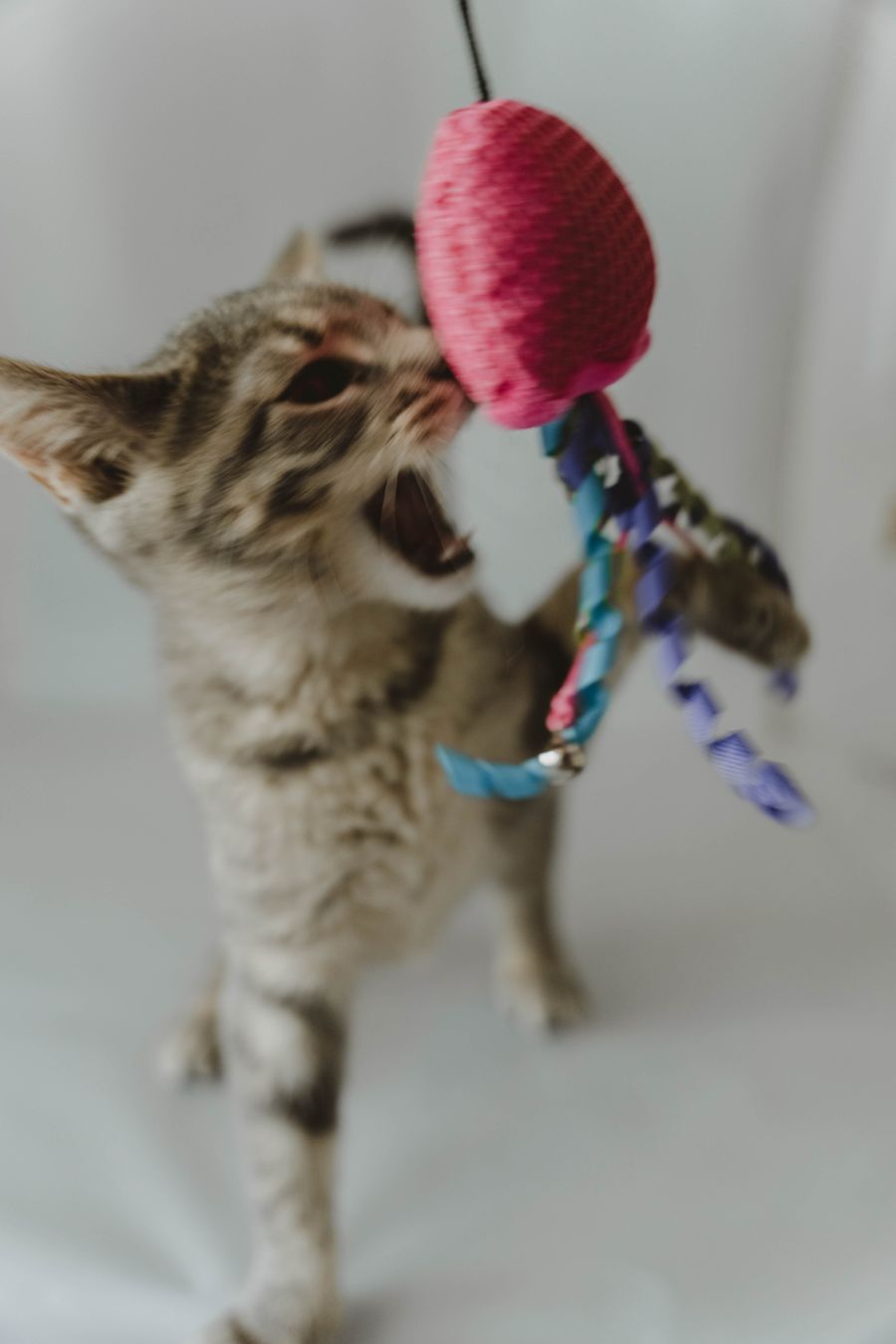
Stalking, pouncing, and gentle biting during play reflect a cat's natural hunting instinct, not aggression toward people.
Why Play Aggression Is Normal
Cats are natural predators, and much of their play behaviour, stalking, crouching, pouncing, and batting at a moving target, mirrors the sequence of a real hunt. This is instinctive and healthy, and it is especially prominent in kittens and young cats, who are essentially practicing hunting skills through play. A moving hand, foot, or ankle can trigger this same instinctive sequence, which is why play aggression often targets a Cat Parent's extremities rather than a toy specifically.
Play Aggression vs a Genuine Concern
Controlled and redirectable
- Bites are inhibited, rarely breaking skin
- Body language is playful: dilated pupils, a wiggling stance before pouncing
- Easily redirected to a toy
- Ends when the game ends
Uncontrolled or escalating
- Bites or scratches draw blood repeatedly
- Difficult or impossible to redirect
- Continues after the person disengages
- Paired with other aggressive body language
Why It Happens More in Some Cats
Play aggression is more common in young cats, kittens separated from littermates earlier than ideal (who miss out on learning bite inhibition through play with siblings), and under-stimulated cats who lack adequate outlets for their natural hunting instinct. A cat with limited access to appropriate play, particularly an indoor-only cat without enough enrichment, may direct that pent-up hunting drive toward whatever moving target is available, often a Cat Parent's hands or feet.
Play aggression is directed at movement and opportunity, not at the person as an individual. A cat play-attacking ankles is responding to a moving target triggering an instinctive sequence, not expressing dislike or hostility toward the person attached to those ankles.
What Helps
Provide regular, structured play sessions using wand toys or similar options that keep hands and feet out of the direct play sequence, giving the cat an appropriate outlet for stalking and pouncing behaviour. Avoid using hands or feet as play objects, even for kittens, since this teaches that human body parts are appropriate targets. If a cat pounces or bites during unstructured moments, calmly disengage (pause movement, remove the target) rather than pulling away abruptly, which can intensify the chase response. Increasing overall environmental enrichment, including vertical space and rotating toys, helps address under-stimulation as a contributing factor.
Restore the Peace
Pawganix CalmGuard: diffuser, 3 refills, and a bonus calming collar. Soothes the stress behind unwanted behavior.
Shop NowNot Sure What Your Cat Needs?
Take the free Calm Home Audit. Ten quick questions about your cat and your home, and you get the pattern named, the four things behind it, and how many rooms need covering. No email needed to see your result.
Take the Calm Home Audit →Frequently Asked Questions
This reflects a normal hunting instinct, especially common in kittens and young cats practicing predatory skills through play. Moving hands, feet, or ankles trigger this same instinctive stalk-and-pounce sequence, and it is not directed at the person specifically.
Normal play aggression involves inhibited bites that rarely break skin and is easily redirected to a toy. It becomes a concern when bites or scratches draw blood repeatedly, cannot be redirected, or continue after the person disengages.
Never use hands or feet as play objects, provide regular structured play with wand toys instead, and calmly disengage rather than pulling away abruptly if biting occurs. Increasing overall enrichment helps address under-stimulation as a contributing factor.
This content is for informational purposes only and is not a substitute for professional veterinary or behavioural advice. If aggression is severe, escalating, or causes injury, consult your veterinarian or a qualified feline behaviourist.
What is unsettling your cat?
Ten questions about your cat and your home. You get the pattern named, the four things behind it, how many rooms need covering, and a 30-day check-in date.
- 1The pattern, named, and the four things behind it
- 2How many rooms and floors need covering
- 3A plan sized to your home, and when the collar earns its place
Most read
-
 CatsMulti-Cat Household Stress: Why Your Cats Fight and How Pheromones Can Help8 min read
-
 CatsCat Vomiting: Hairballs or Gut Problem?6 min read
-
 CatsSeparation Anxiety in Cats7 min read
-
 CatsCat Calming Collars, Diffusers & Sprays7 min read
-
 CatsFeliway vs Pawganix: Cat Calming Compared7 min read
-
 CatsCat Anxiety: The Complete Guide to Causes, Symptoms, and Solutions9 min read


