


Krill Oil for Dogs: Why It's in MoveGuard Growth
Antarctic krill oil is a marine omega-3 source that supports joint tissue during a puppy's growth window, similar in purpose to fish oil but with a structural difference in how the omega-3s are bound (phospholipid form rather than triglyceride form), which some research suggests supports better absorption. MoveGuard Growth includes 150mg of krill oil, a dose not present in MoveGuard Adult, since the formulas are built for different life stages.
Krill oil shows up in MoveGuard Growth specifically, not MoveGuard Adult, and the reason comes down to what a growing puppy's joints need that a fully grown dog's don't.
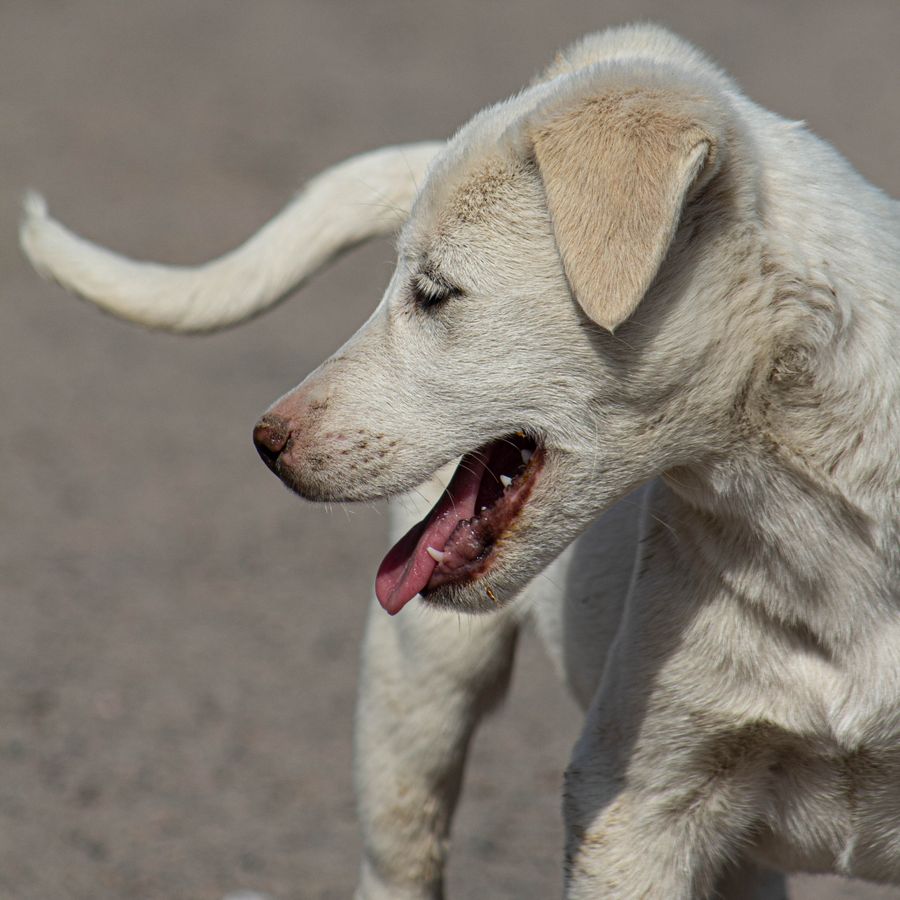
Omega-3s support the cartilage formation happening throughout a puppy's growth window.
What Krill Oil Is
Krill oil is derived from Antarctic krill, a small shrimp-like crustacean, and is a source of the same key omega-3 fatty acids (EPA and DHA) found in fish oil. What distinguishes krill oil is the form these fatty acids take: in krill oil, omega-3s are bound to phospholipids, whereas in fish oil they are bound to triglycerides. Krill oil also naturally contains astaxanthin, a carotenoid antioxidant that gives krill its reddish color and helps protect the oil itself from oxidation.
How It Differs From Fish Oil
| Feature | Krill Oil | Fish Oil |
|---|---|---|
| Omega-3 binding | Phospholipid form | Triglyceride form |
| Natural antioxidant content | Contains astaxanthin | Typically requires added antioxidants |
| Source | Antarctic krill (crustacean) | Various fish species |
| Oxidation stability | Generally more stable | More prone to oxidation without additives |
Some research suggests the phospholipid form of omega-3s in krill oil may support more efficient absorption than the triglyceride form in standard fish oil, though individual studies vary and this remains an active area of research rather than a settled conclusion.
Its Role in a Growing Puppy's Joints
Omega-3 fatty acids support cartilage formation and help modulate inflammatory response, both directly relevant to a large or giant breed puppy during the growth window, when joint tissue is actively developing under increasing mechanical load as the dog gains size. This is distinct from the role omega-3s play in a fully grown dog, where the emphasis shifts toward managing existing joint tissue rather than supporting new cartilage formation, which is part of why krill oil appears in MoveGuard Growth specifically and not MoveGuard Adult.
The Dose in MoveGuard Growth
MoveGuard Growth includes 150mg of Antarctic krill oil, individually disclosed on the label alongside the formula's other 8 actives, rather than folded into an undisclosed proprietary blend.
Every Active, Individually Disclosed.
MoveGuard Growth: NZ Green-Lipped Mussel, Glucosamine, Chondroitin, MSM, Krill Oil, Vitamin C, Vitamin E, Hyaluronic Acid, Manganese. Every dose on the label.
Shop MoveGuard GrowthKrill oil is one of several actives that show up on big dog labels. Our Large Dogs breaks down what each joint ingredient actually contributes.
Frequently Asked Questions
Krill oil provides omega-3 fatty acids (EPA and DHA) that support cartilage formation and help modulate inflammatory response, relevant to a growing puppy's actively developing joint tissue.
Neither is universally better. Krill oil's omega-3s are bound in phospholipid form, which some research suggests may support more efficient absorption than the triglyceride form in fish oil, and krill oil naturally contains the antioxidant astaxanthin. Both are legitimate omega-3 sources.
MoveGuard Growth is formulated for the active cartilage formation happening during a puppy's growth window, where omega-3 support plays a more central role. MoveGuard Adult is formulated for a different biological need, managing existing joint tissue in a fully grown dog, which is why the two formulas differ in this ingredient.
Their growth window only happens once.
Eight to thirty months decides a lot about their joints. The free Growth Blueprint covers what matters while it still counts.
Get the Growth BlueprintEnter your email on the next page. You'll also get new findings as we publish them. Unsubscribe any time. See our Privacy Policy.
You're already making the content. Get paid for it.
Commission on your link, or a flat fee per post. Your call. A real person reads every application and replies within two working days.
Apply in two minutesThese statements have not been evaluated by the Food and Drug Administration. This product is not intended to diagnose, treat, cure, or prevent any disease. This content is for informational purposes only and is not a substitute for professional veterinary advice. Individual results vary. Always consult your veterinarian before starting your dog on a new supplement.
Where is your dog on the joint clock?
Ten questions about your dog. You get a named stage, the four things loading your dog's joints, a 30-day check-in date, and a plan sized to your dog's weight.
- 1Your dog's joint stage, named and scored
- 2The four things loading the joints
- 3A plan sized to your dog's weight, or a plain answer if no formula fits
Most read
-
 Puppy GrowthGerman Shepherd Hip Dysplasia Prevention18 min read
-
 Puppy GrowthGerman Shepherd Puppy Joint Development: What to Do From 8 Weeks to 18 Months8 min read
-
 Puppy GrowthLab and Golden Retriever Growth Plate Window (2026)14 min read
-
 Itch & YeastThe 7 Best Dog Yeast Infection Supplements Compared (2026 Review)14 min read
-
 Itch & YeastBest Supplements for French Bulldogs: What Actually Helps (And What's a Waste of Money)9 min read
-
 Itch & YeastBest Ear Infection Supplements for Dogs11 min read


