


French Bulldog Tail Pocket: How to Clean It
A tail pocket is a small skin fold tucked underneath or around a French Bulldog's tail. Not every Frenchie has one. Where it exists it traps moisture and debris, which is exactly the environment skin trouble starts in, so it needs wiping and, more importantly, drying once or twice a week. Pawganix YeastGuard works on the gut and skin side of that picture from the inside.
Support the skin side from the inside, daily.
Shop YeastGuardMost Frenchie owners learn about the tail pocket the hard way: a smell nobody can place, traced eventually to a fold of skin they did not know existed. It is one of the few parts of a French Bulldog that genuinely needs a routine, and one of the least talked about.
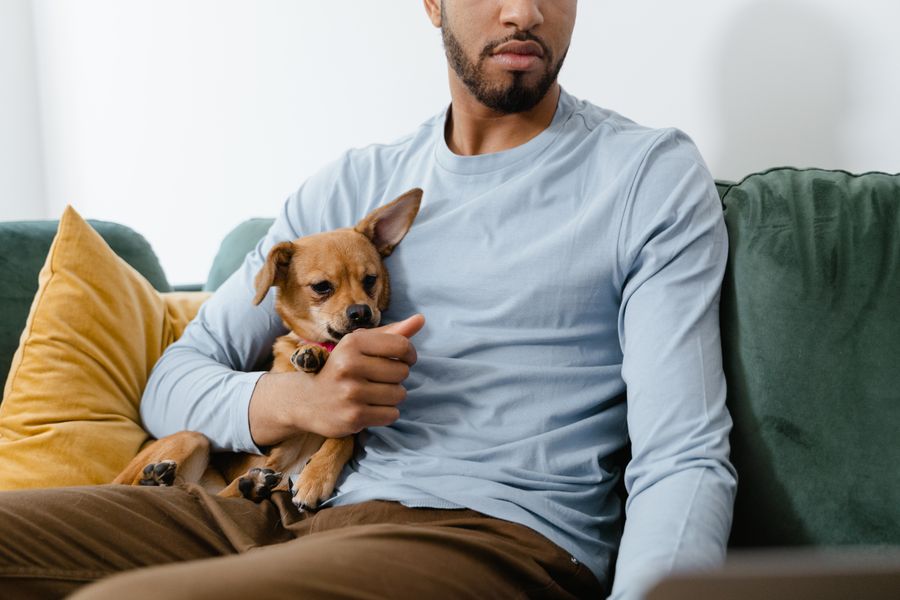
The corkscrew tail that gives the breed its shape is also what creates the fold underneath it.
What a tail pocket actually is
It is a recessed fold of skin underneath or just around the base of the tail, created by the tight corkscrew shape the breed was selected for.
The tail itself sits low and curls in on itself, and in many dogs that leaves a small pocket of skin beneath it that never really opens to the air. It is the same basic problem as the face folds, in a spot that is harder to see and much easier to forget. Warm, enclosed and slow to dry after a bath or a wet walk, it collects the ordinary debris of a dog's day and holds onto it.
Not every French Bulldog has a pronounced one. Some have almost none, some have a deep fold that needs attention weekly, and the only way to know which you have is to look.
How to find out whether your Frenchie has one
Lift the tail gently and feel underneath the base with a clean finger. If there is a recess rather than flat skin, that is the pocket.
Do this when your dog is relaxed rather than mid-play, and keep it brief and pleasant the first time. A dog who learns that tail handling is fine will make every future cleaning easier. If your Frenchie objects sharply to being touched there, leave it and mention that reaction to your vet rather than working through it.
How to clean it, step by step
Get set up before you start
You need unscented pet wipes or soft cloth and warm water, a dry cloth or gauze, and something your dog likes. Keep the whole thing short. Two calm minutes beats ten minutes of wrestling.
Lift the tail and look first
Before wiping anything, look at the skin. Note whether it is pink and normal, or red, raw, sore-looking or crusted. If it looks inflamed or your dog flinches, this becomes a vet visit rather than a cleaning session.
Wipe gently, inside the fold
Use a wipe or damp cloth over a fingertip and clean inside the recess rather than just over the surface. Be unhurried. The skin in there is thin and easily irritated, and scrubbing causes more problems than it solves.
Dry it properly, and treat this as the important step
This is the part most people skip, and it matters more than the wiping. A damp fold is the whole problem. Use dry gauze or a soft cloth and get the recess genuinely dry, not merely less wet. A cool hairdryer at arm's length works for dogs who tolerate it.
Finish well
Something nice at the end, every time. You are going to be doing this for years, and a dog who does not mind it is worth the biscuit.
- The skin is red, raw, weeping or bleeding
- There is a strong smell that returns within a day of cleaning
- Your dog yelps, snaps or pulls away sharply when the area is touched
- You can see a lump, a swelling or a discharge
- The area has not settled after a week of consistent, gentle care
A sore tail pocket can be bacterial, yeast-related, or an allergy flare showing up in the place least able to cope with it, and those are managed differently. Cytology takes minutes at the clinic and tells your vet which one they are dealing with, which is worth far more than guessing at home.
How often to do it
Once or twice a week for a typical pocket, and after anything that gets your dog wet or muddy.
Frequency should follow your own dog rather than a rule. A shallow fold on a dog with no skin history may need a wipe every week or two. A deeper pocket on a dog with allergies may need looking at twice a week, and always after a bath, a swim or a wet walk. What does not work is cleaning it only when you notice a smell, since by then the skin has usually been irritated for a while.
Tail pocket care sticks when it is attached to an existing habit rather than added as a new one. Pair it with the weekly nail trim or the post-walk paw wipe, and it is no longer a thing to remember.
Mistakes that make it worse
Before you decide, see it from someone who already did
Why the inside matters too
Cleaning manages the surface. It does nothing about why the skin keeps tipping out of balance in the first place.
A Frenchie who needs the tail pocket cleaned twice a week, plus the face folds, plus the ears, plus the paws, is usually not dealing with five separate problems. They are dealing with one picture showing up in five places that happen to be warm and enclosed. Allergy predisposition sits underneath a lot of it, and this breed carries more of that than most. It is why French Bulldog health advice so often circles back to skin rather than to any one fold.
That is where daily internal support belongs alongside the routine rather than instead of it. YeastGuard is built around gut and skin balance: a four-strain probiotic blend at 4 Billion CFU, a 125mg prebiotic blend, and botanical ingredients including caprylic acid and oregano extract, with the amount of every active printed on the label. The chewables are dosed by your dog's weight.
Clean the Fold Outside. Support the Skin Inside.
Four named probiotic strains at 4 Billion CFU, a 125mg prebiotic blend, and botanical ingredients including caprylic acid and oregano extract. Every active individually dosed on the label.
Shop YeastGuardFrequently Asked Questions
No. It depends on how the tail sits. Some Frenchies have a deep, obvious fold, some have a shallow one, and some effectively have none. Lift the tail and feel underneath the base with a clean finger: if there is a recess rather than flat skin, your dog has one and it needs a routine.
Once or twice a week suits most dogs, and always after a bath, a swim or a wet muddy walk. Follow your own dog rather than a fixed rule. A deeper fold, or a dog with a history of skin trouble, may need looking at more often. Cleaning only when you notice a smell means the skin has usually been irritated for a while already.
Unscented pet wipes, or a soft cloth with plain warm water, and then something dry to finish. Avoid scented and alcohol-based wipes, which irritate thin fold skin. Drying matters more than whatever you clean with, since a damp fold is the underlying problem.
A smell that returns within a day usually means the skin is already irritated rather than simply dirty, and wiping alone will not settle it. It can be bacterial, yeast-related, or an allergy flare, and those are managed differently. Several causes are worth ruling out, so book a vet visit rather than cleaning harder.
Yes. A warm, enclosed, damp fold is a favourable environment for both bacteria and yeast, and the skin there is thin and easily broken. Redness, weeping, crusting, swelling or pain on touch all mean a veterinary visit rather than another wipe.
Not unless your vet has told you to use something specific. Anything that sits in the fold and holds moisture works against the thing you are trying to achieve, which is a dry pocket. Coconut oil in particular is often recommended online and is a poor choice here.
It sits in the group of skin fold problems that make up a large share of the French Bulldog health issues owners manage month to month, alongside the ears, the nose rope and the skin generally. A tail pocket is not dangerous in itself. Left unchecked it becomes a reliable source of recurring irritation, which is why a short weekly routine is worth more here than any product.
Stay one step ahead of the itch.
The free Yeast Complete Guide covers what drives the cycle, what actually breaks it, and the mistakes that keep it coming back.
Get the Yeast GuideEnter your email on the next page. You'll also get new findings as we publish them. Unsubscribe any time. See our Privacy Policy.
You're already making the content. Get paid for it.
Commission on your link, or a flat fee per post. Your call. A real person reads every application and replies within two working days.
Apply in two minutesThese statements have not been evaluated by the Food and Drug Administration. This product is not intended to diagnose, treat, cure, or prevent any disease. This content is for informational purposes only and is not a substitute for professional veterinary advice. Sore, red or weeping skin in a tail pocket needs a veterinary assessment, since bacterial, yeast and allergy-related causes look similar and are managed differently. Always consult your veterinarian before starting your dog on a new supplement.
Most read
-
 Itch & YeastThe 7 Best Dog Yeast Infection Supplements Compared (2026 Review)14 min read
-
 Itch & YeastBest Supplements for French Bulldogs: What Actually Helps (And What's a Waste of Money)9 min read
-
 Itch & YeastBest Ear Infection Supplements for Dogs11 min read
-
 Itch & YeastYeastGuard vs. Zesty Paws Aller-Immune Bites: Ingredients, Results, and Value Compared10 min read
-
 Itch & YeastDog Itching But No Fleas: 8 Other Causes You Need to Check11 min read
-
 Itch & YeastChronic Dog Ear Yeast Infection: Home Treatment That Actually Stops the Cycle14 min read


