


French Bulldog Ear & Skin Infections
French Bulldogs develop chronic ear and skin infections due to three breed-specific factors: skin folds that create permanent warm, moist microclimates for yeast and bacteria; narrow (stenotic) ear canals that restrict airflow and trap discharge; and a brachycephalic anatomy that contributes to gut dysbiosis and immune hyperreactivity. Management requires daily fold care, weekly ear maintenance, and internal gut and antifungal support — not just reactive treatment when infections appear.
French Bulldogs have exploded in popularity over the past decade, becoming one of the most registered breeds in America and Europe. They are compact, affectionate, and endlessly charming. They are also one of the most dermatologically challenged breeds in veterinary medicine.
If you own a Frenchie, you have almost certainly dealt with at least one of the following: ear infections that keep coming back, red or raw skin folds on the face and body, itching and scratching that no product seems to fully resolve, a musty smell that persists between baths, or dark, thickened skin in the groin or armpits. These are not random problems. They are the predictable result of the French Bulldog's unique anatomy and immune profile.
Why French Bulldogs Are a Skin and Ear Infection Breed
Facial and Body Skin Folds
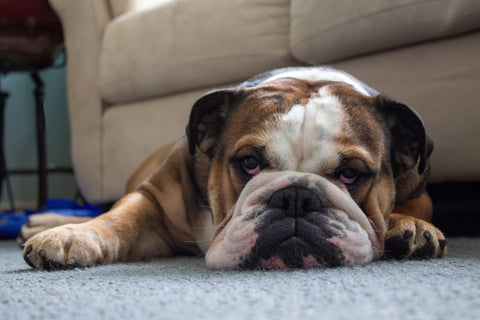
The flat face (brachycephalic structure) creates deep skin folds around the nose, above the nose (the nose rope), around the mouth, and in some dogs along the neck. These folds trap warmth, moisture, tears, saliva, and food debris against the skin — creating permanent microclimates where yeast and bacteria thrive. Malassezia yeast and Staphylococcus bacteria colonize the macerated tissue, producing red, raw, malodorous folds that cause significant discomfort.
Narrow, Stenotic Ear Canals
French Bulldogs have narrower ear canals than most breeds — a condition called stenosis — often present from birth and worsening with chronic inflammation. Even though Frenchies have erect ears (which normally provide better ventilation than floppy ears), the internal canal narrowing negates this advantage. The combination of stenotic canals and the breed's predisposition to allergic inflammation means that ear infections in Frenchies tend to be chronic, resistant to treatment, and quick to recur.
Brachycephalic-Related Gut and Immune Challenges
The anatomical changes that produce the flat face also affect the upper airway, which can lead to chronic swallowing of air, increased gastroesophageal reflux, and altered gut motility — all contributing to gut dysbiosis. French Bulldogs also have documented elevated rates of atopic dermatitis, food sensitivities, and immune-mediated skin conditions. The breed appears to carry a genetic predisposition to immune hyperreactivity that combines with their anatomical challenges to create a perfect storm for chronic skin and ear disease.
Why 80% of Dog Skin Problems Start in the Gut (The Science Explained) →
The Four Conditions Every Frenchie Owner Needs to Know
Ear Infections (Otitis Externa)
Frenchie ear infections are typically yeast-driven or mixed (yeast plus bacteria). The narrow canal creates conditions for yeast overgrowth, and the breed's allergic tendencies add inflammatory fuel.
Signs
Management
Weekly ear cleaning with a veterinary solution containing a drying agent. Antifungal ear drops when active infection is present (confirmed by cytology). Internal antifungal support (caprylic acid, oregano oil) to reduce the systemic yeast that seeds the ear canal. Gut health restoration to rebuild the immune regulation that prevents yeast from overpopulating.
Dog Ear Yeast Infection: Complete Treatment and Prevention Guide →
Skin Fold Dermatitis (Intertrigo)
Infection and inflammation in the skin folds — particularly the nose rope, facial folds, and any body folds. The affected skin is red, moist, malodorous, and may have a yeasty or sour smell. In severe cases, the skin becomes raw and ulcerated.
Signs
Management
Clean all skin folds 2 to 3 times per week with a gentle, veterinary-approved wipe or dilute chlorhexidine solution. Separate each fold, wipe away debris, and dry thoroughly. Apply a skin fold-specific protective barrier if recommended by your vet. In severe cases, topical antifungal or antibiotic cream may be needed. For Frenchies with extremely deep folds causing chronic unresolvable infection, surgical fold reduction is an option to discuss with your vet.
Atopic Dermatitis and Secondary Yeast Overgrowth
Generalized allergic skin inflammation that allows secondary yeast to overgrow across the body — belly, groin, armpits, paws. Frenchies with atopy often develop the characteristic darkened, thickened skin (lichenification) that indicates chronic yeast-driven inflammation.
Management
Allergy management (Cytopoint is often preferred for Frenchies because it does not suppress the immune system that is already struggling). Combined with internal antifungal support and gut restoration to address the yeast component that allergy medications leave untouched.
Dog Yeast Infections: The Complete Guide to Causes, Symptoms, and Treatment →
Is Your Dog's Yeast Infection Actually Allergies? How to Tell →
Pododermatitis (Paw Inflammation)
Inflammation and yeast overgrowth between the toes, causing licking, rust-colored staining, and interdigital swelling. Frenchies are prone to this condition partly because of their allergy-driven immune dysfunction and partly because their compact body structure places more weight per square inch on their paw pads than lighter breeds.
Management
Paw soaks with dilute povidone-iodine during active infection. Thorough drying between all toes after walks and baths. Internal antifungal and gut support to address the systemic component.
Dog Paw Yeast Infection: Why They Won't Stop Licking and What to Do →
Dog Itching But No Fleas: 8 Other Causes You Need to Check →
Frenchie Skin Problems? Start With the Root Cause.
Take the free Itch Loop Diagnostic. Ten quick questions about your dog, and you get the itch pattern named, the four things driving it, and a plan sized to your dog's weight. No email needed to see your result.
Take the Itch Loop →The French Bulldog Skin and Ear Health Protocol
The daily time investment for this protocol is approximately 3 to 5 minutes. Frenchie owners who adopt this proactive routine consistently report that the chronic cycle of infections they had accepted as "normal for the breed" can be broken.
- Gut support supplement (probiotic + prebiotic + digestive enzyme)
- Facial fold wipe and dry — takes 30 seconds and prevents days of treatment
- Check for paw licking or new skin odor
- Full skin fold cleaning (nose rope, lip folds, any body folds) — separate each fold, clean debris, dry completely
- Ear cleaning with veterinary drying solution
- Full-body visual inspection: belly, groin, armpits, and between toes for redness, darkening, or moisture
- Dry ALL skin folds thoroughly
- Dry inside ears
- Dry between every toe
- Protein-first diet with under 30% estimated carbohydrates
- Omega-3 supplementation (fish oil or sardines)
- Internal antifungal support during warm or humid months — or year-round if yeast is a recurring issue
Moisture left in folds and ears after bathing is the most common trigger for infection in Frenchies. Post-bath drying of every fold, every ear, and every toe is not optional — it is the most important five minutes of skin care this breed receives.
Chronic Ear Infections in Dogs: Why They Keep Coming Back and the Gut Connection →
A Note on Breed-Specific Realism
French Bulldogs will always have skin folds that need cleaning and ear canals that need monitoring. Their anatomy creates permanent maintenance requirements that cannot be supplemented away. No product eliminates the need for fold care, ear hygiene, and post-bath drying.
What gut health support and antifungal supplementation do is raise the threshold at which problems develop. A Frenchie with a well-regulated immune system and balanced gut microbiome can tolerate the moisture and microbial challenge of their anatomy without tipping into infection. A Frenchie with dysbiotic gut health and weakened immune regulation cannot — and every missed fold cleaning or undried ear becomes an infection waiting to happen.
Daily care manages the anatomy. Internal support strengthens the immune system managing the microbes within that anatomy. Running both simultaneously is what breaks the chronic infection cycle for most Frenchies.
- French Bulldogs develop chronic ear and skin infections due to three permanent anatomical and immune factors — skin folds, stenotic ear canals, and brachycephalic-related gut dysbiosis.
- The four conditions (ear infections, skin fold dermatitis, atopic dermatitis with secondary yeast, and pododermatitis) frequently coexist and compound each other.
- Post-bath drying of every fold, ear, and toe is the single highest-leverage daily habit — it prevents more infections than any supplement can.
- Gut health support raises the threshold at which the Frenchie's anatomical vulnerabilities tip into active infection.
- Accepting "it's just a Frenchie thing" normalizes treatable conditions. The chronic cycle can be broken with consistent proactive management.
Frequently Asked Questions
No. A mild, neutral skin smell is normal. A sour, yeasty, or foul odor from the nose rope indicates active yeast or bacterial colonization. Clean the fold thoroughly, dry it completely, and begin daily fold maintenance. If the odor persists despite consistent cleaning, topical antifungal treatment and internal gut and antifungal support are warranted.
French Bulldogs have elevated rates of food sensitivities compared to many other breeds. Common trigger proteins include chicken, beef, and dairy. If your Frenchie has non-seasonal skin problems that do not respond to environmental allergy management, a veterinary-supervised elimination diet (8 to 12 weeks on a novel or hydrolyzed protein) is worth pursuing.
Frenchies typically have less ear canal hair than breeds like Poodles or Schnauzers, so plucking is rarely necessary. If your vet identifies significant hair contributing to wax and moisture retention, discuss whether gentle trimming (rather than plucking) is appropriate — plucking creates micro-inflammation that can actually promote infection in an already vulnerable breed.
Skin fold issues can begin at any age, even in puppies, because the anatomical predisposition is present from birth. Atopic dermatitis and yeast overgrowth typically become clinically apparent between 6 months and 3 years of age. Starting preventive gut support and establishing the cleaning protocol in puppyhood is the most effective strategy for delaying or preventing the onset of chronic problems.
What is behind the itch?
Ten questions about your dog. You get the itch pattern named and scored, the four things driving it, a date for the first visible change, and a 60 day pack sized to your dog's weight.
- 1Your dog's itch pattern, named and scored
- 2The four drivers behind it
- 3A 60 day pack sized to your dog's weight
Most read
-
 Itch & YeastThe 7 Best Dog Yeast Infection Supplements Compared (2026 Review)14 min read
-
 Itch & YeastBest Supplements for French Bulldogs: What Actually Helps (And What's a Waste of Money)9 min read
-
 Itch & YeastBest Ear Infection Supplements for Dogs11 min read
-
 Itch & YeastYeastGuard vs. Zesty Paws Aller-Immune Bites: Ingredients, Results, and Value Compared10 min read
-
 Itch & YeastDog Itching But No Fleas: 8 Other Causes You Need to Check11 min read
-
 Itch & YeastChronic Dog Ear Yeast Infection: Home Treatment That Actually Stops the Cycle14 min read


