


F3 vs CAP: Cat Pheromone Types Explained
Cat calming products are built on two different pheromone types, and they do different jobs. F3 is the facial pheromone, the signal a cat leaves when rubbing their face on furniture, and it communicates that a space is familiar and safe. CAP is the cat appeasing pheromone, based on the signal a nursing mother produces for her kittens, and it is used for tension between cats living together. If your problem is environmental stress, F3 is the relevant signal. If your problem is specifically cat to cat conflict, CAP is the one built for that. Pawganix CalmGuard is an F3 product and does not contain CAP.
Most Cat Parents comparing calming diffusers are comparing brands. The more useful comparison is the pheromone inside them, because two products can look identical on a shelf and be sending entirely different messages to your cat.
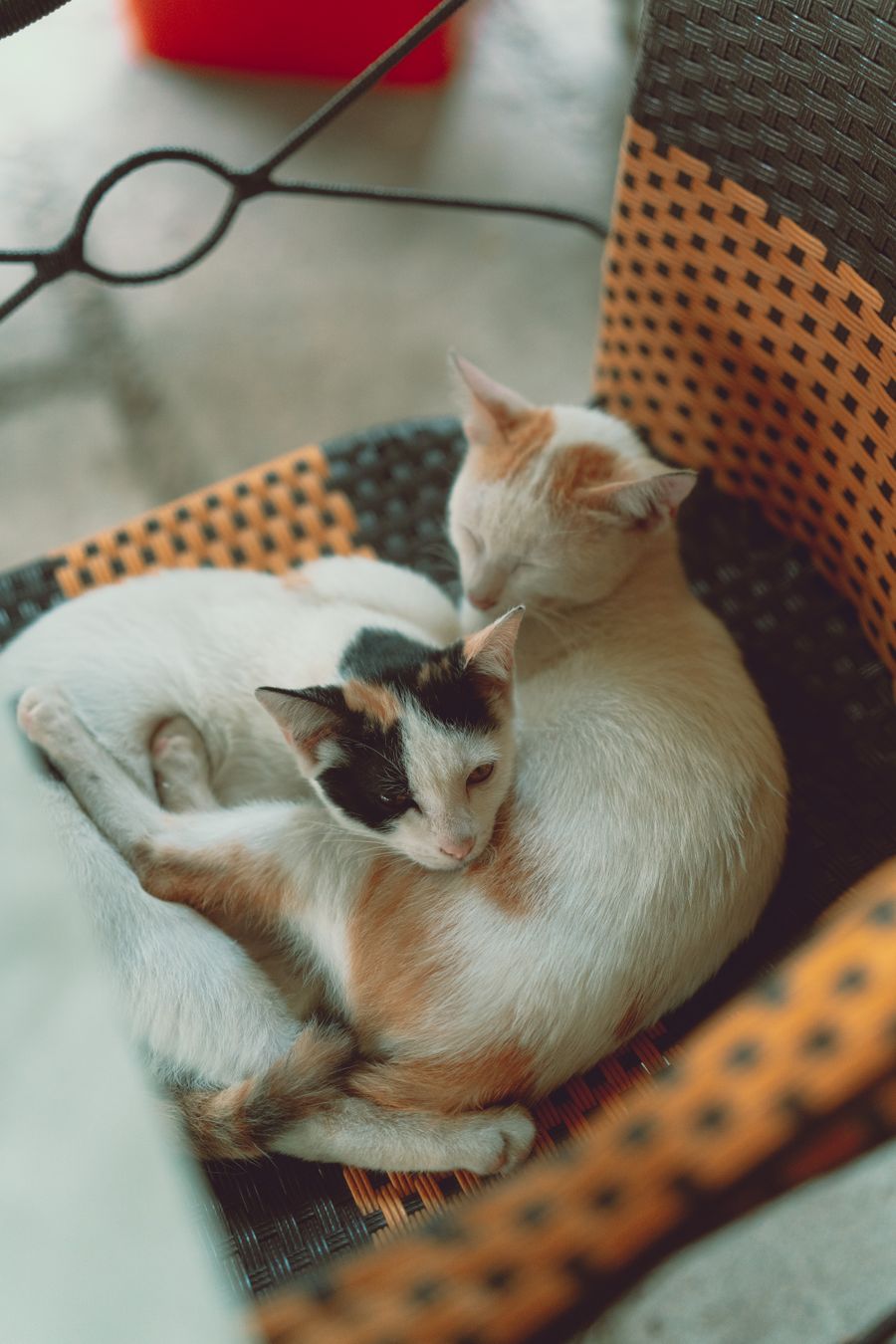
Cats sharing a home comfortably and a cat settling into a space are two different problems, and they call for different pheromone signals.
What F3 Is
F3 is the facial pheromone. When a cat rubs their cheek against a doorframe, a chair leg, or your ankle, they are depositing it. The message is territorial in a reassuring sense: this place is known, this place is mine, nothing here needs to be treated as a threat. Cats do this most readily in environments where they already feel secure, which is why a cat that has stopped face rubbing around the home is often a cat that has stopped feeling settled.
Synthetic F3 reproduces that signal and releases it into a room continuously. The situations it suits are the ones where the underlying issue is a cat's relationship with their environment rather than with another cat: settling into a new home, adjusting after a change to the household, scratching and marking behaviour, general hiding and withdrawal, and everyday background stress.
What CAP Is
CAP, the cat appeasing pheromone, comes from a different source entirely. It is based on the pheromone a nursing mother cat produces, which supports bonding and a sense of group harmony among her kittens. The message is social rather than territorial: these individuals belong together.
That makes CAP the signal used in products aimed specifically at tension between cats sharing a home, the chasing, blocking, staring, and fighting that come from an unresolved social arrangement rather than from an unfamiliar environment. Feliway's Friends and MultiCat formulations are the widely available CAP products.
Which One Your Situation Calls For
| What is happening | Relevant pheromone |
|---|---|
| Moving house, renovation, new furniture, a change in routine | F3 |
| Scratching furniture, urine marking, spraying | F3 |
| Hiding, withdrawal, general unsettledness at home | F3 |
| Carrier and travel stress | F3 |
| Cats chasing, blocking, or staring at each other | CAP |
| Ongoing fighting between cats in the same home | CAP |
| A new cat being introduced to a resident cat | Either can play a part, since the situation is both environmental and social |
A multi cat household still benefits from F3 for general environmental calm, and a household with one cat can still have social stress from cats visible through a window. The distinction is not absolute. What it does mean is that reaching for an F3 product when the specific, central problem is cats fighting each other is reaching for the wrong signal.
Where CalmGuard Fits, and Where It Does Not
Pawganix CalmGuard is an F3 product. It is built for the environmental side: supporting a cat through change, general household calm, and the behaviours that follow from a cat not feeling settled in their space. In a multi cat home it supports the shared environment, which is genuinely useful.
What CalmGuard is not is a CAP product. Pawganix does not currently offer a CAP equivalent. If the central problem in your home is cats actively in conflict with each other, a CAP formulation is what that situation calls for, and it would be misleading to suggest otherwise. Pheromone support of either type also works best alongside the environmental work, particularly resource distribution, rather than instead of it.
Restore the Peace
Pawganix CalmGuard: an F3 diffuser, 3 refills, and a bonus calming collar. Soothes the stress behind unwanted behavior.
Shop NowNot Sure What Your Cat Needs?
Take the free Calm Home Audit. Ten quick questions about your cat and your home, and you get the pattern named, the four things behind it, and how many rooms need covering. No email needed to see your result.
Take the Calm Home Audit →You're already making the content. Get paid for it.
Commission on your link, or a flat fee per post. Your call. A real person reads every application and replies within two working days.
Apply in two minutesFrequently Asked Questions
F3 is the facial pheromone cats deposit when rubbing their face on furniture, and it signals that a space is familiar and safe. CAP is the cat appeasing pheromone, based on the signal a nursing mother produces for her kittens, and it addresses social tension between cats living together. F3 is environmental, CAP is social.
CAP is the pheromone type built for tension between cats sharing a home. F3 supports the shared environment and is still useful in a multi cat household, but it is not the signal aimed at inter cat conflict specifically. Resource competition is often the underlying driver and is worth addressing alongside any pheromone support.
No. CalmGuard is an F3 facial pheromone product, built for environmental calm, change at home, scratching and marking behaviour, and general household stress. Pawganix does not currently offer a CAP product.
This content is for informational purposes only and is not a substitute for professional veterinary or behavioural advice. Product information reflects what each manufacturer publishes as of September 2026 and may change. Feliway, Friends, and MultiCat are trademarks of Ceva Sante Animale, referenced here for identification only, and this article is not affiliated with or endorsed by Ceva. If cats in your home are fighting, causing injury, or one cat is being kept from food, water, or the litter box, consult your veterinarian or a qualified feline behaviourist.
What is unsettling your cat?
Ten questions about your cat and your home. You get the pattern named, the four things behind it, how many rooms need covering, and a 30-day check-in date.
- 1The pattern, named, and the four things behind it
- 2How many rooms and floors need covering
- 3A plan sized to your home, and when the collar earns its place
Most read
-
 CatsMulti-Cat Household Stress: Why Your Cats Fight and How Pheromones Can Help8 min read
-
 CatsCat Vomiting: Hairballs or Gut Problem?6 min read
-
 CatsSeparation Anxiety in Cats7 min read
-
 CatsCat Calming Collars, Diffusers & Sprays7 min read
-
 CatsFeliway vs Pawganix: Cat Calming Compared7 min read
-
 CatsCat Anxiety: The Complete Guide to Causes, Symptoms, and Solutions9 min read


