


Territorial Aggression Between Cats
Territorial aggression between cats in the same home usually stems from competition over resources (litter boxes, feeding stations, resting spots, or a Cat Parent's attention) or from an unclear territorial arrangement, rather than the cats simply disliking each other. It often develops or resurfaces after a change in the household, such as a new pet, a move, or a shift in the existing resource setup. Addressing the resource and territory situation directly is usually more effective than waiting for the tension to resolve on its own.
Two cats who previously coexisted comfortably suddenly stalking, blocking, or swatting at each other is unsettling, and it is easy to read as the relationship between them breaking down. More often, it reflects competition over territory and resources rather than a change in how the cats feel about each other.
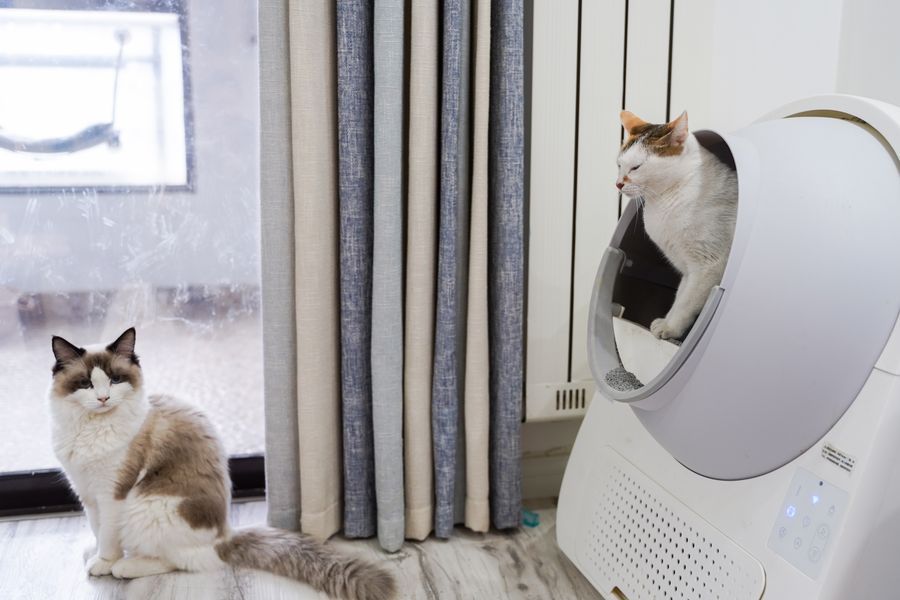
Cats sharing a home, including breeds like Ragdolls known for an easygoing temperament, still need clearly divided territory and resources to stay comfortable together.
What Territorial Aggression Looks Like
Territorial aggression between cats can include stalking, blocking access to a room or resource, staring contests, growling, hissing, and occasionally physical altercations. It often concentrates around specific locations, such as a particular doorway, a favoured resting spot, or the area near food or litter, rather than happening uniformly throughout the home, which is itself a signal that territory and access are central to what is driving it.
Common Causes
Insufficient or poorly distributed resources
Too few litter boxes, feeding stations, or resting spots for the number of cats in the home, or resources clustered in one area rather than spread out, can create genuine competition even among cats who are not inherently hostile toward each other.
A recent household change
A new pet, a move, furniture rearrangement, or any shift that disrupts the previously established territorial arrangement can trigger a period of renegotiation between cats that looks like aggression.
An unclear territorial hierarchy
Cats generally establish a workable territorial arrangement over time. When that arrangement has not yet been established, such as after introducing a new cat, or has been disrupted, ongoing tension can result until a new equilibrium is reached.
Why This Is Not Necessarily a Relationship Problem
Two cats can have a genuinely comfortable relationship and still show territorial tension if resources and space are not adequately distributed. Addressing the environmental setup often resolves aggression that looks, on the surface, like the cats simply do not get along, because the underlying driver was competition for a limited resource, not the relationship itself.
What Helps
Increase the number and distribution of key resources, following the general guideline of one litter box per cat plus one extra, spread across different locations rather than clustered together, along with multiple feeding stations and resting spots so no single cat needs to control access to the only option. Provide vertical space, such as cat trees or shelving, since height gives cats additional territory to claim without direct competition for floor-level space. For an active or unresolved conflict, a gradual, separated reintroduction, similar to introducing a new cat, can help re-establish a workable arrangement rather than leaving two cats to work it out through ongoing confrontation.
Restore the Peace
Pawganix CalmGuard: diffuser, 3 refills, and a bonus calming collar. Built for households managing multi-cat tension alongside everyday stress.
Shop NowNot Sure What Your Cat Needs?
Take the free Calm Home Audit. Ten quick questions about your cat and your home, and you get the pattern named, the four things behind it, and how many rooms need covering. No email needed to see your result.
Take the Calm Home Audit →Frequently Asked Questions
Usually competition over resources or territory, often triggered by a recent household change such as a new pet, a move, or a shift in the existing resource setup, rather than a genuine breakdown in how the cats feel about each other.
Not necessarily. Cats can have a comfortable relationship and still show territorial tension if resources and space are not adequately distributed. Addressing the environmental setup often resolves aggression that looks like a relationship problem but is actually about resource competition.
The general guideline is one litter box per cat plus one extra, spread across different locations, along with multiple feeding stations and resting spots so no single cat controls access to the only option.
This content is for informational purposes only and is not a substitute for professional veterinary or behavioural advice. If aggression between cats is frequent, severe, or causes injury, consult your veterinarian or a qualified feline behaviourist.
What is unsettling your cat?
Ten questions about your cat and your home. You get the pattern named, the four things behind it, how many rooms need covering, and a 30-day check-in date.
- 1The pattern, named, and the four things behind it
- 2How many rooms and floors need covering
- 3A plan sized to your home, and when the collar earns its place
Most read
-
 CatsMulti-Cat Household Stress: Why Your Cats Fight and How Pheromones Can Help8 min read
-
 CatsCat Vomiting: Hairballs or Gut Problem?6 min read
-
 CatsSeparation Anxiety in Cats7 min read
-
 CatsCat Calming Collars, Diffusers & Sprays7 min read
-
 CatsFeliway vs Pawganix: Cat Calming Compared7 min read
-
 CatsCat Anxiety: The Complete Guide to Causes, Symptoms, and Solutions9 min read


