


How Wild Is Your House Cat? What Tilcayo Reveals
Mostly, yes. House cats have lived alongside people for roughly 9,000 to 10,000 years, but their genome still differs only slightly from their wild relatives, which is why some researchers describe them as semi-domesticated. Your cat carries a wild ancestor's wiring: territorial, scent driven, and built for a solitary life. That wiring explains a great deal of ordinary household cat stress, and it is why a synthetic copy of a cat's own facial scent can help a cat settle into a space again.
In September 2026, scientists named the first new living cat species in more than a century. The detail that travelled furthest was not the genetics. It was that this wild cat spent about a year living in a family home, because the man who found it believed it was an ordinary kitten.
That raises a question worth answering properly, because it applies to the cat asleep on your sofa right now.
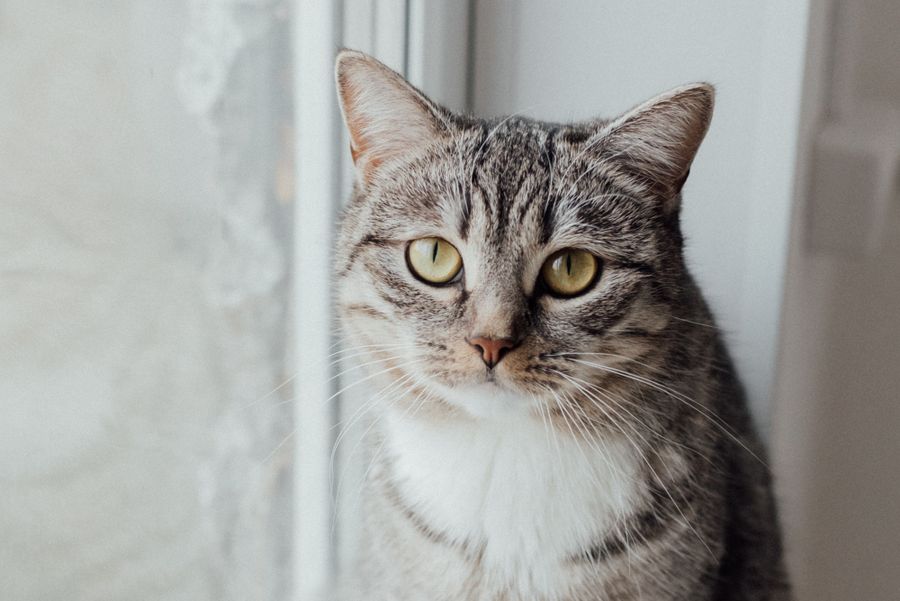
Your house cat's instincts were shaped long before cats ever shared a home with people.
What is the tilcayo, the first new cat species in 100 years?
The tilcayo, Leopardus tilcayo, is a small spotted wild cat from the cloud forests of Bolivia, formally described as a new species in the journal Current Biology on September 17, 2026.
It is the first living cat species described since the pampas cat in 1923. Researchers identified it by comparing whole genomes from across the Leopardus genus, which revealed that what had long been regarded as a single species of tiger cat is in fact five. The tilcayo separated from its closest relatives around 1.4 million years ago. The name comes from local communities in the Yungas region, who had called the animal tilcayo for generations before science caught up with them.
| Scientific name | Leopardus tilcayo |
|---|---|
| Group | Tiger cats, genus Leopardus, native to Central and South America |
| Where it lives | The Yungas cloud forest on the eastern slope of the Andes, Bolivia |
| Size | About 18 inches from head to base of tail and roughly 3 lb, smaller than an average house cat |
| Described | September 17, 2026, in Current Biology |
| Why it matters | First new living cat species described since 1923 |
| Still unknown | Most of its behaviour, diet, breeding, and how many exist in the wild |
How did a wild cat pass as a pet for a year?
Because a young wild cat and a domestic kitten can look remarkably alike, and the differences only become obvious as the animal grows.
The cat was found as a kitten near a forest and taken home by a man who assumed it was a stray domestic cat. Over roughly a year its behaviour made the truth plain: reporting describes it stalking the neighbours' chickens, and the family eventually handed it to the Senda Verde wildlife sanctuary. A biologist there noticed its spots were unlike those of known tiger cats, and years of genetic work later confirmed a species new to science. The cat still lives at the sanctuary.
The story works as a mirror. The traits that gave the tilcayo away, a hunting drive and a stubborn independence, are traits house cats share. The difference is one of degree, and that degree is smaller than most Cat Parents assume.
Are house cats still wild?
Partly. House cats are domesticated, but far less so than dogs, and their genome sits remarkably close to that of their wild ancestors.
Domestic cats descend from the Near Eastern wildcat. Research into the origins of the house cat points to early farming settlements in the Fertile Crescent between 9,000 and 10,000 years ago, where wildcats were drawn in by the rodents living on stored grain. Unlike most domestic animals, cats were not recruited and bred for a job. They largely chose us, on their own terms.
That history left its mark. Geneticists have found relatively few changes separating house cats from wildcats, and some researchers describe cats as semi-domesticated as a result. Others dispute the label, since cats plainly do live with people and have shifted in temperament. Either way, the practical point for a Cat Parent is the same. Your cat is running software written for a wild animal.
| House cat | Wild ancestor | |
|---|---|---|
| Hunting instinct | Intact, even in a well fed cat | Essential to survival |
| Territory | Monitors and defends a home range, often a single house | Monitors and defends a home range in the wild |
| Scent marking | Face rubbing, scratching, sometimes urine | The same behaviours |
| Social life | Often shares space with people and other cats | Largely solitary |
| Tolerance of people | Much higher, the main result of domestication | Low |
What wild wiring does your cat still carry?
Three instincts matter most in a home: territory, scent, and a strong preference for predictability.
- Territory. A cat's home is its territory, and shrinking that territory to a few rooms does nothing to soften the instinct to patrol and defend it.
- Scent. Cats map their world by smell. When your cat rubs a cheek along a doorframe or against your leg, it is depositing scent from glands on its face. Behaviour researchers describe this as marking something as familiar and part of the cat's own group.
- Predictability. An animal that survives alone depends on knowing its surroundings. Familiar smells, routes and routines signal that nothing needs attention. Change signals the opposite.
Why that wiring leaves house cats stressed
Because we ask an animal wired for a solitary, predictable life to share space and absorb constant change.
Veterinary behaviourists point out that cats' wild ancestors were mostly solitary, while domestic life often requires a cat to live closely with people and with other cats. Add a house move, a new pet, visitors, a new baby, or a change in schedule, and the territory no longer feels predictable. The response is rarely dramatic at first. It shows up as hiding, overgrooming, scratching in new places, urine marking, or quiet tension between cats.
The facial scent a cat leaves when it rubs against things is its own signal that a space is known and safe. When a cat goes quiet on face rubbing around the home, that often means the space no longer reads as settled. Synthetic versions of this facial pheromone, known as F3, copy that signal and release it into a room continuously, so the space carries the familiar message even when the cat is not topping it up itself.
Pheromone support works best alongside the practical steps that respect a cat's wild wiring: steady feeding times and litter box locations, separate resources for each cat, high places to watch the room from, and changes introduced gradually rather than overnight. For a fuller picture of what stress looks like and what helps, see our complete guide to cat anxiety.
Give Their Wild Wiring a Familiar Signal
Pawganix CalmGuard: an F3 facial pheromone diffuser, 3 refills, and a bonus calming collar. Soothes the stress behind hiding, scratching, and marking.
Shop NowCan you keep a wild cat as a pet?
No, and the tilcayo's story is the reason why.
Wild cats are not domesticated, however young they are when found. Their needs, instincts and adult behaviour are incompatible with a home, and taking them from the wild feeds a wildlife trade the researchers behind this discovery have warned about directly. The tilcayo at Senda Verde is well cared for, but it cannot return to the forest. In many places keeping a wild cat is also illegal. If you ever find a kitten in or near wild habitat and are unsure what it is, leave it where it is and contact a local wildlife rescue or rehabilitation centre rather than taking it home.
Frequently Asked Questions
The tilcayo, Leopardus tilcayo, is a small spotted wild cat from the Yungas cloud forest of Bolivia. It was formally described as a new species in Current Biology on September 17, 2026, making it the first living cat species described since 1923.
Partly. House cats have lived alongside people for roughly 9,000 to 10,000 years, but their genome differs only slightly from that of their wild ancestors, and they retain strong territorial, hunting and scent marking instincts. Some researchers call them semi-domesticated, though the label is debated.
Only distantly. The tilcayo belongs to the genus Leopardus, the tiger cats of Central and South America. House cats belong to the genus Felis and descend from the Near Eastern wildcat. Both sit in the cat family, separated by millions of years of evolution.
Cats have scent glands on their cheeks and face. Rubbing deposits that scent, marking furniture, doorways and people as familiar and part of the cat's own space. It is an inherited wild behaviour, and a cat that rubs freely around the home is usually a cat that feels settled. Synthetic versions of this facial scent are what cat pheromone diffusers use.
No. Wild cats are not domesticated, their adult needs and behaviour are incompatible with a home, and taking them from the wild fuels the illegal wildlife trade. If you find a kitten near wild habitat and are unsure what it is, contact a local wildlife rescue rather than taking it home.
Its conservation status has not yet been assessed, and scientists do not know how many exist in the wild. Because the study split one widespread tiger cat into five species, each one now covers a smaller range, and researchers say each will need to be assessed separately.
Not Sure What Your Cat Needs?
Take the free Calm Home Audit. Ten quick questions about your cat and your home, and you get the pattern named, the four things behind it, and how many rooms need covering. No email needed to see your result.
Take the Calm Home Audit →You're already making the content. Get paid for it.
Commission on your link, or a flat fee per post. Your call. A real person reads every application and replies within two working days.
Apply in two minutesSources
- Phylogenomics and museomics reveal five distinct species of tiger cats in South America, Current Biology, September 17, 2026.
- Meet the First New Cat Species Discovered in 100 Years, National Geographic, September 17, 2026.
- The Taming of the Cat, Driscoll et al., via PubMed Central.
- The ABCs of Cats, Cornell University.
This content is for informational purposes only and is not a substitute for professional veterinary advice. Sudden changes in behaviour, appetite or litter box habits can indicate illness as well as stress, so any change that persists warrants a veterinary visit. Facts about the tilcayo reflect published research and reporting as of September 21, 2026.
What is unsettling your cat?
Ten questions about your cat and your home. You get the pattern named, the four things behind it, how many rooms need covering, and a 30-day check-in date.
- 1The pattern, named, and the four things behind it
- 2How many rooms and floors need covering
- 3A plan sized to your home, and when the collar earns its place
Most read
-
 CatsMulti-Cat Household Stress: Why Your Cats Fight and How Pheromones Can Help8 min read
-
 CatsCat Vomiting: Hairballs or Gut Problem?6 min read
-
 CatsSeparation Anxiety in Cats7 min read
-
 CatsCat Calming Collars, Diffusers & Sprays7 min read
-
 CatsFeliway vs Pawganix: Cat Calming Compared7 min read
-
 CatsCat Anxiety: The Complete Guide to Causes, Symptoms, and Solutions9 min read


