


Urine Marking in Cats: Why It Happens
Urine marking is a communication behaviour, not a litter box problem. Cats mark to establish territory, signal their presence to other cats, or respond to a perceived threat or stressor, whether or not they are spayed or neutered, though the behaviour is more common in unaltered cats. Marking typically involves small amounts sprayed on vertical surfaces, distinct from a full-volume elimination on a horizontal surface.
Urine marking is one of the more misunderstood cat behaviours, often mistaken for a litter box problem or, worse, interpreted as spite. Understanding what marking actually communicates changes how a Cat Parent responds to it.
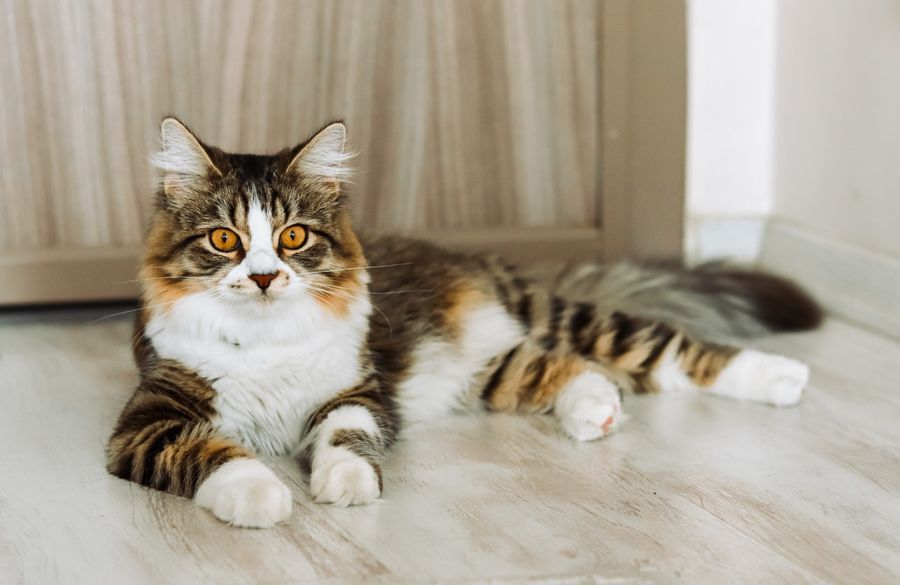
A calm, settled home environment is the foundation for reducing how often marking occurs.
Why Cats Mark With Urine
Urine marking is a form of scent communication cats use to establish territory boundaries, signal their presence to other cats in the area, and respond to stress or a perceived threat in their environment. It is not related to litter box cleanliness or accessibility, which is the primary driver behind litter box avoidance instead. Marking is more common in cats who are not spayed or neutered, since hormonal factors influence the behaviour, but it occurs in altered cats as well, particularly in response to environmental stress or territorial pressure.
Common Triggers
An unfamiliar cat nearby
The scent, sound, or sight of an outdoor cat, whether through a window or near the home's exterior, is one of the most common marking triggers, since it represents a territorial challenge the indoor cat cannot directly address.
A new pet, person, or major household change
The introduction of a new animal or person, or a significant change like a move, can trigger marking as the cat attempts to reassert territorial boundaries in a shifted environment.
Tension with another cat in a multi-cat home
Ongoing tension or an unclear territorial arrangement between cats sharing a home can lead to marking as one or more cats attempt to establish or reinforce boundaries.
Marking vs Litter Box Avoidance
Marking and litter box avoidance look and mean different things, even though both involve urine outside the box. Marking typically involves a small amount sprayed backward onto a vertical surface, often with the cat standing and the tail raised and quivering. Litter box avoidance involves a full, normal volume of urine on a horizontal surface, usually with the cat squatting, and points toward either the litter box setup itself or an underlying medical cause rather than territorial communication.
Marking points toward an environmental or social stressor worth identifying and addressing. Litter box avoidance points toward the litter box setup or a possible medical issue. Confusing the two can lead to addressing the wrong root cause.
Reducing the Likelihood of Marking
Identifying and reducing the specific trigger, when identifiable, is the most direct approach: blocking a window view of outdoor cats, providing separate resources in a multi-cat home to reduce territorial tension, or allowing a gradual adjustment period after a significant household change. A calm, settled home environment overall supports lower baseline stress, which in turn reduces how often territorial marking behaviour is triggered. For cats who are not spayed or neutered, discussing the procedure with a veterinarian is also a relevant consideration, since it addresses one of the hormonal factors that influence the behaviour.
Frequently Asked Questions
Urine marking is a form of scent communication used to establish territory, signal presence to other cats, and respond to stress or a perceived threat. It is unrelated to litter box cleanliness, which drives litter box avoidance instead, a separate behaviour with a different cause.
Spaying or neutering addresses the hormonal factors that contribute to marking and is associated with a reduced likelihood of the behaviour, though marking can still occur in altered cats, particularly in response to environmental stress or territorial pressure. Discuss the procedure and its expected effect with your veterinarian.
Marking is a small amount sprayed on a vertical surface, usually with the cat standing, and communicates territory or responds to stress. Litter box avoidance is a full volume on a horizontal surface, usually with the cat squatting, and points to the litter box setup or a possible medical cause.
Restore the Peace
Pawganix CalmGuard: diffuser, 3 refills, and a bonus calming collar. Soothes the stress behind unwanted behavior.
Shop NowNot Sure What Your Cat Needs?
Take the free Calm Home Audit. Ten quick questions about your cat and your home, and you get the pattern named, the four things behind it, and how many rooms need covering. No email needed to see your result.
Take the Calm Home Audit →This content is for informational purposes only and is not a substitute for professional veterinary or behavioural advice. If marking is frequent, severe, or paired with other behaviour changes, consult your veterinarian to rule out an underlying medical cause.
What is unsettling your cat?
Ten questions about your cat and your home. You get the pattern named, the four things behind it, how many rooms need covering, and a 30-day check-in date.
- 1The pattern, named, and the four things behind it
- 2How many rooms and floors need covering
- 3A plan sized to your home, and when the collar earns its place
Most read
-
 CatsMulti-Cat Household Stress: Why Your Cats Fight and How Pheromones Can Help8 min read
-
 CatsCat Vomiting: Hairballs or Gut Problem?6 min read
-
 CatsSeparation Anxiety in Cats7 min read
-
 CatsCat Calming Collars, Diffusers & Sprays7 min read
-
 CatsFeliway vs Pawganix: Cat Calming Compared7 min read
-
 CatsCat Anxiety: The Complete Guide to Causes, Symptoms, and Solutions9 min read


