


Cat Hides When Guests Visit: Holiday Calm Home Tips
Hiding when guests arrive is a normal way for a cat to cope, and the goal is to make it easy rather than to cure it. Set up a quiet safe room with food, water, a litter box and hiding spots, ask guests to ignore the cat, and never force interaction. A plug-in pheromone diffuser can sit in that plan, if it goes in well before the visit. Pawganix CalmGuard uses the F3 facial pheromone to support a calmer home.
Set up the calm room before the first guest arrives.
Shop NowWhy cats hide from guests
To a cat, a house full of visitors is a change of territory.
Cats rely on a predictable routine and a familiar home. Unfamiliar voices, smells, extra footsteps and an open front door all upset that. Hiding is how cats cope, and the Fear Free Happy Homes advice on cats who dislike company is clear that fearful cats deserve a space away from strangers.
Stress can also show up as pacing, vocalizing, skipping meals or bolting for the door. Our guide to the signs a cat is stressed explains what to look for.
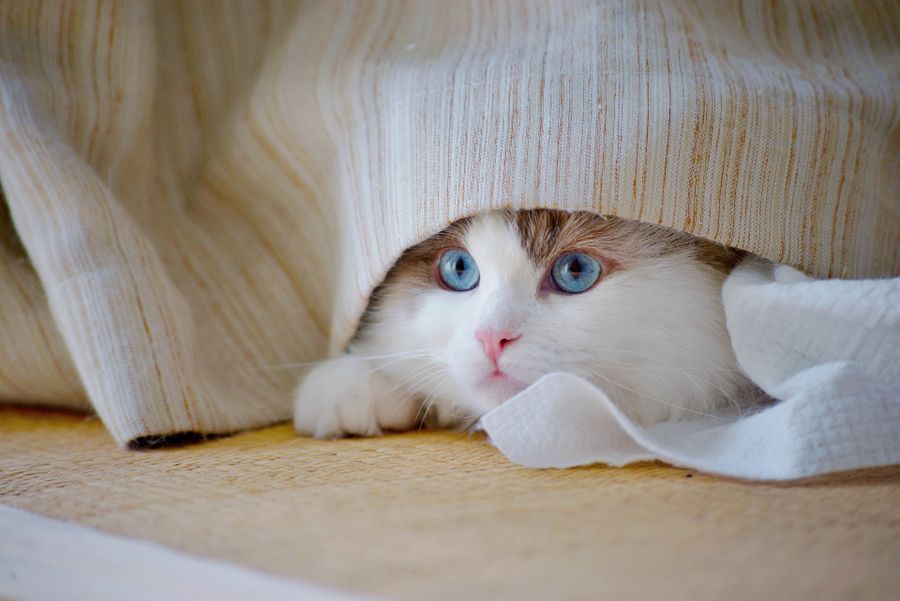
Photo: Pexels
A plan for the visit
Build a safe room
Choose a quiet room away from the action. Fear Free suggests turning your cat's favorite room into a retreat with food puzzles, fresh water, small treats and a litter box, with both elevated and ground-level hiding spots that are easy to reach.
Close the door before guests arrive
Settle your cat in first, so the cat is not carried or chased in once the house is busy. A sign on the door tells guests it is off limits.
Brief your guests
Ask visitors not to chase, pick up or pet the cat. Fear Free advises no petting even if the cat approaches, and suggests guests toss treats nearby to build a positive association.
Keep exits secure
Open doors and busy entrances are a bolt risk. Keep the safe room closed and watch the front door while people come and go.
Return to routine afterward
Feed on schedule and give quiet time once guests leave, so your cat can check the house and settle.
What to avoid
- Forcing your cat out of hiding to say hello. Fear Free warns this will make a cat feel unsafe and more distrustful of guests
- Letting children or guests corner a cat
- Leaving your cat to roam near the door
- Scolding a cat for hiding or for a litter box accident after a stressful day
A cat that wants to hide should be allowed to. Hiding is how cats cope.
Where a pheromone diffuser fits
Fear Free lists pheromone diffusers and collars among the ways to help anxious cats relax during visits. CalmGuard is a plug-in diffuser that uses the F3 facial pheromone, a synthetic version of the marker cats leave when they rub their faces on furniture. It is made to support a calmer, more familiar-feeling home.
Timing matters. Results are gradual, not instant:
- Weeks 1 to 2: early signs for some cats, such as less hiding and a smaller startle response.
- Weeks 2 to 3: more noticeable change in many homes.
- Week 4 and on: a settled routine with consistent use.
That means plugging it in well before the holidays rather than the day guests arrive. Place it in the room where your cat spends the most time or in the safe room. It does not replace the plan above, and it is not a treatment for anxiety disorders. Every cat differs, and results vary.
How calm is your home for your cat?
Take the free Calm Home Audit. Ten quick questions about your cat and your home, and you get the pattern named, the four things behind it, and how many rooms need covering. No email needed to see your result.
Take the Calm Home Audit →If it goes beyond guests
If your cat hides every day, or for days after visitors leave, the pattern may be wider than one holiday. Our cat anxiety guide covers causes and routines, and the pheromone diffuser explainer goes deeper on how they work.
When to call the vet
- Your cat stops eating for more than a day
- Your cat strains in the litter box or passes little urine
- Hiding or aggression continues well after the visit
- Your cat is injured after bolting or fighting
Stress can show up as physical illness in cats, so changes that persist deserve a vet check.
Make Your Home Feel Familiar All Season.
CalmGuard is a plug-in diffuser kit that uses the F3 facial pheromone to support a calmer home. Plug it in early and give it a few weeks.
Shop NowFrequently Asked Questions
Hiding is a normal way for cats to cope with strangers, new smells and a change in routine. A quiet room with a hiding spot makes it easier for your cat.
Only if your cat chooses to. Fear Free advises never forcing interaction, and asking guests not to pet the cat even if it approaches.
Ask them to ignore the cat, stay calm and quiet, and toss a treat nearby if the cat comes out. That builds a positive association without pressure.
Gradually. Some cats show early changes in the first two weeks, many show more noticeable changes in weeks 2 to 3, and the full effect with consistent use is usually week 4 onward. CalmGuard works best when it is plugged in well before the visit.
No. It supports a calmer home and works alongside a good routine and vet care. If stress signs persist, your vet can check for health causes.
Want a calmer home for your cat?
Explore the Cat Wellness page for the routines, products and quizzes we recommend for stress-prone cats.
Explore Cat WellnessSee our Privacy Policy.
You're already making the content. Get paid for it.
Commission on your link, or a flat fee per post. Your call. A real person reads every application and replies within two working days.
Apply in two minutesSources
- Fear Free Happy Homes. Does Your Cat Hate Company? Help Her Cope. fearfreehappyhomes.com
- Pawganix. CalmGuard Cat Calming Diffuser product page. pawganix.com
These statements have not been evaluated by the Food and Drug Administration. This product is not intended to diagnose, treat, cure, or prevent any disease. This content is for informational purposes only and is not a substitute for professional veterinary advice. Persistent hiding, not eating, straining in the litter box or aggression should be checked by your vet. CalmGuard supports a calmer home environment and is not a substitute for veterinary care.
What is unsettling your cat?
Ten questions about your cat and your home. You get the pattern named, the four things behind it, how many rooms need covering, and a 30-day check-in date.
- 1The pattern, named, and the four things behind it
- 2How many rooms and floors need covering
- 3A plan sized to your home, and when the collar earns its place
Most read
-
 CatsMulti-Cat Household Stress: Why Your Cats Fight and How Pheromones Can Help8 min read
-
 CatsCat Vomiting: Hairballs or Gut Problem?6 min read
-
 CatsSeparation Anxiety in Cats7 min read
-
 CatsCat Calming Collars, Diffusers & Sprays7 min read
-
 CatsFeliway vs Pawganix: Cat Calming Compared7 min read
-
 CatsCat Anxiety: The Complete Guide to Causes, Symptoms, and Solutions9 min read


